20120616

Gundert and more (BH: D279)

May 11, 2012


The front pages of the two main Malayalam dailies was rather revealing this morning. Eminent author Zachariah has bemoaned the utter "selling out" of Malayalam media to the god called profit. He illustrates the seismic shift of the media's loyalty from to the people to the profit. Today's Manorama had all its headlines in the front page featuring murders except one which was about an accident death. So much violence and misfortune in page 1 on a Friday, I double checked if it was the 13th. 

No violence in the front page of Mathrubhumi newspaper though. In fact, no news at all. Full page ad glittering in gold. An advertisement about the latest branch opening of a leading jewelry. So there you have it, violence and gold, two things that sell aplenty in Kerala today.

Saving myself from the newspaper, I walked with Dr. Sreedhara Menon's book. I have 3-4 more chapters to go in it. Today's lesson was on Mr. Hermann Gundert, the 19th century traveler and scholar who is credited with the first model dictionary in Malayalam. 

Gundert was born in Germany and started his career in England. By the time he reached south India as a protestant missionary, he already knew 18 languages. He was quick to add Malayalam, Tamil, Hindi and Telugu to that list. From Thirunelvelli, he traveled to Mangalore via Travancore before settling down in Malabar. 

Before listing the grand achievements of Gundert, I will briefly recap the major contributions to Malayalam from foreigners as mentioned by Dr. Menon. Jesuit priest Arnos who came to Kerala in 1699 was the first to contribute a dictionary and grammar book for the language. Another grammar helper by Angelo Francis in 1712. In the second half of 18th century, a missionary named Clement prepared a dictionary geared towards missionaries. He also created "Samkshepavedardham" (Concise Biblical Meaning) in 1722. Printed in Rome, this was the first book to be type set in Malayalam. 

The first travelogue in Malayalam was "Varthamana pustakam" by Paremmakil Thomakathanar published in the second half of 18th century. An Austrian priest named Barthelomew who lived in Varapuzha from 1777 to 1789 wrote "Thressiacharitham" (Story of Teresa, poetry) and "Kudashapustakam" (Book of Prayers, prose)

Gundert Malayalam Grammar book came out in 1851. From 1836 to 1859 he was in India, out of which the later twenty years were in Kerala. He passed away in Germany in 1893 at a ripe old age of 80. 

Gundert has 21 books to his credit in Malayalam. Majority of them were religious in nature. Even while writing mostly Christian works, he has to his credit "Muhammad Chairtam" on the life of Prophet Mohamed and "Nalacharitha Parishodana", an book based on the Hindu myth. Gundert also published the first compilation of Malayalam proverbs. His grammar book remains till date a wonderful helper for students of the language. 

Oldest newspapers in Kerala are also credited to Gundert. He started two of them in 1847. "Rajyasamacharam" was meant for missionary news while "Paschimodayam" contained articles on Kerala culture, history and geography, most of them written by the editor himself. These articles have been compiled into three books: Keralapazhama, Keralolpathi and Malayalarajyam.

Prof. Menon mentions that Kerala Sahitya Academy is working on the translation Gundert's detailed diary whose existence came to light only in 1986. I would like to find out where that project stands. 

The Portuguese, the Dutch, the British and the European missionaries who followed them here are undoubtedly responsible for large scale plunder of this land. But there were plenty of men like Gundert who enriched lives and culture here. The tragedy is that today we have elected leaders who not only continue the plunder of this land but also progressively ruin its culture and heritage.

Neighborhood is in a festive mood again. Our neighbor's daughter is getting married on Sunday. Illuminations and feasting as usual. I remember the day she was brought home as a baby. I remember the days she learnt to speak. Their car, like most Indian cars in those days, had an obnoxious warning voice that shrieked for attention (with a please thrown in) whenever the car was backing up. In her words, it was saying, "Athatha Pee, Dikar e baakina"I didn't recognize her when I saw her last August after a gap of 16 years. She is only 21 but her mother was super worried by some astrologer dropping the "now or very late" standard scare tactic. 

It is raining heavily this evening. The TV volume level required to make the program audible can be used as a good measure of the rain. Usually our TV volume is set to 5. Today's rain was an 8. It had rained heavily the day before the day before my sister's wedding as well.

If you haven't tried a hot, lime Sulaimani tea after spicy chicken biriyani dinner while enjoying the rain on an electricity-less late evening, you are missing out on a singular pleasure in the magnificent time-space fabric of life in this universe.

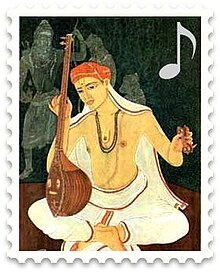
Enthero Mahanubhavalu (BH:D278)

May 10, 2012


Suraj Venjaramoodu is a Malayalam movie comedian who has made a career out of his inveterate and pronounced use of the Thiruvananthapuram dialect. In a totally avoidable movie called “Happy Husbands” he jokes that Thyagaraja Swami, one of the holy trinity of Carnatic Classical music, has specifically composed a hymn for people of Thiruvananthapuram. He goes on to sing the famous “Enthero Mahanubhavalu..” The joke being that diehard Trivandrumites say “Enthero?” instead of the refined and proper Malayalam word “Entho?” meaning ‘What’

The shabby joke apart, it turns out that there is a real connection between Thiruvananthapuram and that composition. Swati Thirunal, the great classical music maestro and king of Travancore, had a great desire to meet Thyagaraja Swami. He sent Shadkala Govindamarar and Vadivelu, two gems from his court, as envoys to the grand master of music. They set off to the then Madras Presidency from Thiruvanathapuram.

Shadkala Govindamarar was a living legend. He obtained the title of ‘Shadkala’ for his ability to sing the same hymn in different ‘kala’ or meter. He is also credited with the invention of the seven-string ‘Thamburu’ which till then had only four. Vadivelu was one of the dance masters in Swati Thirunal’s court.
When they met Thyagaraja Swami, Shadkala Govindamarar sang in his own style Jayadeva’s “Chandanacharchitha Neela” in praise of Krishna. The folks present were apparently mesmerized. Thyagaraja Swami was so deeply moved by the genius of Shadkala Govindamarar that he immediately sang “Endhero Mahanubhavalu” in appreciation.

Wikipedia suggests that this song had been an earlier composition of Swami, but I would rely more on history Dr. Shreedhara Menon who writes that Thyagaraja composed the song in praise of Shadkala Govindamarar. If so, the song indeed has a deep Thiruvananthapuram connection.

Dr. Shreedhara Menon wonderful book has been keeping me company during morning walks. The Swati Thirunal chapter is an eye opener on the stupendous achievements of that king who died at a rather young age of 33. He was a master of 18 languages. The University of Kerala was ultimately born out of Raja’s Free School that he created and maintained. It was the first Indian initiative towards English education. Swati Thirunal set up the observatory in Thiruvananthapuram and the archives of ancient records. It is from his private menagerie that the Thiruvananthapuram zoo was created.

Swati Thirunal’s achievements in Carnatic music cannot be praised enough. But I guess it is to be expected from a baby who was greeted into this world by the magnificent lullaby “Omanathinkal kidavo” composed specifically for him by Irayimman Thampi. And then there is the refinement of Mohiniyattam that the king is credited with. I had mentioned his design of the ‘tight blouse’ and rest of the costume for the dance in an earlier note.

20120613

The Plot (BH: D277)

May 9, 2012


The innumerable Malayalees who work abroad but nurse a longing to return home for retirement have bought small plots of land in and around the city. Their home is to construct a home that matches their abroad-derived social standing and heaviness of their purse. This note is my two cents about the five, ten and twenty cents of land plots the hardworking men and women overseas have invested in.

Thiruvananthapuram city hasn't had garbage cleared for nearly half a year now. The situation is same in other bigger cities in the world. The problem has been overdiscussed and political abused by now. It has been transformed into a permanent political platform. The ruling parties at the corporation which haven't solved the problem might lose the next election. The opposition party that will promise that it will solve the problem might come to power. But then solving the problem is not in the interest of the political parties.

Garbage must be left uncleared so that the issue can burn like the ubiquitous piles of garbage all around for the years to come. This has been made easy by the fact that since Malayalees are Indians to the core, we have become "used to" the problem. It has been ingested so to speak. It has become part of our "way of life" already. We are very quick about compromises, you know! The apparently "unsolvable" problems are the greatest nourishment of the political system. So the filth is here to stay.

There are a few last standing colonies, like ours, which have managed to put pressure on the local counselors to open small-scale landfills. But it is a temporary solution which threatens to disappear with every sunrise. The placement of the garbage can daily morning outside the homes is invariably accompanied by a prayer. This is the case of a microscopic minority. For the whopping majority, especially those who have managed to build homes in small plots and aggressively concreted over whatever piece of soil was, a new tradition has come to force.

It is the act of quickly throwing away garbage from a moving vehicle and then speeding away. Such dumping can happen in any street after 11pm at nights. But most blatant violation is committed on those empty, gated plots that Malayalees abroad have bought and left unattended. In the roughly couple of square kilometers of area that I walk around during the day, there are at least a dozen plots bearing the brunt. They have become virtual landfills.

As I had written in an earlier note, a garbage mafia now operates in the city. They collect garbage from shops, restaurants and hotels for a hefty fee every night. Then they dump it conveniently somewhere in the suburbs. Once again, the slightly bigger vacant plots of land just outside the city have become the favorite destination.

With each day, the pile grows. In a matter of months, the expense to clear out the filth from even a tiny plot to begin any kind of construction there would be scary. Besides, where can it be redumped? Once it has been found in your land, its your garbage. The corporation officials with the rather itchy palms will be quick to slap sanctions on anyone attempting to redistribute the waste.

I wonder how practical and effective it would be to appoint watchmen to prevent the late night dumping. This new menace should soon start reflecting on real estate prices. Increased small scale construction activity all around meant simply to avoid the inviting look of a "vacant" plot is possible. Of course, it will happen under stringent new guidelines for having garbage disposal facilities included. Then again, it will be as stringent as stringent gets in this land.

Under a single king, as we know now, this was the home of the richest temple in the world. With everyone being a king, democratically, with the criminally irresponsible put in charge of administration, it has become the dirtiest and stinkiest!

Hartal Diet (BH: D 276)

May 8, 2012


Hartal i.e. forced closure of all businesses is the easiest and most irresponsible weapon in the political armory of those who practice that professional in the state. Any political emotion is expressed via downed shutters of shops. It was no surprise that a state-wide 'hartal' was the subtitle of the newspaper headlines screaming the gruesome murder of a local political leader in northern Kerala on Saturday morning.

Coincidentally, it happened to be the day I had chosen to break free of my hospitalization induced "homely" diet of four months. Soon after noon, we went to towards Pettah, hoping against hope that 'Ammachi hotel', next to the railway station, renowned for its fish curry, might have escaped the hartal assault. Hard luck.

Next destination was Ajwa, the biriyani place. It had been a take-out orientated place located near home. Two weeks ago, they made a paradigm shift into 'dine in' business and moved to a location near Panavila. The interior design was certainly done by some school kids enjoying their summer vacation. 

Amateur paint job coated the pillars. Five air conditioning units arranged in a row on a wall blasts into the rectangular dining area. As if to make up for the attempted Islamic touch in the reception area's decor, an abundance of red and saffron inside. Pray why have saffron balloons hanging from the ceiling?!The place makes one nostalgic about the cheapest eateries in suburban Mumbai.

But the quality of the food more than makes up for the shoddy interior. Aromatic 'dum' biriyani made a health conscious use of ghee and oil. And biriyani is all there is in the menu, lunch and dinner. Chicken variety comes for a modest Rs. 110 while fish has an avoidable Rs. 190 price tag. 

Just as we were anticipating a lethargic afternoon estimated from the massive serving, splendid lime tea came to the rescue. A short glass of clear golden tea with mint is an absolute delight at the end of the indulgence.

Needless to say the biriyani kept me filled till 8pm. Dinner at 'Oriental Spice' restaurant which operates on the floor above 'All Spice' restaurant which operates on the floor above 'Supreme Bakers'. As the name suggests they specialize in Chinese and Thai. 

The interior is cozy and classy. But that hasn't managed to shave off from the quality as usually happens in the food business. Hakka noodles and American chop suey were rightly spiced. Weight watchers can skip the dessert and count the walk over to Duetto, the ice cream place, next door as valid exercise and grab an icy delight.

The packed restaurants and waiting areas indicated that the kitchens of the city's homes had also declared a hartal.

20120610

Televisioning (BH:D275)

May 7, 2012


Aamir Khan, the popular Bollywood actor has taken on the task of becoming India's Oprah Winfrey. Since this is India and he is from Bollywood, a lot more melodrama is to be expected. And it was delivered. Much eye wiping and tear swiping in the studio audience. He began with a 'perfume ad' type montage on the beach and treated the studio audience with his own version of Shah Rukh's famous "Maa..." speech on motherhood from Kuch Kuch Hota Hai.

The interviews in the first episode on female feticide, rampant among the affluent educated sections in the country, were hard hitting. Mr. Khan has promised to send a letter to the Rajasthan government requesting some follow up in the sting operation related cases with clear evidence against 140 doctors in that state.

As any Indian who has dealt with our government knows, letters are more potent than anything Hogwart teaches. Our otherwise lethargic and irresponsible ministers and 'babus' tremble at the very sight of the postman! Independent India's history is nothing but the instantaneous, far reaching changes that letters have brought about. It is so deeply ingrained in our culture that those who retired from government positions cannot sleep unless they dispatch 'letters to the editor' of at least two dailies daily.

Needless to say, the choir to which he is preaching has gone gaga about the effort on the social network. Slactivism via the television screen doesn't tamper with the complexion. This commitment to fairness (not the justice kind, you silly!) was quite the damper in Anna Hazare's operations. The old man wanted patriots to show up in open grounds and street. Aamir Khan assures me that sitting on the couch and texting would do. Thank You, Sir!

The man had hit upon the incredible combination of cricket, patriotism and cinema with his Oscar-nominated "Lagaan". Only Poonam Pandey has managed to take that 'mind-blasting' combo one step further by combining nudity with cricket and patriotism. She reportedly makes half a crore a month. Now Aamir Khan has unleashed the twin headed 'patriotic, socially responsible talk show' beast on the Indian audience. We love the mauling. Our only hope is that soon Poonam will top it...perhaps, without the top!

On the personal side, I have started having nightmares about my possible static appearance on TV. My cousin is on his way to qualifying for the local version of "Who wants to be a millionaire." I am supposed to be his 'life line.' Couple of days ago, couple of passport size photos were made available to the channel to be displayed just in case my services are enlisted. This has been the most unexpected fallout of my relativo-phobic and bibliophilic behavior.

The local version of the show is an utter insult to all the international versions that incredible show has had so far. The absolutely wonderful Regis Philbin will resort to harakiri if he were to see the antics Suresh Gopi and gang resorts to here. But the worse the quality, the more the popularity. That is the conveniently omitted subtitle of the 'India Shining' mantra. So it will be the perfect venue to showcase my ignorance in front of the population. Family honor will be ruined. Mustaches will need to be shaved

"Bay...cho...ooo" (BH:D274)

May 6, 2012


My childhood, like most others in middle class India in the 80s, was one in which much excitement was generated at the sight of ever-so-slightly wide and straight neighborhood streets that have managed to hold on to the tar on them for more than one monsoon. Our eyes would widen at the street cricketing possibilities such "pitches" offered. I have noticed that similar eye-widening effect is brought about by wide flat screens and LCD monitors on today's kids. Times change.

Nevertheless, I have managed to find a few dinosaur kids in the neighborhood who still enjoy '1-bounce-out-underarm' version of the game played with a tennis ball. Obviously, I am no good at it but I will blame that on the bat that resembles a buffet spoon in my hands these days. I do manage to prolong my stay at the wicket by entering into furious arguments about LBWs which happen every other ball. Some childhood lessons are never forgotten.

On a recent afternoon, despite my imposing largeness in front it, a sneaky spin ball managed to hit the cardboard sheet that acts as the stumps supported by a brick. The little bowler dude was ecstatic. He punched his fists in the air and 'airplaned' a few feet acknowledging the roaring cheers from an imaginary stadium crowd. Then he did something interesting. 

Pulling his clenched fists closer to the body as if attempting to open a rather stubborn drawer, he silently mouthed, "Bay....cho...oo!" and pointed me to the nonexistent pavilion. The mouthing was done in slow motion as learnt from the action replays of match live telecasts. For those with working knowledge of our national language, it is pretty clear which word he was mis-silent-pronouncing. 

Almost every kid in India who has access to television has learnt this Hindi word even if their state government's insist on education in the mother tongue. It is the most obvious word that accompanies celebrations on the cricket field by our players... our national treasures ....our icons. It has become India's own "fuck!" Our cricket league may use Caucasian blonde cheerleaders, but you Westerners can keep you four letter word with you. We have our own. 

With a virtualyl infinite amount of cricket on TV with the IPL in progress, a few of our beloved cricketers (under the leadership of Virat Kohli) are providing an unexpected (and some would say unpleasant) fillip to our national language.

I remember the unnecessary ink and bit spilling that happened some time back in the USA about the excessive on-field celebrations during NFL. The Indian Information & Broadcasting Ministry that brought down the hammer on the "Dirty Picture" has no qualms about the slow motion repeats of this word. The dime a dozen women's rights groups are also mum about the repeated assault on the opponents' sisters that these players unleash every time they manage a catch or a wicket. That poor player is already returning to the pavilion but the heroes of the occasion seem to insist that the festivities are not complete without invoking his female blood relatives. Perhaps this shows how close-knit and glorious Indian families are. May be they've all watched Stephen Fry discuss the joys of swearing on youtube.

Rain has taken a break today. And this means snail invasion. Which is the most patient kind of invasion out there. In the morning sun, the streets and footpaths sparkle with the ephemeral silvery paths these slimy slow movers leave behind. Like luxuriant grandma's hairs for those who can remember the days before grandma's dyed. In the attempts to cross the roads, they stagger and exhaust themselves in regressive circles, like John Abraham's efforts at acting, till death by squishing under the next vehicle. 

Though the road development and traffic departments of Thiruvananthapuram provide them no assistance by marking lane dividers, the stray dogs in the city somehow pick precisely the middle to crap!

Torturing Thirty! (BH:D273)

May 4, 2012


62 people were injured when an elephant that was paraded for the Thrissur Pooram went out of control. One of the injured women is in serious condition in the hospital. The newspaper headlines suggest that the elephant was in the wrong. Apparently, it was supposed to stand enjoying the loud music, the noise of hundreds of thousands in attendance and the sweltering heat, not to mention the presence of 29 other tuskers. 

The immediate cause was the stabbing it received from the elephant standing next to it. We will soon punish that elephant. We're first determining whether it is of Italian origin before letting the law take its course.

A debate has been raging in the "letters to the editor" section of major newspapers about the torture of elephants in the name of temple festivals. There are enough 'Hindus' who are deeply offended that meat-eating uncouth are screaming for animal rights. 

In a letter this morning, a gentleman suggests that elephants actually shake their heads and wave their ears in appreciation of the music and the rituals. Brilliant! As long as we have such folks who either remember details from their previous elephant birth or know elephant language to be keepers of animal conscience, there shouldn't be any debate at all. 

30 elephants, split into two equal teams assemble for the competition between two temples that forms the essence of the Thrissur Pooram festival. As far as I know, it has nothing to do with the Jewish festival of a similar sounding name, though the Jews were a prominent, powerful section of Kerala's population till 17th century. 

9000 liters of water was consumed by these 30 tuskers in one day. At least during the Pooram, ardent devotess don't go out of the way in imposing new rituals on the poor animals. In other temples there is a new practice of pulling the elephant's tail to commemorate Lord Subramanya pulling his elephant-headed brother, Ganesha's tail. The animal then runs berserk around the temple and lo and behold, the gates of the Hindu heaven swing open.

I wonder if the number 30 comes from the latent memory of another gruesome traditions in the annals of Kerala history. The festival that used to be celebrated in the banks of Bharathapuzha during the day of Makam in the month of Magham, hence the name Maghamakam or Mamankam, has a story that would interest Tarantino. 

Originally, it was a religious festival under the Kulasekhara kings. But after the dynasty's downfall, the responsibility fell on the small time ruler of the area, Valluvakonathiri.

Traders based out of Kozhikode, especially Kozhikode Koya, were interested in capturing Thirunavaya area and the river so that a route opened up all the way to Coimbatore. They got Samuthiri, the Kozhikode king, and Mangattachan, his minister, interested in the plan. During one of the 13th century Mamankams, Valluvakonathiri was killed by the assassins from Kozhikode. 

The festival was transformed into a massive trade fair under Kozhikode's management and continued to be celebrated for 26 days every 12 years. The most amazing as well as disturbing event came during the final day. 

A 30-member strong suicide squad from erstwhile Valluvanad will attack the festive crowd seeking revenge for the defeat of Valluvakonathiri and murder of his two princes. All these 30 men would fight till they get slaughtered by Samuthiri's soldiers. How Fun!

This gruesome, bloody, violent "celebration" was recorded as late as 1597 by Jesuit priests. Better sense prevailed after that year and the final event was made merely a ceremonial battle without the bloodshed. Better late than never! The final large scale Mamankam was celebrated in 1765 after which Hyderali's invasions crippled the kingdom of Kozhikode.

Nowadays, instead of Thirunavaya it is Thrissur, instead of 12 year cycle it is every year and instead of men, pachyderms suffer, 30 of them to match!