20120205

Unniyappangal (BH:D79)

October 21, 2011

Any combination of ripe banana and batter hitting hot oil creates an aroma that has the unique capacity of not only expanding the nostrils but also the stomach. 
Appi-amma, Rema aunty's occasional, as in during special occasions, chef was in our kitchen making delectable Unniyappams this afternoon. 
I had a book open next to my open laptop but all such attempted worldly distractions were utterly futile before otherwordly lingering fragrance of the little brown balls of sweetness being tossed into the colander for draining in the kitchen. 
The scent of unniyappam summarily dismissed Nitrogen and inert gases from the atmosphere. 
I realize that 60% of my body is composed of water. Half of it shows up in my mouth. 
Desire becomes me. 
Buddha is forgotten.

On the way back from the hospital yesterday, Achan had stopped at the Pettah market to buy 'Palayamkodan' variety bananas specifically for this purpose. Clearly our love for bananas goes back to the simian days. In Unniyappam, this ancient affection meets the modern Malayalee passion for coconut oil. The result is ADD and restlessness until more than a few have been consumed piping hot. 
If you doubt that among the five senses, the maximum number of genes are dedicated to the olefactory function, transport yourself to an arena of Unniyappam or Pazhampori preparation and witness your own helpless transformation.

Another lentil based sweet called Munthirikothu had already been prepared. It is a Kanyakumari district specialty and so Appi-amma is in her home turf with that one. She is no less a magician with unniyappams. The Unniyappam frying dish, similar to paniyaram/pancake puffs dish, was too small for Rema aunty's gas stove, so the ambrosial lab shifted to our place. 

All these wonderful delicacies and other curry powders, pickles etc will be on their way to Bangalore with Amma tomorrow. I am not sure if there is any tradition involved and I am too busy to care. 
My undivided attention has been given over to misshaped or twisted Unniyappams that fail to pass the chef's strict quality control and become Bangalore-export rejects. 
They belong to me. 
They are addictive. 
The coating appears rough and hard...even a tad obdurate and callous. 
But it is a facade. 
Once the crunching of the coat is relished, the squishy cooked batter from the inside treats the tongue. 
Like a Kollywood villain who repents after the intermission, the unniyappam melts into a hot softie. 
The flavors of banana, jaggery, sesame and ghee circulate in the mouth. 
If Gaddafi had grown up eating unniyappams, he would have been a better man!

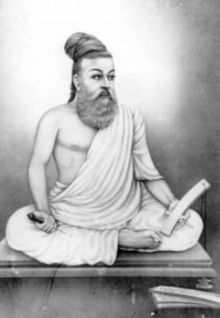
Achan had bought S. Rameshan Nair's translation of the Tamil sacred work, Thirukurral, while he was in Chennai. I have read this ancient masterpiece only in very small bits and pieces online. Since my Tamil reading skills are practically non-existent, I never attempted to read the beautiful cadjan leaf type copy that Chalam has at his home in College Station. I learnt to read Tamil in my four years of hostel life during undergrad. But piecing together the letters in the song titles displayed in the lower half of the television screen during all night song shows in Sun Music channel can only get one so far.

S. Rameshan Nair spent a decade preparing the Malayalam translation. The back-flap of the book says Thirukurral is the second most translated work in the world next only to the Bible. I had thought that the second place belonged to the Communist Manifesto.

I read the first three chapters while walking this morning and was utterly fascinated by this verse
Thupparku Thuppaya Thuppaki Thupparku
Thuppaya Thoovum Mazhai
The second chapter that contains this verse is titled Vaanchirappu or in Praise of Rain. It is quite interesting that Thiruvalluvar considers it appropriate to praise the rain right after the first chapter praising God and before the chapter praising ascetic life. 
This verse in direct sense praises rain for not only being the cause of excellent food (farmed) for the people but also becoming a food itself. Outstanding lyrical quality of the lines. When recited quickly, it sounds like rain itself and almost attains the meaning "look, look, look at the rain" (ithu paar, ithu paar, paar ithu thoovum mazhai). Deeper, there is the spiritual sense of raining on the soul and the Ultimate Cause. 

Most of the day passed in revising flight mechanics and aerodynamics concepts that have been long forgotten. Thirukurral and the BBC Radio 4 thankfully form excellent interludes in the aerospatial academic pursuit. Radio 4 has a 3 part series on the much neglected and ignored history of Germany before the 20th century. The first part, now online, discusses the Prague defenestration (I had encountered that word earlier only in Calvin & Hobbes) leading to the 30 year war and the fascinating diary of the soldier named Peter Hagendorf. 

Amma will fly to Bangalore in the morning and Achan will leave for Kochi in the afternoon to attend a wedding on Sunday. My astrologer uncle said that he would drop by for some discussions. Achan dug up his old diary from 2000 to discover that he too had his surgery on November 11th in the same hospital. This coincidence should keep uncle occupied. 

Unniyappam recipe: http://www.reciperoll.com/2011/04/kerala-unniyappam-neyyappam-vishu.html
Lal enjoys unniyappam 0:26 into this scene from the biggest hit of the year, Salt n Pepper: http://www.youtube.com/watch?v=NTHkJrXY3RU

20120204

Tests (BH:D78)

October 20, 2011

The road that leads to the Lords hospital complex in Anayara from Pettah is so bad that even if you don't have hernia while starting for the hospital, you will have one by the time you get there. Adding to the constant shaking of the autorickshaw was the wait at the railway crossing for couple of trains going in opposite directions. My judgments are perhaps too harsh because I am anxious about my first hospital visit in over a decade. I was dressed in 'mundu' and shirt for easy check up. The hospital waiting area with coffee colored plastic chairs is packed at 10:30am. It takes a while for Amma to get her bearings. She was here 11 years ago. In a few seconds, she locates Dr. Haridas's office. 

In the spacious office, a junior doctor and a nurse sit on either side of the doctor in the classic triumviral idol arrangement common in Hindu temples. The central figure is in his late 60s, a good old FRCS, still appearing like he is pushing 50. Neatly oiled hair combed backwards revealing a high forehead with hints of wrinkly streaks, intelligent sparkle in the eyes behind rimless spectacles and a dyed, trimmed, handle-bar mustache, Dr. Haridas is an oxymoronic jovial authority. We shake hands. Before I begin to speak, he says, "At the outset, I can tell you that you must lose another 10kg." He asks my height and weight. His hunch is right. I am 10kg overweight for my height. He enquires about my life in the USA. While we talk, Amma's uncle telephones him. They have been good friends from our native village. 

We proceed to the examination room. Eyes have never been widened at the drop of my pants or rather mundu before. Unfortunately, in a doctor's office, it cannot be a moment of pride for the juvenile male fantasy of onlooker jaw-dropping to play out. I resist the instinctive wink and smile. The doctor is curious about what my body has managed. He suspects that I have had the problem since birth and allowed it free flow, so to speak, for 33 years. 

We step back into his office. He quickly orders a full regimen of tests. He wants to do this surgery himself, so he flips through his diary and I notice the absence of computers in the room. Amma is anxious about any possible scarring. He searches for a day not packed with surgeries. "Let's fix it for the the 11th...Laparoscopy," he says. 

11-11-11, the special date once in a hundred years. I was reading yesterday how Hollywood, Bollywood and Kollywood were reworking their movie release dates for this special day. I am slotted to have my big release from this nagging problem as well on this memorable date. 

Amma goes back to work while Achan and I move onward to the payments and tests. The door of the sample collection room is crowded by those giving samples and collecting results. Absolutely painless, expert blood extraction. Next urine. I am on my own for this one. No expert assistance. I remember the numerous wonderful waterfalls of Munnar. It works. 

The X-ray and ECG rooms face each other. First, the chest X-ray. Off comes the shirt in front of an apparatus that looks like a death ray machine from a 70s sci-fi flop. The nurse asks me to stand on a platform, press my chest against a board and rest my chin on its top edge. My shadow on the wall in front reminds me of the French nobles during the revolution. "Kayy kootti ketti amarnu nikkane" (Lock your palms and press on the board) instructs the nurse. "Njan parayumbo shwasam valichu akathu vaykane, vidathe" (When I ask you, take a breath and don't exhale) she says as she switches off the lights and goes into an adjoining room. "Swasham pidikoo," (Hold your breath) she shouts after half a minute. It's over in a split second. I was half hoping to see my skeletal structure on the wall in front. 

I move across the waiting area to the ECG room. The same nurse asks me to lie down shirtless and without my wrist watch. A "viroopaksha" (ugly eye) mural type drawing of a dancing Ganesha stares down from the wall. His crooked eye appearing straight from my supine pose
. 
Nurse proceeds to squirt gel on my wrist and ankles before clamping sizeable car battery jumper cable type leads. More gel on the chest before suction cup leads attach with a pop. With all the wires and the leads, I imagine I am under attack, a half-hearted one, from a grey, rubbery, lean tentacled octopus that has been dieting. I ask the nurse if there will be any invasive probing. She politely says no. My alien abduction simulation dreams pop. 

As she gets the machine going, I make conversation. Ambika nurse hails from Alapuzha though her dad is from my Amma's village. I ask her what the gel is made of. She simply says it is ECG gel. I am asked to hold still for a minute. I alternate my gaze between Ganesha and the ceiling fan. The suction leads come off with a slight pinch. I double check my mind: No, nothing sexual about them. Ambika asks me to get the ultra sound scanning done as early as possible because the radiologist might leave by noon.

At the ultra sound scanning room, the nurse asks me to drink some water and come back. I obey and wait for her to call. Couple of young men are also waiting. They speak a strange language. Achan speculates that they might be from Maldives. 

Inside the scanning room, the radiologist asks me to pull up my shirt and pull down my mundu. He squirts the gel generously on the scanner's head. I repeat my query about the gel's composition. "It is gelled water, " he says. I pretend that I understand what that means because he is applying good amount of pressure over my liver. As the scan proceeds downwards, he shouts the conclusions of whatever he sees on the monitor. The nurse on the other side of the curtain types them into the desktop. Looks like my inner organs, liver, spleen, pancreas, prostate, kidneys, testes, are all in working condition. When he is done, I resemble, from chest down with clumps of wet hair and skin, a well-licked calf.

Achan and Amma had fond memories of the hospital canteen. So we decided to have tea before going back home. The canteen has changed much in the last decade. The lady at the counter was having a loud discussion with the one in the kitchen through the hole in the wall. Our order of two teas, one without sugar, is obviously an undesired interruption to the character dissection they were so heartily enjoying. Nevertheless, good tea.

Next to the canteen stands the new building of the Lords School of Nursing. I read this morning that of the 70 member emergency nursing team assembled for India's first Formula 1 grand prix that is scheduled for the 30th, 60 are Malayalees. I think internationally Malayalees can be suspected of monopolising nursing. Achan remarks that Christian families have been encouraging their daughters to take up this profession for nearly one hundred years. 

A rather narrow road through a residential area leads to the hospital and consequently out of it. So it is difficult to get an autorickshaw for hire. After a few minutes, we managed to wave one to stop. He agrees to take us to Pettah junction. The empty cooking gas cylinder lying on its side behind the passenger seats, bumps up and down on the bad road. There is a good poster of the majestic tusker, Pambadi Rajan, on one inner side wall of the rickshaw. 

The district block member cousin, Kala chechi, and her son, my nephew, visit in the evening. She was in the city to attend a one-day seminar on the Right to Information Act. She took the opportunity to bring new spice powders so that Amma can take them to Bangalore day after tomorrow.

News channels and websites are reporting that Col. Gaddafi is dead. Will we ever know? The news of the physical death of belligerent, violent men of action of this world has simply become an indication that they would no longer have a public life.

Sowing (BH:D77)

October 19, 2011

Our neighbor's father-in-law is nearly 90 years old. He has been staying with her for the past few years. Two of his sons, one among them her husband, have passed away and a third one is in the USA. He needs a wheel chair and suffers from all the aches and pains that come with the age. His sole caretaker these days is a 30-something man named Joy. The only time I have seen Joy leave the old man's ear-shot is during his afternoon nap. At that time, Joy usually sneaks to their backyard, squats behind the washing stone and smokes a beedi. This old man was once a rich and powerful figure in his native village. He owned 140 acres of land, most of it a rubber plantation. Today he is confined to a bedroom in his daughter-in-law's house and is completely dependent on an unrelated Joy who lovingly calls him Achan. 

I read yesterday about billionaire Vijay Mallya's plans to raze his ancestral home in Bangalore and construct a 34 storey apartment complex with a penthouse resembling the White House. Times of India today speculated on its website that the Ambanis haven't yet moved to their nauseatingly opulatent billion-dollar eyesore in Mumbai because of some Vaastu defect! Both Mallya and Ambani have way more than 140 acres of land. I hope they will have more than joy in their final years. 

To avoid disturbing the old man's afternoon nap, Achan decided against preparing the soil for new okra planting near the wall next to the old man's bedroom. The man is an early riser and listens to All India Radio from 6am. Achan postponed that bit of labor till tomorrow morning. The last round of okra seeds, planted a week ago, did not sprout. Achan went ahead this afternoon with the preparation of a platform for replanting red spinach saplings. A handful of pumpkin seeds we threw near the coconut tree have sprouted into healthy young plants. 

It rained heavily in Thiruvananthapuram during the couple of days I was in Mumbai. The new Malayalam month of Thulam famous for its rain called "Thulavarsham" started yesterday. I spent most of yesterday preparing the notes from the Mumbai weekend. The couple of hours of note making everyday brings me great pleasure. So yesterday (BH:D76) I had 6 full hours of it.  

Achan is going full steam ahead with the backyard vegetable garden. Much to my frustration, I cannot be of assistance except making him the evening tea and putting in a small teaspoon of tabbooed sugar for him in it. He hates drinking tea without sugar but Amma is strict in the mornings about keeping his bloodsugar level in check. Unpalatable political news in the Malayala Manorama and the sugarless, salted black tea in the mornings provide excellent facial muscle exercise for him. 

Clearing up the small plot for the spinach makes Achan sweat profusely in the afternoon sun. The plot is readied where our old firepit, lined with red bricks, stood. So the soil here is effectively black ash from 15 years ago. But there were far too many bricks to be removed than Achan had imagined. While sipping tea, he recalls that his father used to make fun of him for having a "kalla-kurukku" (cheating/faking back) which pours forth numerous rivulets of sweat even when the labor is little. 

I am staying away from gardening because I have a hospital visit coming soon. Nothing complicated, just one of the routine procedures a sizeable minority of men go through. I haven't been to a doctor in 11 years. Not because I am superhealthy but because major health issues have stayed away despite my lifestyle. But that lucky streak seems to have ended and my astrologer uncle's prediction has materialized. Amma made it a point to remind me of uncle's prediction. I guess this means she is prepared for my predicted out-of-caste bride! Tomorrow I have the doctor's appointment. Besides restoration to health, this short hospital stint should also give me an intimate view of the healthcare system in India. 

The Hindu newspaper today proudly published a letter to the editor from the famous writer Khushwant Singh. Mr. Singh wrote that he reads around a dozen newspapers everyday, both Indian and foreign, but none of them cover to cover like the Hindu which he says is unmatched in the quality of its articles and news coverage. He "even wrestles with its crossword puzzle everyday". Glad to have such an illustrious compatriot in that wrestling! I am sure the Times of India group will pay some literary whores to write similar letters about its yellow paper tomorrow.

One of the pioneers of modern Malayalam literature, Kakkanadan, passed away today. I haven't read any of his novels but stories I have. In an interview from 2008, republished by Mathrubhumi news on its website today, he says that it was from the habit of telling stories to his brother, 8 years younger, that he acquired his taste for literature. Kakkanadan, like O.V.Vijayan, was one of those leaders who freed Malayalam literature from its fantasy and pulp boundaries and injected harsh realism. In Mumbai, last Sunday night, while watching the smouldering glow of the city lights resist the envelope of the night in the horizon, I had remembered Kakkanadan's words about Mumbai, "Ivananu mahanagaram. Sirakalil lahari padarthum nagaram" (He is the metropolis. The one who spreads intoxication in the veins).

To end with the Hindi music trivia. Salil Chaudhary admits that the inspiration for his huge hit song from the film Madhumati comes from an old Polish folk song. Here's the film song: http://www.youtube.com/watch?v=vsSh35RThDM and here's the inspiring tune: http://www.youtube.com/watch?v=7FSFYLvL5lg

20120203

Friends: Old & New (BH:D75)


October 17, 2011

Monday morning, after checking out of the guest room, Vishnu gave me a quick campus tour in the car. I say checking out but the preferred usage in India is "to surrender".Indians like to surrender everything: rooms, cooking gas connections, telephones, cable TV...almost all amenities and previleges. 

The campus hostels have all received commendable facelifts. Across from Hostel 2, where once stood a Chinese food shack upstairs, our go to place for chicken garlic and veggie manchurian, now stands a state of the art air-conditioned indoor swimming pool. Hostel 3, my home for 4 years of bachelor's degree (when I was strictly a bachelor), sports a reconstructed mess hall. Outside Hostel 5 is a new fresh fruit juice stall. Hostel 6 used to be the end of the universe back in the days. Today, new hostels 12 and 13 stand proud in that area. A hostel 14 is under construction.

I wonder about the conical structure accompanying the new hostels. It looked too elaborate for a security room. Vishnu enlightens me that it is the entrance to the underground mess hall. This dining hall had a partly mechanised kitchen. But this architectural beauty proved a little imprudent in last year's heavy rains in the city. The whole underground area was flooded and kitchen needed replacement. Later on Vijayalakshmi aunty told me that one of her official guests from Europe who was put up in the new Renaissance hotel that flanks lake Powai had seen these new hostels and requested to be transferred to these "hotels" that are closer to the office buildings. I am told the new rooms have concrete and stone beds and tables to save on cost and maintainence. 

Couple of new gardens, couple of new synthetic tennis courts. A small army of men were at work maintaining the green hockey field. Certainly more young ladies on campus. Good luck with those bachelors degrees to everyone who is in pursuit.

Right after 10:45, Sundeep Kapila telephoned to say that he is starting towards the campus from Arey colony and should be able to meet me by 11:30. Kapila is without question the friend with whom I have spent the most amount of time on this campus. Numerous rides on his sputtering but reliable old Chetak. The back cushion of that scooter was screwed down. It would go flying whenever a speed breaker tried to break the speed and my momentarily levitated ass would land back on the cold metal surface. We had a weekend ritual of riding on it to Shreyas theater in Ghatkopar to watch whatever atrocity was being projected on the screen. 

By 11:30, I waited for him outside the faculty housing called the white house. The cows were grazing, bulls were herding them, cranes were looking for dung maggots, I suppose. Outside the campus wall, Mumbai flowed restless in perpetual heat. 
Kapila came on a motorbike. He had sold the scooter in his final year after I had left. "Idhar hi kahin ho gaya" (It'll be somewhere here only) he said. He has sold it to a staff member on campus. On his bike to the coffee shack. Parking carefully between two freshly laid steaming hot piles of cow dung. 

We reconnect where we had left off. Kapila wonders how I managed a PhD! "Saale, tera BTP tu ne mujhse karwaya tha!" (You had made be do your BTech project). He rues the fate of Indian Space Research if I begin teaching here. He asks if I had written any new plays. I give him the 2-minute synopsis of Kumbhakarnam. I find out more about his life. From campus, he went to work straight for an MNC. Had a good stint. Quit couple of years ago to start Swasth India. I listen wide-eyed as he narrates the progress of that venture. Commendable social service. I couldn't help being proud of this young man. 

We met for all but 15 minutes but that was enough to erase the decade of absence from each other's lives. 

12:15, Rajan uncle drives us outside the campus to get a taxi to the airport. Luckily, aunty's nephew and family are in the same flight. So I have company. The taxi driver agrees to make the trip for Rs. 250. He pours water into the radiator and we are off. Hardly a minute into the road, a policeman waves us down. The driver pulls to the side. We were supposed to take the outer lane but the driver didn't want to be slowed down. The level-headed and well-behaved policeman doesn't fit the stereotype I had in mind. The driver apologizes profusely. "Agli baar nahi jhodunga" (won't leave you next time) we are let off with the warning.

The trip in the heat is a nightmare. The driver curses the heat and the traffic. Multiple near-death experiences, let me tell you, are nothing like multiple orgasms. At one point, a huge truck swerved so close to us that I instinctively moved closer to the driver from my seat. Some red lights are meant for decorative purposes. Those who find them entertaining can stop. Rest of Mumbai is busy moving.

At a red signal near Ville Parle, we face a huge hoarding of Tata Retirement services. Three faces stare down at us: men of different ages. A young man with a stylish leather jacker, a middle aged, slightly balding man with a dinner jacket and finally an old man with a winter jacket. The theme is that Tata retirement services got you covered at all times. Our driver cannot read English. "yeh kuch lene ki baath ki halath dikhaya hai kya" (Is it some before-after photos of some medicine) he asks about the three similar looking models featured in the hoarding. I explain what it is. "Tata tho bahut bada company hai! Acha hi hoga" (Tata is a huge company. It will be good). We move on.Was he thinking about retirement?

The 25-30 kilometers I travelled within the city, not a single beggar was in sight. I wonder if it is impossible to survive in this city by begging or if the city manages to provide means of livelihood for everyone who migrates. 

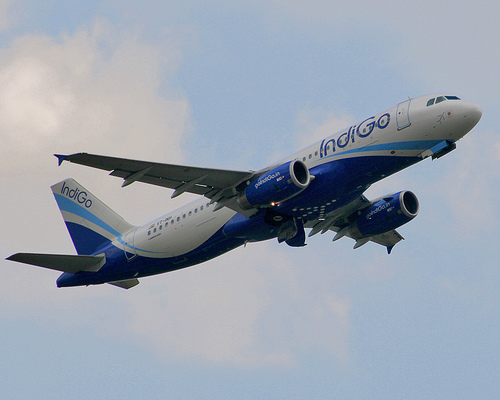
We make it to the airport in 40 minutes. Long queue at the Indigo check in counters. Staff members hurrying the "Lucknow-Patna" passengers through. A young Malayalee mom at the check-in counter 33 calls out to "Sharada-akkan", her old maid servant, who is taking care of her baby boy in the waiting area. She loses patience as Sharada-akkan takes her sweet time to finish feeding an orange to the kid. 

Past the security check, onto the crowded lounge. I visit the men's room. All the urinals are occupied, I point towards one of the toilets to the staff member standing with the mop. He opens the stall, soaps and wipes the commode, mops the floor, flushes...everything in 30 seconds. I tip him when I come back and from his grateful expression I assume that many don't.

Most of the crowding in the lounge is because the sun shining through the huge glass skylights render a slowly shifting pattern of a couple of dozen chairs uncomfortable at any time. In the 10 minutes available before boarding, I reflect on the slow genetic mixing of the races in the subcontinent; the thought process triggered by the textbook aquiline nose of the middle aged woman sitting three rows away.

As if to make up for the delay in my onward flight, Indigo flight 177 to Thiruvananthapuram takes off 15 minutes early. Before take off, the woman in the seat across from the aisle refuses to remove her choir bag from between the chairs. "Madam, in case of an emergency, this will block this young lady" the air hostess, semi-squatting on the aisle, tries to explain the safety priority. "But I have been coming like this only from Delhi...from Delhi" says the woman wondering if the air hostess didn't get the memo about unbroken 'jalebis' and uncrumbled 'laddoos' being more important than human life. A minute before take off she agrees for a compromise. One of her other bags can go into the overhead bin and this sack can sit on the seat. And in the exact moment the aircraft tyres leaves the ground, she talks to someone on the cellphone. She covers her mouth with her palm as she speaks. Despite that precaution and the engine sound it is clear that some 10 lakhs needs to be arranged by the night. 

The seat next to me is vacant. The young man on the window seat is sleepy. I continue reading M.N. Vijayan's "Vaakkum Manasum" (Word and Mind). Vijayan discusses deep seated complexes and hysteria. The woman across the aisle continuously eats during the trip. An apple followed by spicy potato chips as she browses real estate ads in the Times of India Delhi edition. Finally, she starts chewing her nails. Jung, Sartre, Lacan and Freud, discussed in the book, would love to have met her.

Captain begins descent 200 km away from Thiruvananthapuram. Burnt styrofoam type clouds over gorgeous Arabian sea. Aircraft banks to reveal the greenery of the city. The landing gear drops with an irritating noise as if a huge zipper is being repeatedly opened and closed. Safe landing. 40 minutes ahead of schedule.

I call Achan to find out how much I should pay for the autorickshaw home. He says a little over hundred rupees. As I walk down the road towards the airport compound gate, rickshaw drivers and their agents approach. 
"Vellayambalam ethrayakum?" (How much to Vellayambalam?) I ask. 
"Saar ethra tharum?" (How much will Sir give?) they answer with a question. 
"Ningal para" (You say) I insist. 
"Irunoottambathu" (250) an agent says. 
I laugh out very loudly and continue laughing for a few seconds. That scares a few agents away. "120" I say. "Koode oralu koodi kanum" (it will be a shared ride). Fine by me.

A young man was waiting in the rickshaw. Obviously not a Malayalee. 
"How much are they charging you?" I ask him. 
"200 to Kowdiar" he says. 
"You are not from here" I seek confirmation. 
"I work for Air India, they have given me a flat in Kowdiar". 
"What do you work as?" 
"I am pilot" 
"I am an Aerospace engineer". We shake hands. He was genuinely pleased. 
"It is such a great pleasure for us pilots to meet aerospace engineers" he says. I keep a lid on my stock market inclinations. 
Wonderful ride home. New friendship. He is now based out of Thiruvananthapuram. Flies Chennai-Bangalore, Thiruvananthapuram-Delhi and a few other routes. Was staying at Kovalam. Recently moved to Kowdiar. 7 other pilots from his batch are staying in different parts of the city. 

I tell him about my Austrian friend from Amarillo nicknamed 'airplane whore' for his ability to and excitement for flying any type of aircraft. "That's how it should be. You can ask any pilot. They would tell you that the best thrill is to fly new, untested designs and aircrafts. " He had wanted to be a pilot ever since he was in primary school. "Now but I want to be a director. I love watching movies in any language." Hindi film director Rajkumar Hirani's wife is a captain flying with Air India. He had approached her for opportunities in the film industry. 

Born in Bihar and raised in Delhi, he wanted to join the National Defense Academy but ended up getting pilot's license from a school in Philipines that operates out of an American base. He is deeply impressed with the recent progress in Bihar and would like to go back and settle there. We exchange numbers. I promise to help him explore the city, "such a clean, laidback city with so much history" and introduce him to a few Malayalam movies.

My home. My room. My bed. Best part of any trip is the return home. With rekindled old friendships and exciting new ones.

20120202

A Mumbai Engagement (BH:D74)


October 16, 2011

The name Powai comes from the erosion of Padmavati. The Padmavati temple stands inside the IIT campus overlooking the Powai lake. The main diety is a jet black stone with facial features and piercing eyes that has been recovered from the lake. The temple in its current form was built in 1975 and was dedicated by M.S. Subbalakshmi, the carnatic vocal legend!

A metal grill fence to guard against the lake's crocodiles, a new gateway arch and paved path have been added in the last decade. It is in this temple that Vishnu, my cousin, was to get engaged to Lakshmi. Vishnu and Lakshmi, those familiar with Hindu pantheon would recognize, are a match made in heaven. When I reached the temple, the Phd students of Vijayalakshmi aunty, the groom-to-be's mom, were hard at work creating color powder rangolis. Couple of these students were married, so their wives were also directing and assisting in the endeavor. It could be because they were all nanotechnologists that major attention was paid to minor details. Across the globe, PhD is 50% personal relationship with the advisor. The other 49% is luck.

While waiting to be dropped at the temple, I watched a documentary on Choice dairy farm on the Asianet channel. The cows wake up to the Ilayaraaja song in Mohana raagam from the movie Sagarasangamam, "karmekha varnante maaril...". Only the cows that give more than 30 litres are milked using the machine. The owner of the farm has developed a new fodder composition which saves him Rs 5 per kilogram. 

At the temple, most of the guests arrive by 9:30. I recognize plenty of the old smiles aged by a decade. Balachandran uncle, Mohan uncle, Annie aunty, Dr. Sudhakar....Numerous enquiries about my marriage plans.

Vishnu dressed in a splendid kasavu double mundu walks with baby feet like a coy Japanese lady in kimono. The auspicious time is between 9:30 and 10:30. Even by the standard watch advertisement time of 10:10, no sign of the bride. Vishnu stands with the "she will arrive, won't she?" expression. In a couple of minutes, three cars pull up. The bride-to-be in all her splendor. But all eyes are quickly diverted to the long haired, black bearded man in white kurta-pyjama who is wearing more gold than the bride. He has thick chains on his neck. They rattle when he shakes his head. On both arms, bracelets, bangles, bands of gold. At least 15 rings on his fingers. A prominent red kumkum vertical streak on his forehead.

Guest speculate about his identity. "Must be a spiritual guru" opines one uncle. "His family must be letting him wear such things so that he feels good," suggests another less generous uncle. Turns out he is a close relative who happens to be the leader of a local political party. This is their standard outfit. Accompanying him are three scary bodyguards who must be spending every waking hour in the gym when they are off duty.

The ceremonies proceed quickly after an impromptu prayer by one of aunty's PhD students. His dad happens to be the head priest at the famous Ganesh temple at Pazhavangadi Thiruvanathapuram. So he was the default choice. The fathers exchange horoscopes. The progenies exchange rings. Marriage is announced for February 9th. Applause. Onto 'vada', 'laddoo' and tea.

Since it was not the examination season, very few student visitors at the temple. 

After the snack, lunch at the newly constructed Gulmohar hall near the IIT guest house. I notice the gold-clad political figure talking on his cellphone outside the hall. The bodyguards are a few feet away. I couldn't resist walking up to him.
"Saaru malayali aano?" (Are you a Malayalee?) I ask
"Athey" (yes) he is undecided whether to smile
"Born and brought up bombaya?" (were you born and brought up here?)
"hmm...anaganeyum parayam" (Pause...you can say that)
"Politicsila?" (Are you in politics?)
He shakes his head and smiles.
"Naattil evida sthalam?" (Where in Kerala are you from?)
"Kozhikode"
For me, this man is the posterchild for the immense adaptability of Malayalees. 

More introductions and reintroductions at lunch. Even a relative hailing from Amma's native village is revealed. Annie aunty had gone home after the morning ceremony to fetch me a photograph of me and Vishnu from 1996 when we went to her apartment to attend a Holy Communion. She said she remembers me very well because I had hosted the L. Subramaniam-Kavitha Krishnamurty concert at IIT in 1999. 

In a conversation about men who wear gold, naturally Hindi film music composer Bappi Lahiri's name comes up. Vishnu's friend recalls that once at an airport a bunch of people including himself went into the men's room just to see how Bappi Lahiri manages all his jewelry when he goes to pee. They discovered that he grabs the necklackes hanging all the way down to his belly in one hand and flings them all backwards in one go. None of us wanted to hear the subsequent steps.

Vishnu had arranged a celebratory dinner at the Mirador hotel in Andheri. While waiting to be picked up from the guest house, I watch the beginnings of a Kannada move. The hero bashes up some white goons in an American bar. Then he sings about his super rich life. Like Bruce Wayne's Alfred, his butler advises him to go back to India to manage businesses there. "Prepare my jet" he says and the next shot shows a 747. He lands in India, is stuck in traffic. "I need a helicopter" he tells his manager and just then he notices the heroine, waiting for the bus across the road. He dreams and sings in his dream with her in Spain.

An arrangement of heliconias greet us at the hotel. We were half an hour early for the buffet. We go upstairs to wait at the cafe. Sitting around in sofas a bunch of young Indians were trying to convince some Japanese to invest in their business. Laptops on the tables, writing pads in hand, anxiousness in the eyes. 
The cafe bakery's chalkboard announces a wide 'verity' of snacks including 'browine' cookies. 

8pm: Sumptuous buffet. Live music. Keyboard and Guitar. The man of the one man show aspires to look like Jagger and Depp but less wrinkles and less hot. The suit burdens his frail frame. Long hair resembling trails of smoke from invisible ciggarrettes hidden under his cowboy hat. He nails a few Elton John songs. 
I catch him taking a break and walk up to say that he is a good performer. He says he will come over to my table. When I am relishing the custard, he arrives. 
"Are you from Kochi?" he asks
"No, Thiruvananthapuram" I say
"Only south Indian guys stop by to appreciate" 
"What is your name, Sir?"
"I am Khan....and I am not a terrorist"
"You don't look like one"
"Is there a standard terrorist look?"
"Touche"

He goes on to talk about his admiration for south Indian composers while finish my dessert. "They are all so well educated and not just in music." We talk about Jassi Gift's pursuit of doctorate. Mr. Khan sings at the Mirador all nights except Monday or may be it is Tuesday. I forget. The dessert was brilliant. In his second session, he sang some old classic Hindi songs with English words inserted. Went well with the crowd. "I pick the songs based on the crowd" he had said earlier. One of his numbers was greatly appreciated by one particular table who clapped hard and long as if they had a localized mosquito problem.

The night continues with food, drinks and laughs. I am informed that it is bad luck not to look at the other person's eye while clanging glasses for cheers. Such horrendous bad luck that brings seven years of bad sex. I knew that if you are unable to look the other person in the eye and hold your glasses steady for cheers, at least one night of bad sex is guaranteed. May be there is a ritual that can rid one of the bad luck. Five coconuts, perhaps? 

The plans to move the party to Elbo Room pub are shot down. Obligatory commemorative photo taken outside the hotel so that facebook tagging can complete all the introductions. 
Vishnu drives us back. Mumbai has traffic jams at 11pm. And the drizzle is not helping. Small pools on the road where new gigantic concrete pillars for the new metro rail are being erected. 
Back in the room, I let Kannada film songs play while I sleep. They should scare the hell out of any sneaky leopards.

20120201

Back on Campus (BH:D73)

October 15, 2011

The private airlines Indigo is known for their punctuality, so almost everyone I talked to this weekend in Mumbai were surprised that my flight from Thiruvananthapuram was 2 hours late to depart. On Saturday, by 9am I received a text message saying the 10:45 flight was delayed to 11:45. Amma dropped me at the domestic terminal of the airport. The single guard at the entrance, automatic rifle hanging to his side from a belt across the chest, examined my passport issued by the Indian consulate of Houston.
"You are smiling in this photo?" he quizzed with a smile.
"It was a happy day" I replied. It was the correct answer. I was let inside. 

While checking in, I am told that the flight won't depart till 12:05. After clearing the security where the guard with the magic wand initialises it on himself by tapping twice on his own belt buckle, I went upstairs to the new louge. The lounge was a fabulous "set-up" as Murugan, the driver from Munnar, would say. Deep sinking leather chairs which haven't had the time to crack or human exfoliation performed. Brass lamps, elephants, lions, drinking water fountains and clean toilets. 

Every few minutes, the announcement repeats citing the cause of delay as the lateness in another aircraft's arrival. I am glad they stop at that without tracing the cause all the way back to Wright brothers. An enormous young man in an embroidered dark gray kameez fills the chair in the opposite row. He munches on an apple while informing people in Mumbai about the delay. The 17" Dell laptop looks like a tablet PC on his lap. But with delicate moves of his chunky fingers, he pulls up an album of his baby boy and watches the slide show. 

An Indian mom chases after her little daughter who is running behind an American boy. Couple of aging British girlfriends discuss their trip. A Belgian family: mom, dad and three twenty-something kids plopped down their carry-ons and immediately proceed to reading. Anyone who believes that reading is dying should visit this lounge. Every other person is lost in a book. The young man sitting next to me is enjoying how Nassim Taleb was Fooled by Randomness. He laughs once in a while. The Malayalee with uncombed hair is reading "Maalakhamarum Chekuthanmarum", the Malayalam translation of Dan Brown's Angels and Demons. 

12:40: finally boarding. The ground staff and crew of Indigo are all in their twenties which probably explains why it is the most efficient, fastest growing airlines in the country. The all female cabin crew are dressed in indigo frocks that stop tantalizing above their knees. This single piece tight dress caused much discomfort to one of the shorter hostesses who was tasked with closing the overhead bins before take off. She needed her best stretch to reach the shutters. To prevent the dress from taking off behind her, she kept her left hand on the small of her back as a stopper. With the fingers facing outwards and the palm ever so slightly lifting upwards each time she reached for the shutters, it looked like she had a bunny tail. 

I paid very little attention to the mandatory safety briefing. The brand new A320s, I consoled myself, are very safe. My confidence appeared misplaced when an excruciating whirring noise came from the left engine as the aircraft accelarated. It stayed on till we reached cruising altitude. It was that same painful humming that comes from machines with blown capacitors and stuck fans.

I was in seat 4C. In 4A and 4B were Vasudevan Nair and his wife Rema, a couple in their 70s, going to Delhi to be with their daughter for a month. Their son had left for Dubai that morning. "I worked in Delhi for 51 years," said Mr. Nair. Indigo doesn't serve free food. Their expensive menu items come in quaint packaging like kulchas in giant matchboxes and Samosas, which Mr Nair bought (Rs. 100 for 2), in newspaper bags. The samosas come with disclaimer that they are being served at room temperature. The room being the airconditioned aircraft cabin, it is pretty cold service. 

Mrs Nair had packed soft home made chappatis and potato roast. They insisted that I share. I quickly dispensed with the polite refusal ritual. The delayed flight was creating engine noises in my tummy. I happily tucked into the potato roast. The universe, hopefully, will continue to send me benevolent Rema auntys with great food. The air hostess was sympathetic enough to provide free water to help the consumption. Mr. Nair added spice to the meal with a tirade against the politicians. 
Our mallu-accented captain informed us that we flew over Mangalore and Belgaum. 

Mumbai, the bigger apple, has grown bigger. The roads are wider, there are more flyovers and bypasses, more mini-cities within the city, yet all neutralized by exponential growth in the population. 
I try not to let the overwhelming congestion of the city invade our little blue WagonR taxi by catching up with Pillai uncle who had come to pick me up. He discusses his retirement plan. I discuss my career plans. His plans are better. Our sardarji driver disapproves other drivers from time to time.

Nearing the Indian Institute of Technology, my alma mater, I see the complete makeover that the Powai lake shoreline has undergone in the last decade. Apartment towers and hotels make the hills between Powai and Vihar lakes look much smaller. The road in front of the campus is twice as wide. The good old bars and hotels demolished. Road might be wide but there is four times as much traffic. My cousin's family who only had his bicycle to count as the wheels of the household in the 90s, now have two cars. 

Quick tea at Vijayalakshmi aunty's new flat inside the campus. She used to work for the Regional Sophisticated Instrumentation Center when she was my local guardian 1996-2000. Now the center has been renamed as Nanotech Research center. She is guiding six PhD students. 

A room for me was arranged at the SAMEER guesthouse. SAMEER is one of those creative abbreviations. It stands for Society for Applied Microwave Electronics Engineering & Research. 
The room 105 in the guesthouse has a balcony overlooking an abandoned open air theater. A beautiful teak tree grows near by. Later in the evening I spotted a teak sapling growing on the wall of an abandoned building next to its second floor balcony railing. Birds! They crap at the most creative location. In this abandoned lot, a foundation stone with some unreadable names. A couple of rusted parallel bars. In the distance, the new apartment towers for the staff. Above them, in the distance, dark clouds ready to burst.

I call up Rajeev telling him that rains might spoil our plans. A facebook friend for years, this was going to be our first face to face meeting. He tells me that 45 minute downpour in the evening is a new Mumbai tradition. Rajan uncle, Viajayalakshmi aunty's husband, agrees to drop me at Aroma's, the cafe Rajeev was waiting at. I have never met a husband more proud of his wife's achievements than Rajan uncle. Exemplary! Aunty finished her PhD after their marriage and has steadily built herself a fabulous career in science. Uncle is all smiles whenever he talks about her conference visits to the far east and west. 

On the way, he stops to buy flowers for the engagement ceremony next day. Through the windshield of the Indica, I watch Mumbai flow by. Much surprise, seeing an IITian walk past with new can of deodarant from the medical shop in front of which we had parked. 
IITian with deodarant. A lot has changed in 10 years!

The campus roads are pretty much the same. The trees lining them still flourish, amply assisted by the copious amounts of dung the campus free range cows and bulls provide. I identified a couple of notoriously violent bulls from the late 90s. One of them had chased my bicycle all the way to the girls hostel once. I wondered what the life span of bulls are. If it is not the same bulls, then genetic replication is happening. Internet tells me that on an average bulls live for 28 years. I am sure that the well-fed, unincumbered, healthy lifestyle they enjoy inside the campus, would keep them alive and very much kicking well into their 50s. So it is the same bulls that still roam here with their harems. 

With three times as many students, hermitic life is much less possible. Even the dilapidated lake shack which one could sneak up to in the past, through a small forested area, now has a paved path. Private thought seems to have been banished. Funded research should flourish, I suppose, especially with the ever expanding school of management complex. 

World population is nearing 7 billion. Exactly half of them stay in the Hiranandani area in Mumbai. Through this human ocean in perpetual perfect storm, uncle navigates the car whose horn mysteriously died that afternoon. Perhaps out of shame. Perhaps out of exhaustion. I am sure cursing isn't all that sailors do. They must have prayed too. I prayed to nonexistent traffic dieties all the way to the cafe. After an excruciating 15 minutes, land! Before I drop to my knees on the pavement, I check for dog litter. In the meantime, Rajeev hurries out of the cafe, where I had kept him waiting, with a "Dr. Livingstone, I presume?" expression. My khakhi shorts and canvas shoes would have matched such a greeting.

Rajeev and I exchange scientific, psychological, sociological articles on facebook. By exchange, I mean, he reads and posts, I hit the share button. So it was only befitting that during our face to face meeting over Coronas and a cappuccino, we should discuss the most sophisticated of all subjects: women. The discussion was edged on by the apparent bevy of beauties walking in and out of the cafe. Apparent because I was facing away from the door and I could detect their presence only by the reactions on the male visages angled towards the entrance. I felt like a particle physicist at the Hadron collider making judgements on invisible rays based on the reactions caused.

Rajeev was the cake bearer for a birthday party that night, so he had to leave by 9:30. I logged on to facebook, the cause and channel of our friendship, from his apartment to tag our real world meeting. We ended the night with the agreement that Thiruvananthapuram, with orders of magnitude less noise and other distractions, would be a much better venue for discussions. 

Before turning in for the night, I ensure that the french windows are secured. Last year, couple of crocodiles killed a fisherman in Powai lake. Rain meant possible leopard intrusion from the Sanjay Gandhi National Park on the other side of the hills and lakes. I doze off listening to imaginary growls. It is incredible that such a green island with possible wild life is preserved within one of the largest urban concrete jungles in the world thanks to the vision of the fathers of this nation. Perhaps engineering education deserves more credit than it is usually given!