20120604

Tree Rain (BH:D 268)

April 28, 2012


The mango showers that lasted three days seem to have ended by this afternoon. Flaky, powdery rain during the morning walk. Closed the umbrella and walked enjoying the nearly invisible spray. "Maramazha" (Tree rain) regularly from the saturated tree canopies at every inkling of a breeze. 

The rain has opened up a deep, nearly perfect circle hole in the middle of an intersection in Jawahar Nagar colony. The road had been tarred only a few months ago. Some good samaritan has erected some tree branches and placed couple of orange traffic cones near it. It is no wonder that residents of Thiruvananthapuram feel the city is steeped in history and has several layers. Its depths are revealed by such holes very frequently all over the place.

Yesterday at the shopping festival, we found a stall selling mango juice. Mangoes across the country are not yet ripe. The 'Mango Fest' scheduled for the last week of May sounds like decent timing. Almost all the mangoes feigning ripeness in the market these days are cosmetically, chemically enhanced. 

Abhishek hails from Bihar, a state known for mangoes. He picked up a palm-size mango at the stall, smelled it and asked me to try. "Smell the carbide," he instructed. I had never associated the word carbide with the act of checking a mango's ripeness. I used to get strange looks in the Walmart and Farm Patch back in College Station for the olfactory inspection of fruits. I could indeed smell the carbide in that huge, yellow mango.

The central government has cut down the kerosene supply to Kerala. Fishermen with boats that run predominantly on kerosene are completely dependent on the black market which has been, reportedly, charging five times the usual market price. This is reflected in the market price of fish. A single squid had an asking price of Rs. 150 yesterday at Palayam market. The fishmongers there appear to have informally unionised against fish that come from slightly distant shores. Apparently the fishermen in the outskirts have diesel boats, so those familiar with the little nooks in the city where they come to sell can still find cheaper fish.

My inexplicable association with architects has kicked into a higher gear. Back in Texas, two of my roomies were architects and I became friends with their friends. This afternoon I enjoyed a fantastic presentation by one of the most experienced and established architects in the state. Ar. N. Mahesh's lecture was organized as part of Indian Institute of Architects' Update & Upgrade program. 

The man began his career back in 1975. Back then Achan didn't even know that Amma existed. As he narrated during the talk, his career began in a 110 sq ft room with an ammonia printer. Today his firm is the go to destination for all grand projects in the state: the gigantic Infosys ships, the Muthoot headquarters, the top of the line tourist resorts... 

Great to get a share of the insights on client, project and office management that he has gathered during his long and illustrious career. The combination of anecdotes, tea and masala vada was perfect for a cool afternoon after heavy rains. Looking forward to the remaining two modules of his talk. For some reason, his slides were graphics-free and purely textual. Hopefully, some memorable graphics will enhance the ones in future.

Like all experienced masters, he spoke with splendid clarity. Such minds are like those rain saturated trees. Refreshing shower of wisdom every time they are shaken ever so slightly.

Births (BH:D267)

April 27, 2012


Yesterday astrologer uncle had come around to make the traditional, customary visit for my sister's pregnancy. Discussions swirled around astrology, marriages, births, sickness and deaths; the whole works. I mentioned about getting a call from Saiju 11:38pm the previous night to proudly and happily declare that he has become the dad of another baby boy born exactly half an hour before the call.

"For a man who goes around doing calculations based on people's birth times, I was ashamed that I didn't know my own birth time," uncle went into story telling mode. "After a lot of searching, I tracked down an old aunt who I hoped might have a clue. It took her a while. After a lot of thinking, she said: When I was going to the paddy fields with 'kanji' (rice porridge) for the workers, Pankajakshi (uncle's mom i.e my granny) was cleaning fish for lunch. When I came back from the field, I heard your cries."

"This was all the information I had," he continued. "Traditionally I suppose 'kanji' for the workers is taken around 10:30-11 in the morning. I have written my birth chart with that estimate. Gone are those days when fully pregnant women would be cleaning fish minutes before giving birth!"

"Or the days when they would have 15-16 children spending the bulk of their adult life either pregnant or nursing," I added.

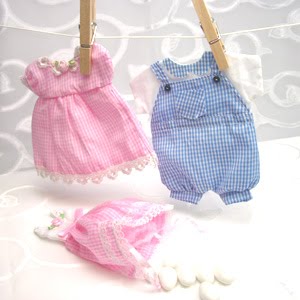
I remember seeing plenty of yard notices and balloons, pink for girl and blue for boy as per the ongoing fad, in College Station-Bryan announcing the birth of babies in the homes. And then there are the baby showers and the e-vites. 
In Kerala, till a few decades ago there was a tradition called "Naadariyikkal" which means "letting the village/neighborhood know" about births. A brother (there were plenty of siblings to go around in those days) of the new born was enlisted to carry out this ritual. If a baby girl was born, the brother would bang the heavy side of a coconut frond on the front porch of the house thrice. In case of a baby boy, a spatula would be banged against the side of a metal utensil thrice. I don't have authoritative information on who takes care of the ritual for the first born at a home.

Went with Abhishek to the substandard shopping fest that is in progress at Kanakakunnu Palace. Only thing worth noting were the signboards of "Lizard Replant" next to white balls of the gecko repellent. Spent a few minutes on Shashi Tharoor's dream flagpole that now serves as a 67 meter cylindrical metallic bench for visitors to the palace campus. 

Abhishek talked about how Kerala looks from the cockpit of his flights. "It is such a beautiful land. There will be a small lake and then we will see a bigger one and then an even bigger one. Beautiful blue and green. The mountains, when you fly in, it feels like it is just mountains everywhere. And they are so steep and appear to extend almost to the coast from that altitude. The contrast with Tamil Nadu is sharp once you fly over the Ghats. "
It is the mountains that made the Arabs call Kerala as Mala-bar, the abundance of 'Mala' i.e mountains.

Another pilot friend dropped me home. "You guys should preserve the uniqueness of Trivandrum." he says as we wait for the signal at Kowdiar. "It is sad to see that Kochi has become just another city with its traffic and tall buildings everywhere. Trivandrum is so beautiful with its narrow by lanes and old buildings. And it is so clean!" 
That is the certificate from a Delhiite to a city that hasn't had garbage clearance done for five months now!

Dam Safe (BH:D266)

April 26, 2012


Like the blind men who went to see the elephant in the fable, three journalist went and 'saw' a sealed, confidential report submitted to the Supreme Court about an old dam in Kerala that supplies water to Tamil Nadu. 

Staring into the thick manila envelop, the first one said,"Surely, the report supports Kerala view. I can almost read the pages that recommend building a new dam. Just as the people of Kerala wanted."

"It quotes the people of Kerala?" wondered the other journos.

"Of course not, who knows what the people want. Based on what the politicians want, we can know what the people want. Just as we know what's in the report by looking at the envelop."

"But I am seeing the report slightly differently," disagreed the second journalist shaking his head."The people of Kerala must actually panic," he said. "The report has completely rejected their demands and the research reports and studies that support those demands. The water level of the current dam is to be raised by another 20 feet."

"20 feet?" said journo numero uno incredulously.
"May be 18 feet. I can't see that well. But 20 sounds better than 18."
"And there will be a full two more feet to panic about. Clever!"

"I think you guys have got it all wrong," mumbled the third journo scratching his scruffy beard. "Most probably because the report is in English and you report in Malayalam.""What do you see then, smart man?" chided the other two.

"The report is clearly well balanced. Like our circulation in Tamil Nadu and Kerala. So the report says that the current dam is safe but a new dam is also safe."
"You mean safer?" asked the first journo anxiously.
"Don't be silly. Only nuclear energy is safer. That is our paper's stance."

"So Kerala wins," noted the first journalist.
"So Kerala loses," underlined the second one.
"Our headline will be long and ambiguous. That will keep our intellectual readers happy." reflected the third one.

"What happens when the report actually comes out of the envelop?"
"When is that supposed to happen?"
"Next week!"
"That is eternity in our business. Besides who has the time and patience to read through hundreds of pages"
"What if courts and commissions make their judgments and reports tweet-sized?!"
"We'll move that topless actress from last page to front page."
"Our jobs are safe."
"Dam safe."

20120531

Mango Showers (BH:D 265)

April 25, 2012


I am typing this from the cool comfort of the verandah. Till yesterday, seeking refuge indoors under the fan was unavoidable. But then it rained all night! Decisive, 'game-changing' mango showers!

The deep gray skies and the virtually omnipresent pothole pools of reflection left the city a self-conscious this morning. The drenched green canopies giving her what Kalidasa called the summer solaces that women bestow on their lovers with the cascade of bath-fresh hair. With each whiff of the occasional breeze, refreshing, cold surprises from the tree tops. On other days, the crows would have been the suspects. 

Since the label 'mango showers' had come to mind, I noticed the fruit-heavy mango trees inside Jawahar Nagar colony during this morning's walk. Mangoes of different shapes and shades of green mostly. There is one tree of the purple mango variety near the NCC office.

Though I didn't get to walk around much inside the IIT Bombay campus when I visited in October, with all the new construction, the number of mango trees there must have drastically reduced. In the 90s, the produce from all the trees inside the campus was so high that it got mentioned even in the Union budget. India continues to be the world leader in mango production by far with nearly three times the output of China. As early as last month, artificially ripened mangoes laden with harmful chemicals had hit the market. With the 'mango showers' finally here, it is time to look forward to fleshy, juicy, naturally ripeones.

While the rain began yesterday evening, I was inside the Bank Employees Union Hall near Kallamman Kovil at Pulimoodu. The monthly meeting of 'Narma Kairali', the local humor club headed by veteran satirist Sukumar was in progress. The rain might have been noisy but it couldn't beat the roaring generator outside the hall that kept going almost for then entire two and half hour event. Even then, thrice during the meeting, we had half minute long black outs.

Sukumar is an experienced hand when it comes to skewering politicians but the rest of the team was nowhere close to his caliber. I am pretty sure I am not biased towards the West when I say that stand-up comedy in Britain and USA are generations ahead of what I watched here yesterday evening. Couple of parody songs were funny. 

Only once barrier-breaking, original humor surfaced. Sukumar mentioned that a wiry, 50-something gentleman, in traditional, borderline religious costume showed up one day at his home. As soon as the door opened, the man said, "Saarine enniku venam. Saarinte body" (Sir, I want you. Your body!) Sukumar said his wife was shocked. She doubted if he has started experimenting with homosexuality as is the new fad among high society aged gentlemen in the city. Sukumar himself stood open mouthed. Turns out that the guest was a Yoga instructor and this was his opening line. 

The performers refer to notes and speak from a podium. A element of formality and ritualism hangs in the air. I felt this was a step backwards compared to the free flowing, stage utilizing, audience-involving performance of Chakyarkoothu which is a true precursor of stand-up comedy. 

The hall however was packed and there were some wives accompanying their husbands. Applause and laughter were limited mostly owing to the abundance of recycled jokes presented and the substandard delivery.

Recently, during a house visit I was offered a concoction brewed from a powder mix of coriander, dried ginger, cardamom, fenugreek with jaggery. It feels like an illegitimate offspring of the popular 'rasam' dish and the common 'chukku-kaapi' (dried ginger coffee). And like all this illegitimate, it felt good!

Dark Deja Vu (BH:D264)

April 24, 2012


Yesterday evening I made a business related home visit. It was power cut time in the area when I walked over. 

The house is close to the one where I used to have physics and chemistry tuition classes 18 years ago. Negotiating a downward slopping, shoddily tarred, potholed road in the darkness reminded me of another chemistry tuition routine from 16 years ago. 

I was one of the students of Mr. N. S . Nair in his ISC syllabus chemistry coaching. Walking to and fro his home, we had to cross a narrow walkway through a coconut grove and an abandoned field. Interesting walks especially during power cuts. 

Mr. Nair was a scientist at the Geological Survey of India and glorified the extra finger on the palm long before Hrithik Roshan's career began. Recently a mutual acquaintance told me that he still remembers me. Those of us who went to his classes from our school were the "rebels". 

You see, the teacher who taught us chemistry in school also ran her own tuition center in an ironic admission of the lacklustre job she was doing in the classroom. Non-rebellious students were supposed to go that tuition. I am told that it still flourishes and she has made it her full time engagement. Of course, with over 100,000 students (104,852 is the exact number for yesterday's exam) writing the Engineering entrance exam each year in Kerala, the business is booming.

Our chemistry tuition was conducted in a small outhouse. A symbolic cane was always kept on the teacher's table though we never saw it applied. I remember absolutely nothing from the chemistry that was taught. My brain can be forced to come up with some images apparently from those times. One was a particular walk during a power cut when, fearing snakes, we stomped the entire way through the fields and talked extra loud. 

After the meeting, walk back home at 9:30pm. The road and darkness is familiar but surroundings have changed much. The noisy crittens and rustling leaves of the wild growth by the roadside have gone. In those spaces, towering apartment complex and new homes. 

Lights dimmed by curtains from the upper floors of the tall buildings substitute for the stars. Chatter of television screens make much less sense than chirping crickets. The dieting pet dogs of the mansions and the lean, gluttonous ones of the streets wail about and bark against their man-made segregation and class!

All the vehicles have safely reached their congested garages. A few students hurrying home after tuition, still in their sticky school uniforms, share the road with me. They are busy texting. Cellphones didn't exist in Thiruvananthapuram when I went to school. For us then, texting resulted in dog eared and abundantantly highlighted and underlined textbooks.

The headlines in the last page of The Hindu read like the 'state of the union': Record food grain production expected this year; India world's largest spam market; 47% of global measles affected live in India. Add to this the photograph of a thick diamond studded gold crown donated to some goddess by a Chennai businessman.

Talking about gold, Kerala celebrated Akshaya Thrithiya, the fad that has gripped this gold greedy population in the last few years. It used to be a simple auspicious day acknowledged as "Pathamudayam" marking the transit of the sun between constellations. Now the gold merchants in the state has managed whip up an Onam like frenzy about gold buying. 

Apparently, it is Balarama's birthday. Balarama walked around with a plough, epics tell us. May be it was a golden plough. The greatest demand yesterday was for gold coins embossed with the golden god, Sri Padmanabhaswamy's, image. But not far behind were coins with Islamic and Christian icons on them. 200% increase in business compared to last year. Shops had special 'shamianas' put up outside to accomodate the crowd. They were open for business till 2am! 

Mahabali should start getting seriously worried about his numero uno status in the festival calendar of Kerala.

20120528

Greeshma (BH:D 263)

April 23, 2012


According to the Greeshma chapter in Kalidasa's Ritusamhara, while the Indian summer is undoubtedly about merciless heat and lethargy, it is also a time of strange friendships. He sings about the peacock that allows the snake to rest in the grand shadow cast by its magnificent tail fan. A little later we are told about the cobra's hood providing solace to the tired frog whose home has dried to a trickle.

It's quite revealing that one of the greatest cities in ancient India, Ujjain, where the poet lived and wrote, retained so much wild nature for him to witness. 

Amma dropped me at the entrance of the steep slope that descends to Panavila junction this morning, on her way to the bank. By the time, I had walked the couple of hundred meters to the local office of a famous mutual funds, profuse sweating gave me a blotched light blue Dalmatian appearance. Neither the airconditioning nor the cold welcome at the office were any help. I had to come home and change before heading out to couple of other offices on the other side of the city.

In the small, cozy, wood-paneled office of an international fund, I wait for 10 minutes for the Monday morning conference call to get over. The top management in India speaks just as vaguely as they do in the rest of the world. And they too finish with a flourish of generic powerwords. I think that is a mandatory course in MBA across the globe. 

Much more topical, sensible and data-oriented discussion later.
"RBI cut the rates a little too much. They have given themselves room to raise it back up in the next quarter when inflation will climb."
I head bob in agreement. 

I had read through the RBI governor's monetary policy statement this weekend. It is a pretty good example of "adjectivising" data to fit decisions by clever, selective placement of words 'high', 'low', 'good', 'manageable' etc in front of numbers. Sort of like the pro-Kudankulam "scientific" article Dr. Abdul Kalam wrote. It is even more glaring in this case because Wholesale Price Index and Consumer Price Index are showing diverging trends.
Since the time of epics, India is a land of literally 'fantastic' numbers and an incorrigible obsession with them. That makes it a cakewalk to drown a premeditated interest rate decision primarily targeting inflation under an avalanche of irrelevant fiscal data.

"Italy has a few billion dollar payment due soon. We'll have more restructuring. Spain is in trouble and it is a much much bigger economy. Equity markets don't have happy times ahead. Debt is safer," the young, smartly dressed adviser continued.
"Hmm..."
"NRIs should be looking at MIPs instead of equity exposure at least for the rest of this year."
"I see"

While walking back from the bus stop, a barely out of his teens dude in formal trousers, full sleeve shirt and a fat blue tie was setting up a table under a parasol to lure folks into a new brand of water purifying system. His uniform was the worse thing for the season. Besides, in the last decade, the formal Western wear has become such a signature of low-paying sales jobs in India that youngsters have begun to show a visible sense of shame about it. The "cool" dress code that the Silicon Valley billionaires have promoted in the mean time has also contributed to it.

With neither the nonchalance nor the lethargy of Kalidasa's peacock and cobra shade providers , an old mother, easily in her 70s, holding an umbrella over her middle-aged, physically and mentally challenged son who kept staggering away from its shade.
She continued having a conversation with him and his responses, mostly animated grunts and laughs, seemed to make complete sense to her. 
I followed them for some distance, forgetting the blazing sun in the invisible shade that radiated from their sight.

Pakarnattam (BH:D262)

April 22, 2012


I had no idea what a "floating" theater means. But when has ignorance ever stopped me? So off I went with Achan to "Chilanka Floating Theater's Pakarnattam". The troupe was from Kozhikode. The act was a one-man show.

Vyllopilli Samskriti Bhavan would have been the absolutely perfect venue, with its traditional layout, for a single actor performance lasting an hour on the story of Karna. Those who remember my note on Dr. Paulose's speech on Koodiyattam will recognize that Pakarnattam was a technique initiated by King Kulasekhara Perumal in the Koodiyattam dance form. It involves one actor playing out different roles to narrate the flash back story that leads up to the current scene in the performance.

Bichus Kozhikode, the actor and director, tranformed himself into Parashurama, Suyodhana and Arjuna during the act in which he remained Karna for the most part. One of the most wronged personalities in Indian mythology, Karna is perpetually a magnificently fertile character for theatrical reinvention. That is why I wish, along with the rest of the audience, that Mr. Bichus had the basic theatrical training of getting his voice across to the audience. The utter inaudibility made the performance as tragic as the story of Karna himself.

It is fantastic, at times, when an actor uses hushed tones and speaks in barely audible laconic manner. It is fantastic when Heath Ledger does it in Brokeback Mountain. It is not fantastic when done on stage without microphones. The fans at the venue were way louder than Karna in anguish or Parashurama in anger. And that's not something those mythical heroes will forgive.

Since none of us heard most of it, it won't be fair to comment on the script. There was an opening and closing poem which was delivered with excruciating loudness in contrast. It was fairly good quality, so I presume the rest of the script must have also been so. If only we could hear it.

Mr. Bichus has a spectacular physique and uses his physical agility charmingly on stage. The minimalist set, props and costume were brilliant. In fact, they could almost pass for a "Kavalam Narayana Panicker" production. But then having torches that fail to light up for the climax seals the amateur tag back on the team. While the main actor was inaudible, the couple of other voiceovers were loud and poor. Kunthi, the mother, who visits the son the day before the final battle to reveal his true identity, could have used a voice more mature than a 15 year old's. And for some reason the episode, where Indra asks for Karna's armor and ear-rings, that forms the crux of Bhasa's Karnabhara and is splendid drama territory, was left out.

I guess the actor can pass some of the blame to the soundtrack which was intrusive to say the least. There was something disturbing about the use of Hollywood or perhaps Chinese war epic blockbuster movie sound clips for a play that otherwise had all the appearances of ancient Sanskrit theater. 

The good thing about a play that fails to capture one's imagination is precisely that. The freedom the imagination enjoys while being seated in a theater. So off I went thinking about the concept of "Pakarnattam" i.e. the assumption of roles, the playing of multiple parts. Is life in the civilized society anything but Pakarnattam with wee bit improvisations that we manage to bring in for the delusion of uniqueness? Don't emotions flow along prescribed channels towards predestined destinations?

In a high octane climax, the prop of a chariot wheel stuck on the backdrop was pulled apart and flung on the stage. The prop fell on the stage with all the nails and pins pointing dangerously upwards and the actor was dangerously jumping around in the area. This, alas was the only captivating part of the entire evening's performance. The performance had its heart in the right place, but neither the brain nor the soul. And theater needs all three.

It is good to know that such amateur performances also manage to find a great venue like Vyllopilli Samskriti Bhavan. Pankarnattam managed to be my second disappointment there. Earlier one was the deeply morose and lethargic musical evening that featured some young local bands. 

I still have no clue what "floating" theater means. Hopefully it is not about words that fail to float towards the audience!

An ultra long walk this morning in search of quality mutton for my sister. I presume brothers have fetched meat for pregnant sisters since prehistoric times. May be it was mostly the husband's job. But then there was no Bangalore and 'work from home' arrangement in those days. And I am never going to be fetching meat for my wife. So I'll take this as a karmic fulfillment.

Saiju had alerted me about the "Sanuja Meat Stall" between Plamoodu and Pattom. I got there by 7:30 am. There was an orderly queue. So Malayalees tend to form disciplined queues not just at liquor stores. In front of me was a roly poly 50-something lady, fresh after her morning bath and almost certainly a temple visit. Besides the jasmine on her slowly graying hair, she had sandal paste and red kumkum on her forehead and neck, I presume exactly at the "chakra" points that yoga identifies. She reminded me of the 'Tam Bram' aunties I have seen at Houston Meenakshi temple.
"Randu kilo, Ellu Venda" (two kilos, no bones) was her order. 
As the butcher went about cutting up her order on the solid massive tree stump table, she gave her place in the queue to her driver and went back to car after checking with him that the car aircondition was on. 

On the way back via Marappalam, an even more orderly queue outside a fish shop that had an ominous "Thala kittum" (Head available) board hung outside. Across from the fish shop, another line leading to "Swadeshi Beef Stall". Glad they stopped at Swadeshi and didn't name it after Gandhi. The Malayalee discipline in front of meat and fish stalls on a Sunday morning is an interesting phenomenon....even Menons would agree!