20120109

Obituary: Divakaran Nair Sir

September 9, 2011

Divakaran Sir passed away yesterday. I had visited his home nearby twice last month in an effort to meet him, but I was told that he was living with his daughter temporarily. This morning, I saw his lifeless body draped in silk with a 'kasavu' turban, resting on his living room floor in a boundary of turmeric powder with oil lamps at his head and his feet.

From 1992-1994, I used to be in this room almost every day. Mathematics tuition. Weekdays in the evenings. Weekends, which I preferred, early in the morning. Dressed in pristine, wrinkleless, white khadi shirt and mundu, Sir would pace up and down the room and verandah while the students tackled Mathematics. He appeared like a watchman warding off any fear of the subject likely to approach the young minds at work. He was a grandfather figure who led a lot of us by hand into the wonderful world of Geometry, Trigonometry, Algebra and Arthmetic. Geometry was his favorite. I remember borrowing a copy of Euclid from him. "Read from the originals, " he used to say. As I learnt today, he was 65 then.

Hari.D.Pillai and I were his first students from the ICSE syllabus.  Till then he had had over 45 years of experiencing teaching the state syllabus of mathematics. Sir is present as a Sir already in my Achan's school final year class photo. He had retired from the state department of education and had been responsible for many years in setting the question paper for the state public class 10 exam. The three year experience with us drew him to the ICSE syllabus which he felt went deeper into the fundamentals and encouraged a first principles approach rather than rot learning. Juniors from our school like Deepak Rajeevan followed us to his classes.

Students of a wide age group came to him, from class 5 to class 10. Essentially, he taught everyone the same thing: the excitement of mathematics! 
Whenever a new topic was to be tackled, he would walk in silence for a few minutes. There was no need for this man with such huge experience to do this. Like majority of other teachers, he could have used yellowed, dog-eared, ancient notes to spew out bullet points and cliches. But perhaps, it was the experience that made him insist that he introduce each topic in a customized way to each set of students. 

The entire effort was to ensure that we felt that we had discovered the concepts. When that flash of intuition finally arrived, when randomly floating numbers, signs and figures in the young brains snapped together into razor sharp concepts, unbreakable equations and that language-less depth of mathematical meaning, that was the moment he lived for every day. And when that moment arrived, he would greet it with a characteristic parting of the lips and raising of the eyebrows above the black rims of his spectacles. A gesture that would mirror on the students faces. Slapping the wooden armrests of the settee, he would say "Athre ullu!" (That's all!). 
Years later, I encountered a similarly beautiful expression at A&M in the legendary Dr. John L. Junkins catchphrase "You own it!" about the techniques of dynamics that he would have led us into in the lecture. 

Divakaran Sir taught me that mathematics was not about "problems" that needed "solutions". It was a field of information from which more useful information was to be extracted. What more can we know from what we already know? That is the question! He managed to unalterably link mathematics into the intrinsic curiosity of the human mind. "Education is the manifestation of the perfection already in man." said Swami Vivekananda. Divakaran Sir practiced it as long as his health allowed him to. The perfect scores I landed in Mathematics exams through out 1992-94 are but a weak indicator of how he fundamentally altered my approach to learning. 

He had a special affection for Tara. Back in 2004 from Achan had written to Sir about a possible marriage alliance with a bachelor in his neighborhood, Sir immediately went to the young man's house to discuss the matter. Last April, when Achan and Tara went to invite him, he told them that his health wouldn't allow him to come for the wedding but Tara and Ajith should definitely visit him after the marriage. Like me, they also couldn't meet him this time around. 

Sir's younger son, Kannan, an energetic and humorous young man 20 years ago when I first met him; a mature, sober, grieved son today, talked to us this morning. Sir had gone to his home for Onam day. "Ravile achan kaapi kudichu. Uchakku chorunnan pattiyila. shwasam muttu undayirunnu. mixiyil adichu koduthu. athu kazhinju urangi. vykuneeram ennittu kurachu paalu kudichu. athinte glass njan kondu poyi thirike vachu vannappo poyi." (Father had breakfast in the morning. He couldn't eat rice for lunch. He had some wheezing. So we mashed it in the mixer for him. After that he slept. Evening, he woke up and had some milk. Before I kept the milk cup in the kitchen and came back, he was gone)

Reflections of the oil lamp's flame danced on both the lenses of the spectacles on Sir's motionless face this morning. Hovering above his closed eyes, these virtual flames were a reminder of the lively sparkle of those eyes. The light that he generously gifted to the younger generations.

"Saar illennu vachu varathirikaruth. Veendum varanam," (Don't stop visiting because Sir isn't there anymore.You must come again) Kannan said to me as I got up leave. 
When he said that, I remembered Divakaran Sir's trademark good-bye phrase without which he never parted company of his students and others:"Poyittu varu" (leave now but come back). He had told me that last in 2002. 
Kannan must have remembered this phrase too. 
It looked like he was fighting back tears. 
I left with a heavy lump in my throat. 
Sir will not come back. 
In his sad demise, at the end of my rather giddy first Onam back home after 15 years, Divakaran Sir has left a final lesson on the gloriously balanced equation of life. 

A Day As Sweet As 'Payasam' (BH:D37)


September 9, 2011

May be I should attribute it to the wishes of three great ladies: Priya, Harshini and Uma who wished me a Happy Onam very early in the morning. 
My first Thiruvonam day at home after 15 years has been an unforgettable experience! 
Those who know me well, know that I am least bothered about what I wear. Whenever possible I don't wear anything more than the bare minimum. I am sorry for inflicting that image on you but most of my stay in College Station, I lived without a room-mate because of this deep consideration I have for fellow beings of the human kind. 
But today was different! 
I had received a handful of Onakodis (gift of clothes). Determined to make the most of them, I was showered and dressed up in a 'kasavu mundu' (gold bordered mundu) and a jubba (south Indian version of the north Indian kurta) by 6am. It is 6pm now and I am typing this out wearing the same dress. Once a year, I am going to convince myself, that it is ok to indulge. Or may be the endless stream of advertisements in India is getting to me!

Dressed in Onakodi splendour, I went over to Rema aunty's to wish them a happy Onam.
"Look aunty, I am wearing the Onakodi you bought me!" I told her
She did a quick inspection. "No, the mundu I got you has a red border beside the kasavu gold!" I am too lazy to keep track of gifts received. My whole life runs on them. And of such numerous fauxes pauses. 

Dressing transforms people. Not the type that happens on wounds. Surely, the uniforms have some part to play in both the discipline and the atrocities associated with military. So it is quite possible that the mundu-jubba costume instigated me to make phone calls to all the uncles and aunts (well almost all! there are some I am not that close to) on both sides of the family to wish them a Happy Onam. 

"I miss you very much, sheshakara!" my astrologer uncle said. Sheshakaran is the Malayalam word for nephew. It literally means the one who carries on. In the matrilineal set up of Nair caste, it used to be the nephews (sister's sons) who took over the family duties and property from the uncles. 
I passed him a birthdate, time and location in latitute and longitude and told him he can use it as a case study to teach me the calculation of the planetary positions the Aryabhatta-Varahamihira-Brahmagupta way.

Though Amma had implied there may not be a feast for Onam, she got busy in the kitchen with preparations since morning right after the Appam- Potato stew breakfast. 
Even without a Dodin Bouffant, Achan acted as the sous-chef. I was a mere cheerleader in the double folded mundu with the knees showing. My legs are nothing compared to those that carry the Dalls Cowboys' cheerleaders, but the dishes turned out brilliant! The sous-chef would occassionally disappear with a handful of raw ingredients that are great for muching and reappear after five minutes. In hotels, chefs take smoking breaks. For Achan, it was dried coconuts, raisins and cashews that motivated the small escapes.

By the time we sat down for lunch, there were enough dishes to fill the traditional banana leaf. Three types of pickles: ginger, mango, lemon. Pappadam, sharkaravaratti (banan chips covered in jaggery) and vattal (crispies) contributed the crunchiness. Mixed vegetables in two avatars: solid Aviyal and flowing as Sambar. 
Paripappu (gram/lentil), Kichadi (cucumber & yogurt), Thoran (beans), buttermilk and two varieties of Payasams (rice 'ada' and gram) completed the 'sadya' (feast)ensemble. 
In fact, all the slurping, crunching, gulping and lip smacking that goes into the consumption of the sadya resembles a primordial preagrarian concert!

The whole body was reduced to an intestine. 
My python avatar! 
Brain yawns for more oxygen. But then burp-filled air in the vicinity has less oxygen than the Everest summit. 
I changed into the humble lungi and sort refuge in bed. 

Payasam is a dream inducer, I am convinced. I was busy helping Amma negotiate a high slope in the car in my dream when I was woken up by real world (lets not get into that Zen debate of what is real) voices in the living room. 
In the dream, Amma was in a hurry for a meeting in her bank. In the real world, she was carrying the uruli (round brass vessel) full of 'manchadi' (the red bean of coralwood tree) to entertain Ajith's young niece. Ajith and Tara were back with his sister, niece and a cousin.  

I was still only half awake from the afternoon payasam-induced slumber, when there was a sudden drizzle. I think I have already mentioned the old saying "Atham Karuthal Onam Velukkum" (If it rains on Atham day, Onam day will be sunny) once earlier in these notes. Bullshit! It rained on Atham day and it was cloudy this afternoon with a sudden 2-minute downpour. I am sure the traditionalists will point out that it was exceptionally sunny this morning. 
Anyways, the rush to save the dried clothes in the open terrace clothesline and a winnowing basket full of dried coconuts removed all traces of sleep from me. 
I hope this cloudburst induced burst of activity helped burn some of the feasty calories.

I will stick to lemon juice and Ayurvedic 'triphala' for the night to rejuvenate my overtaxed digestive tract.

Evening news informs that Malayalees have managed to drink 20% more liquor this Onam season. Till the day before Onam (Uthradam day, if you remember) the state Beverages Corporation has sold 236 crores (Rs 2.36 Billion) worth of alcohol. Another study says 45% of the state has a chance of chronic liver disease. An interesting awareness campaign in Kozhikode featured an "Athapookkalam" (the Onam floral mats) made with empty alcohol bottles, cigaratte packets and playing cards. 

All the television channels were showing "superhit" movies. It is the most stale advertising line. Any film that shows up on a tv channel, even if it was thrown out of the theater after 3 shows, is called a superhit. If it was screened for at least a week, it gets the title of a 'blockbuster' when it comes to TV. Attempting to watch any of these quickly becomes an exercise in extreme patience and restraint. 10 minute chunks of the movie are followed by 15 minutes of ads. Since most movies have been doing badly and movie industry is in a slump, the actors responsible for the slump are trying to make some money by endorsing anything under the sun. 
One of our cab drivers, couple of weeks ago, observed about the super star Mohanlal, "He is asking us to do both! In Malabar gold ads, he is asking us to buy more gold. Then in Manalath finance company ad, he is asking us to pawn that gold!" 

On a day of feasting, one of the great business minds of Kerala who spearheaded the revolution of curry powders in the nation, Mr. M. E. Meeran, founder of the Eastern group, passed away. The masala aisles of Indian stores anywhere in the world feature packets of Eastern curry powder. 
In the late 60s, when people still bought ingredients from the market and ground them into powder for curry, Meeran created readymade curry powders. In the last 40 years, they have become indispensible in the Indian kitchen. The newspaper article said his wife would be the first person to test and perfect any product before it is brought to the market. 
Meeran's provisions and grocery store in Adimali used to do Rs 1 lakh of business a day in the 70s. Last year Eastern group grossed a revenue of over Rs 500 crore. Their target is a 1000 crore for 2011. 
Manorama newspaper mentioned the interesting story of the origin of the name Eastern. When Meeran arrived in Adimali to set up a small shop, on his very first day there, he heard a boy call his friend who runs an iron-implements store with the nickname "Irumbee" (Iron in malayalam). The friend told Meeran that such nicknames are common. The iron shop owner is nicknamed Irumbu, the milk shop owner is called Paalu (milk) etc. Meeran realized with a shudder that this meant having a provisions and grocery (palacharakku=different goods) store will earn him the nickname "Charakku"!

Doesn't look like Onam is going to end well for the Indian cricket team. But keeping in mind the glorious uncertainty of cricket, it is too early to tell. 
A major pro-inter-religion and inter-caste love marriage conversation is taking place here in the living room between Achan, Amma and Leny chechi. 
I will save it for tomorrow's note!
One of Kunjunni's poems conveys the idea:
"Without asking who is the driver and the conductor, we board buses! (for Americans, think of this as pilot and co-pilot and that you are boarding a flight)
We are fools who come to this planet without knowing who our parents are!"
This memorable Onam at home after so long makes me realize that I am one of the fools who got lucky!
Wish you all a very Happy Onam!

20120106

The Day Before Onam (BH:D36)

September 8, 2011

While walking back home after watching the city illumination yesterday, we decided to take the ill-illuminated road by the side of the public library. The 23 stalls that sell pirated and second hand books were closing at that time. When we almost reached back to the main road near the eastern gate of the Museum, the smell of cardamom (eliachi, elakkai) overwhelmed my nostils. I was looking at the board of a tea shop and restaurant at that time. That made me wonder if that middle-class looking facade actually hid a five star tea shop. Who else would be so generous with cardamom in the tea?! 
"Enthoru elakkai manam," (Great cardamom smell) I said. 
"Elakka alla," (not cardamom) said Achan, who was walking behind me, pointing upwards, "Ezhilampaala!" (Alstonia Scholaris, Devil's Tree). 
"Yakshipaala," Amma added. 
The Devil's Tree inside a government office campus, overhanging the road, had flowered. The cardamom like fragrance saturated the air around it. 

I don't know why it is called the Devil's tree in English. In Kerala, it is mostly associated with Yakshis, the female vampires who live on these trees and seduce young men with their beauty. They might be 'wicked' in the modern sense of the word, but they certainly don't deserve to be called devils. In fact, the Devi temple nearby is dedicated to 'Yakshi-amma'.
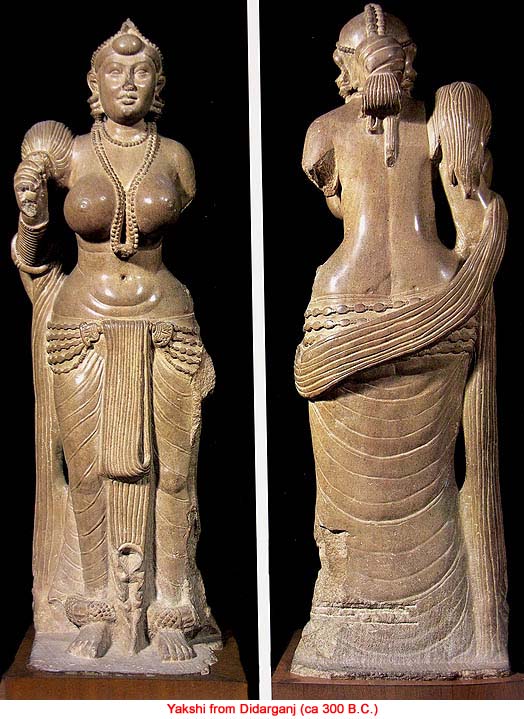
The name Yakshi is an indicator that the legend sprung about travellers from the modern-day Afghanistan-Iran region. The famous Didarganj Yakshi statue in Bihar from 300 BC is a great clue of how the dangerous seductress-vampire image came about. The link to an image of the statue is given at the end of the note. I am beginning to wonder if these neat ladies chewed cardomom as breath freshner and that got them associated with the similar smelling tree. 

For the past 35 mornings, I have religiously submitted myself to the torture of The Hindu newspaper's crossword. No other activity demolishes better any rosy self-image one might have dreamt up the previous night. The clues stump, mock and condescendingly glance at me across and down. I have discovered the amazing blog of Col. Gopinath who posts the solutions to the crossword by 8:30am every morning. So now it has become a race against this army man. Those who are interested in crosswords and word games must check out his blog. He presents his solution with many interesting links.

Couple of days ago, while standing on the balcony of my friend's new apartment, enjoying the fabulous view from 8 floors up, he told me that his primary intention was to rent the apartment out for some time and then when the price is right, sell it off. Now he was sensing that his wife was beginning to bond with the apartment. They had put in motion a plan to immigrate to Canada so any attachment to this property was futile. 
Some of my cousins who live and work abroad are also buying land and apartments here. Their kids were born and are being brought up outside India. They concede that there is no chance that this next generation would want to come back and live in Kerala. 
Buying and flipping properties as an investment vehicle is great, but there is always a hint of attachment, of the faint hope that someday they might come back to live a retired life here. This is a large scale and more financially intensive version of my book buying habit. My small personal book collections here and in US are full of books that were bought with the best of intention. 
Someday, I was going to get the time, surely, to sit down, relax and enjoy these great books. Meanwhile, I continue to read what I have borrowed! 
That which I have committed to lies waiting for me, for a day that is always tomorrow! 
In my case it is the books, for thousands of NRIs (Non-Resident Indians) it is the apartments, mansions, coconut groves, rubber estates and pieces of urban property that may never be able to serve their distant owners. Retirement in a capitalist economy is akin to heaven (Hindu Swargam and Islamic Jannat); it will come only after death. 
Kerala is called God's own country. Like all these NRI property owners, God also seems to have rented this land out of the people who abuse it with the nonchalance that comes with temperory contractual obligations. God stays distant, not wishing to be bothered by the petitions for maintenance and for new facilities. And like almost all owners, His hopes of return may never be fulfilled.

The three books I borrowed yesterday from the RBI staff library are great reads. They have been added to my daily dose of M.P. Veerendra Kumar, R.K. Narayan, Mahabharatha and the Elephant book. Perhaps there shouldn't be any surprise that the authoritative book on "The Decline of Nair Dominance" in Travancore is written by a Canada-born Australian professor of Anthropology, Robin Jeffrey. I am reading the Malayalam translation ('Nair medhavithwathinte Pathanam'). 
It is an exceptionally well-researched work on the period between 1847-1908. Lot of interesting trivia and details about the family set up. In 1905, there were 20 English and Malayalam newspapers published in Travancore. This love for newspapers and news reading continues to this day and is one of the features of the local population that made Dr. Jeffrey make Kerala his home for six years of research and language learning. 

There is a detailed list of the distances that different lower caste members were supposed to maintain from the higher castes: 96 feet, 66 feet, 12 feet etc. Even as late as 1900 if a Kerala brahmin feels that some object has been rendered impure by the touch or proximity of a lower caste member, he could summon the service of a local Syrian Christian (Suriyani christiani) who could restore the purity of the object by simply touching it! 

The family set up of Nair joint families (Tharavaadu) is worth remembering. Property transfer was through women, so that kept their status somewhat ok though men controlled all the day to day management. Each woman in the joint family had a room of her own. It was used for bringing up her children and sleeping with her husbands. "Marriage" was magnificently ambiguous. A Nair or higher caste man (i.e. brahmin or royal/warrior class) could tell the doyen (karanavar) of the family if he was interested in marrying any woman of the family. The woman would be asked and if she says yes, the deal is done. The man can hang around the family during the day and sleep with her during the night. If she or he loses interest, the arrangement was simply over. 

Namboothiri (brahmins) and royals (Varma) could be 'Sayahnathithi' (evening guests) as in those who come after dinner and leave by sun rise. The fathers could buy luxury items for their children but even otherwise income from the land owned ensured the smooth functioning of the family. Seminal source immaterial, all the children were invariably considered Nairs. This inter-caste polyandry situation was a big headache for the colonial masters while trying to define Nairs as a caste. 
Nair women had to bare their breasts when in the presence of higher caste men. This rule was removed only after 1850s. Similarly lower caste women had to be topless in front of Nair men. Mass conversions to Christianity were used by the lower castes to overcome such rigid and inhuman traditions. 

The second book is a complete collection of King Vikramaditya stories in Malayalam. I hope to do a few translations from it for our 'Timeless Folktales' website. 

The third book is a collection of poems by Kunjunni. Kunjunni Mash (corruption of Master as in school teacher) is Kerala's most popular poet. His poems are short like him: couplets or four lines. But they are incisively humorous and pithy. Here's a sample translation I have attempted
"In ABCD, there is a secret,
BC lies within AD!"
I enjoyed reading Kunjunni poems this morning while biting into some translucent green, juicy Amla (Indian gooseberry). Like the peoms, they also tasted very sweet after the initial bitterness.

"Do you want a feast for Onam?" Amma has asked me at least five times in the last two days. I have repeatedly said no. Cooking up a feast for just the three of us is a big pain. Besides, I have overdosed on the traditional feast since the wedding. We decided to make only one dessert Payasam. Since it is the going to be the only 'special' dish, Amma is making it from scratch. I helped her remove the skin of green grams the good old way using stone pestle and mortar. 

The second elephant I have been introduced to through the book is Paramekkavu SriParameswaran. He was the hallmark of the famous Thrissur Pooram from 1990 to 2005. When he passed away in 2005, the funeral was conducted with high honors. He was brought to Kerala from Bihar in the 70s. I learnt that Sonepur in Bihar conducts the biggest annual market for elephants (as well as cattle). Over 800 elephants are traded every year. Though he was known for violent streak his youth (disemboweling another elephant among other crimes), when he was called Krishnagopal, he was a peaceful elephant for the last fifteen of life serving the Paramekkavu temple. In the recovery days after the annual madness period, he used to be fed Ayurvedic preparations from chicken, goat and even 15 monitor lizards.

Few days back saw the news that court has stayed the demolition of R.K.Narayan's home. This is the place where he wrote Malgudi days. Instead of outright declaring it as a cultural heritage building, it was going to be razed to make way for some luxury apartments. This is a society that is quick to burn and ban books without ever reading them. May be I shouldn't expect much respect for an author like Narayan. Afterall he didn't write about Astrology, Bollywood, Cricket or Religion!

Today is Uthradam, the day before main day of Onam, Thiruvonam. House was swept clean. All the dirty laundry washed. We are all set for King Mahabali to show up on his annual visit tomorrow!

I'll end with a quote from the great R.K.N:
"Adulthood may be defined as a phase of self-deception. Nowhere is it carried to a greater extent than in statements beginning: "In those days...." The listener, inevitably not a contemperory but one of younger generation, has no courage to contradict the man nor has he any means of checking the veracity of the statement."

20120105

House Warmings (BH:D34)

September 6, 2011

Day before yesterday happened to be the house warming cermony of a new neighbor, three houses up on our street. Thomas uncle used to live there and when I was in school, we used to play badminton with their gate serving as the net. Now, Anil uncle has partly demolished that house and built-up a big one. Since we had the 'coming home' ceremony happening, we couldn't attend the house warming lunch. Achan and I decided to visit the house in the evening. 

House warming is a big deal around here. It is the other great Indian 'aptitude' test that must be passed besides the test of marrying off one's daughter. The marriage thing happens quickly with may be a month going into preparation. The house building that culminates house warming lasts for several months, may be up to a year and it drains away several years from the life time of whoever attempts it. It took my parents 15 years or so to recover from their 'home building' adventure before they could start the preparing for the daughter's marriage exam. In Malayalam, house warming is called "Paalukachal" which means boiling the milk which is precisely what is done as the core ceremony. You let some milk boil over in the new house and you've accomplished the warming.

House warming consists of lots of other religious rituals as well as is the characteristic of any event in India. We're the nation that broke ceremonial government-sponsored coconuts before launching our indigenous hi-tech aircraft carrier. 

Before we could visit this new home, we needed to get a gift. So off we went to 'Narmada', an old shopping complex, which was the only one expected to be open on that Sunday. It so happens that Anil uncle runs a plumbing and sanitaryware shop in the same complex, so when we walked into the gift shop and said we were looking for a house warming gift, the dark, cylindrical but pleasing saleswoman with a severe body odour problem asked us if it was for "Anil sir". 
Thiruvananthapuram is a city (or glorified village) with never more than four degrees of separation between any two people! 

After we picked out a small indoor waterfountain (in the process spilling some water onto some plush toys in the lower rack), I spotted that they had a name's sake 'books section'. But among the handful of books lying helter skelter there was Anakyondoru Kathaparayan (Elephant has a story to tell). It is a book based on the popular TV show called E 4 Elephant which features one domestic elephant a day. It has had nearly 200 episodes since 2005. The producer of the show, Srikumar Arookutti, has authored the book. He is a good writer known mostly for the penning the story for the award winning movie, "Deshadanam". With this book, I can enjoy the profile of one elephant a day. So much better than the profiles on Keralamatrimony.com. 

Anil uncle's house is far from finished. He said he wanted to get the house warming done on an auspicious month. Initially he had kept it for August 31. Then Achan told him that it was Tara's wedding date. While we were enjoying the evening vada, bonda, mysore pak and semia payasam at his freshly warmed home, he said, "For a house warming, only two sets of folks are important: family and neighbors. Since it was Tara's wedding, I was sure that all the neighbors would go to participate in that. So I postponed my house warming." I liked the very gentle gradient of the stairways they have in the new home. When I mentioned this, his wife said, "some people here have already developed arthritis problems," throwing a glance at Anil uncle. I think this family will be a great addition to our neighborhood. 

We went to the government treasury at the old secretariat building complex. Luckily, there were no demonstrations blocking the road today. Achan and Amma had transferred some accounts and deposits into checking so that they could be used if need be for Tara's wedding. Now they are busy putting them back into savings accounts. The interest rates for seniors citizens are very generous 9.5%-11% depending on the financial institution.

The treasury building sits in the shade a mammoth Banyan tree. Just walking near this majestic tree with its ancient twisting complex system of roots, is enlightening. Buddha had to be sitting under a tree.

After four years, finally met face to face a facebook friend. They are having house warming of their new apartment tomorrow before flying back to the gulf the day after. 

The apartment on the 8th floor provides stunning views of the city. An ocean of green coconut fronds interspersed with mango and banyan trees. From one balony the far away, vegetation-covered hills can be seen. From the bedroom's balcony, at the horizon, the faint line of the ocean. High rise buildings here and there like white spots of fungal infection on the otherwise thick carpet of greenery. 
From this height, one can see the monsoon approach from where the sky ends, where lightnings strike silently.

Illiterate north Indian construction workers meant that there were no graffiti on the walls of the new building where they would normally be expected. At one point, it looked like the elevator was not working. The watchman was rather proud in saying that it might be so because "so many people were calling it." The elevator is assigned the same reason politicians give for not doing their job.

While driving back from the apartment, his wife started speaking on the phone in a language I did not know. "She is speaking Kutchy," he saw my confusion. "But she said she was from Alapuzha." "Her forefathers came over from Gujarat for trading and then settled here. We're pretty lowly people in their eyes, so I had quite a bit of opposition to deal with before our marriage". I had no knowledge of this adventurous love story. He briefly outlined it for me. Inspiring: for scripts and for life!

After briefly cleaning up the apartment and arranging furniture for tomorrow's ceremony, we went to eat at Supreme Bakers and at his favorite hang out in town, Duetto, the gelato place. Beef puffs from the bakers were delicious. Duetto has an interior that reminds one of American coffee shops. Plush leather sofas, low lighting and free wi-fi. We tried five different flavors: mango, chikku, meringue, chocolate and chocolate nut. 
"This mango tastes like the hair of mangoes,'" the little lady said. It was true. It did taste like we were pulling at the fibres of ripe mango. Chikku flavor was very truthful to the original fruit. "This place is so much better than your stinky fish place," she remarked. The stinky fish place she referred to is Mubarak, the extremely popular fish eatery in town where Malayalees of the her father's generation flock to. 
"You don't know what you are missing," said the father and then turned to me to continue, "I got the first shock of generation gap when I heard a kid in Thiruvananthapuram zoo remark that the mango fruit he was eating somehow tasted like the Fruity drink he was familiar with." I remembered how few years back, in College Station, I had introduced Sally to the fig fruit and she was surprised that it tasted a lot like Fig Newton bars!
  
A big thank you to Mark Zuckerberg for introducing me to such friends and their families. I look forward to meeting more of my exclusively facebook friends face to face soon.

"Officially" Onam begins...(BH:D35)

September 7, 2011

'Every leaf of every plant must be examined every day', the Young Farmer award recipient Britisha Alexander was quoted in the article on her in The Hindu newspaper couple of days ago. 
"Simply planting stuff doesn't make you a gardener. There are caterpillars and worms on the long bean plants," Amma took a swipe at my morning laziness few days ago. Obeying both Britisha and Chandrika (Amma), I promptly reported for leafy inspection this morning. Each leaf of the young long bean, snake gourd and brinjal plants was overturned and inspected for worms, caterpillars and insect eggs. There were quite a few. This discovery makes my relationship with butterflies and moths amorphous like their wing patterns. They are beautiful and lovely but I'd rather have them stick their loveliness and beauty on the flowering plants. 
Achan commented that we had planted the ginger on very wet soil. "It prefers a little dry land", he said, "there is just too much water for it here." On the over-water-fed ginger leaflets, I saw the faces of kids who are herded into Sunday morning "Brain development" coaching centers.

I was reading about Guruvayoor Padmanabhan in the elephant book. The 65-year old tusker is the super star among the elephants maintained by the Guruvayoor temple. He came to Guruvayoor couple of years before the death of the legendary Guruvayoor Keshavan, who many worship as a divine incarnate. A life-size statute of Keshavan stands outside the temple. He was considered the elephant perfect according to the "scientific" standards. The science refered to here is ancient Indian texts. 
Ancient Indians had the habit of compiling standards for what constitutes "perfection". The perfect home, the perfect elephant, the perfect cow, the perfect women etc. Tonnes of literature on the physical perfection of women, but the rice bellied, betel chewing gentlemen who spat out these great works conveniently restricted male perfection to the mental realm! 
The standard for elephant beauty is listed in Maathangasastra. The more important work on elephants from the Vedic times is Haasthayurveda (elephant-ayurveda) by sage Paalakapya. Legend has it that it took the sage 15,000 years (Indian 'wisdom' alert) to compile this encyclopedic work on elephant domestication, training, health and medication! 
Guruvayoor Padmanabhan currently holds the record for maximum daily wage. Earning Rs 2,22,222 (~ $5000) for one evening's work of carrying the idol as part of temple procession, he verily is the Gisele Bundchen of the Kerala elephant sphere compared to the other elephants that earn only Rs 3000 (~ $75) a day! Though he has the "mad" season on April-May of every month, Padmanabhan has only one murder to his credit. So much better than the other big grosser, Salman Khan.

Met Ajayan uncle. The conversation drifted towards the diasporic and non-resident nature of our generation. "Your generation will never be able to care for your parents like we did for ours. I don't even know where my son is right now," His son works for the merchant navy and is aboard some merchant ship."Since you are here for a few months, we can get you married," he said. "My vacation will end when such talk becomes unbearable," I replied. He laughed. His laugh has a different shade of dignity with all the gray hair on him these days compared to his smiles in my memory.

We decided to check out the Megamart shirt showroom near by. They feature international brands like Lee, Cherokee and Arrow. It look Achan and me 10 minutes to select a shirt for Ajith. I picked myself a tshirt featuring 6 of the great Indian mustaches: Doodhwala (milkman) cut, talwar (sword) cut, neo-Dali cut, Jhadu (broom) cut, Jaipur cut and Peshwa cut. Recently I had read about new trend in t-shirts here carrying famous Malayalam movie dialogs instead of English tag-lines. (just for mallus, a classic example: "Meen aviyal enthayo entho?") I couldn't find any in this shop. 
The sales folks were a bunch of lazy young men leaning on different walls and furniture as if they were too weak to support themselves this afternoon. It took us a whopping 30 minutes to check out. The man at the counter, who I suppose was the owner, typed with two fingers. 
Billing was a brutal operation. We are never going back.

By 7pm, all of us i.e. Achan, Amma and I went to see the opening night of the official government Onam celebrations. Unlike the years we were last here, almost a decade ago, roads are no longer blocked for traffic. The footpaths are good enough to support pedestrians. 
Small multicolored lights adorn the trees that adorn the roads of the city. The fountains gush. The crowd was fully in Onam spirit. Plenty of street vendors with their petromax lamps selling peanuts, Bengal grams and 'chaat' on their carts. The make-shift 'dosa' shops called 'thattukada' were doing brisk business, The Thiruvananthapuram corporation and water authority buildings were nicely lit. We didn't walk for more than a mile and a half down the main road. We will explore the reminder in the coming days. 
More lights were set up, waiting to be turned on by tomorrow. Came across a fume-emitting ancient petrol generator that was powering some of the lights. Lot more amateur photo and videographers on the streets. Didn't see any foreigners.

I walked expecting a flood of memories to come back. 
For the first half an hour, they didn't. 
A decade of Onam memories were surely inside me. 
I awaited my Proustian Madeline. 
Right in front of Kanakakunnu (diamond-hill) Palace, the hub of celebrations, it came! 
A bunch of balloons! 
That did it for me. A moment when heart literally leaps and then floats in a flurry of memories. When you want to throw up your hands in excitement but weight of civilization bears down on your shoulders. 
I saw a small girl do exactly that, wave her hands wildly in the air even though one of them was held by her dad leading her to the carnival ground. 
My eyes went back 16-20 years ago. The roads were much narrow then so the illumination looked denser. The hustling of feet and rubber slippers have given way to car horns. The shorter me was closer to the ground. I think that is why I remember the sound of the feet of the revelers more. 
20 years later, the crying babies are missing too. They must have all grown up, I suppose. And their babies now have parents wealthy enough to show them illumination through a car window. 
I hoped the overhanging branches of the illuminated trees remember me. I strolled down the road, sharing peanuts with my parents on either side. 

My parents, today much less worried about their child's safety in the crowd, could once again, admire the city lights just as they did before I was born.

20120102

Snake-spotting (BH:D33)


September 5, 2011

While walking back from Spencers grocers yesterday, I noticed that Onam decorations have started to find their places on the road. Outside Yaathrika travel agency, there stood two 12-15 feet tall wooden bulls supporting a yoke that carried a Nettipattam. A nettipatam has nothing to do with a neti pot. Nettipattam is the golden/brass ornament that covers from the forehead the trunk of elephants dressed in ceremonial splendour. Its surface is covered with the metal hemispheres. Link at the bottom of the note shows a nettipattam. Whoever had made these wooden bulls insisted on being as anatomical faithful as possible. So though they had fantastically shaped antlers rather than bullish horns, a pair of pappaya sized testicles hung from them. I was reminded of the movie Jamun Jamun.

Numerous Ganesh idols have been installed on the street-sides by the Shiva Sena and RSS parties as part of the annual Bal Gangadhar Tilak festival. Special care has been taken to make sure that these idols display their full glory right outside hotels run by Muslims and Christian run business establishments. Looks like 'modak' is no longer Ganesh's favorite dish. He seems to have acquired a taste for halal mutton biriyani from most of his locations in the city. He must have secretly memo-ed about it to these few-days-a-year ardent devotees whose devotion works only on the top of sewer covering concrete slabs and footpaths on the road. 

Yesterday's dinner was marked by much overeating in an effort to reduce the amount of food that will be thrown out. Major gaseous consequence in the tummy this morning. 
I woke up in an unbendable state. I am talking about my abs. 
Amma prescribed and provided clove infused hot water. I self medicated with my tried and tested fenugreek with yogurt remedy. The fast action of fenugreek was important because Kala chechi called in the morning to say that she will come by with some mutton curry. She is a brilliant cook. Stomach had to be ready by lunch time for the curry. 

Both the father of the bride and the father of the groom have been fretting a lot about the marriage certificate. Plenty of xeroxing and attesting and signing and sealing happened in the last couple of days. Since endless queues of service seeking citizens were expected from early morning, Achan decided to go take a token by 9am itself. I accompanied Amma to RBI office so that she could get the round seal of approval. I carried this powerful, magical device to the corporation office. 

On my way, I saw many corporation workers carrying what appeared like big bunches of small fruits: blue, green, yellow, red. But this was no Onakazhcha: the traditional gift of farm products tennants would bring their feudal lords. These were small decorative bulbs commonly known here are illumination bulbs. Other workers were either standing on tall ladders or hanging from the trees that flank the city main road. The illumination of the main road and public buildings will begin from tomorrow. Rajavedhi or the royal road that extends from the Kowdiar Palace to the Sri Padmanabhaswamy temple is decorated with lights every year for Onam celebrations. Tomorrow onwards no vehicle traffic is permitted on this road from night fall for 4-5 hours. Only pedestrians and street vendors are allowed. The citizens can leisurely walk on this 7 kilometer stretch enjoying the lights, music, dance shows and shopping.

The corporation office was nothing like the abyss of red tape it was made out to be. It looked like a larger version of the College Station social security office but with less glass windows. There were 4 human beings and 3 houseflies in the air-conditioned counter area. Electronic display for token numbers. Huge board at the entrance says the office is open from 8am to 7pm. It is just that the people assume it is a lazy, crowded office that opens at 10am. 
Prejudice runs deep. 
Even with people who change continously we hang onto our few deeply rooted impressions about them and let those impressions define our whole relationship. The corporation officer was friendly and jovial. Since interminable waiting time was expected, Ajith and Tara were asked to come much later by Achan. Now they were summoned immediately. While waiting for them, the officer asked if it would be ok for him to go have a cup of tea. As soon as the couple arrived, he gave them papers to sign. Tara had a post-marriage photograph in the application. He said it didn't matter but they would prefer something without the 'marriage-signifying' saffron on her forehead. Everything was done in a couple of minutes. All that worry and panicking for nothing! It was truly an office for the service of the people by the people, not a monarch's charitable instincts as all the discussions in the previous days had made it out to be.

While coming back from Rema aunty's house this morning, Amma notices a small snake slithering by the side of the compound wall as snakes tend to do. 
Instead of "Pambeeee" (snakeeee), she shouts "Unniyeee" (my nameeeeee). 
Instead of a stick, she asks me to bring a camera. 
Soon a handful of prominent characters in the neighborhood gather in the car porch (door-less garage) of the uninhabited house in the neighborhood. It is 10 am.
The snake has gone under Ajith's car that was parked there. 
It had difficulty sliding on the smoother garage floor. 
Ajith and Tara swear that they have no intention of carrying a hidden snake in the car for their honeymoon. If it hisses in the car while they are on their way, high chance that they would mistake it for a romantic gesture from the other person. "sshhh....shhh" whisper of sweet nothings!
Ajith takes the car out of the garage. 
We assume it would run over the snake hiding under the tire. 
The snake was to be crushed like the traditional lemon that devout Hindus crush to auspiciously drive out their new cars. (I have a story about that. I will get to later)
Car was out. 
No sign of the snake. No auspicious lemoning. 
Then Omana's son, Achu, notices it under the watchman's chair. We have half a mind to leave it there so that the watchman will have something to stay alert tonight. But then trying to hitch a ride with the honeymooning couple is unforgivable. More immediately, importantly and unforgiveably, the slithereen has made attempts to enter the uninhabited, locked house. No Mercy.
It had to be executed. 
"Thingalazhchayayittu kollanda," (We shouldn't kill it on a Monday) Omana contributes some Indian "wisdom"! As if Tuesdays-Sundays were traditionally approved days for snake murdering! Have the ancient Hindu epics approved Monday holiday for the Sarpa-yajnas (snake-killing rituals)?
Achu brings a dried de-leafed coconut frond. 
His attempt to hit the snake is way off the target. The dried frond cracks into two.
The mis-hit makes the snake more aggressive. The little hood raised, it hisses. 
Everyone jumps one step back. 
Omana, carrying Gowri's baby, steps on Tara's toe. 
Achan grabs the frond from Achu and goes smack. 
He aims for the head but in panic misses and hits it in the middle eviscerating it. All his frustration at the imaginary foes in the city corporation office raises the potential energy of the frond. The loss of potential energy of the frond as it comes crashing down gets converted into loss of kinetic energy of the snake. Nothing conservative. 
With a gash in its stomach, the little serpent struggles. Hisses. Opens mouth wide. Gasps for air. Bites imaginary foes. 
The injured state of the snake emboldens the young Achu. He proceeds to beat the hell out of it like A&M did out of SMU (final game score 46-14). He turns it over. 
"Paambu thanne...Paambu thanne...adiyil kanda" (Snake sure snake sure...look at the underside) Omana confirms that it is not a nonpoisonous rat-snake (which is called Chera). 
Only the occassional flinching of the tail remains when Achu pushes it onto the spade I was holding. 
As my astologer uncle would say, only "Dhanajaya vayu" (final breath of air) remained in its slender body. 
Unceremonial burying. Neither crosses nor coconut trees were planted to mark the spot.

As if to make up for the 32 day delay in their appearance for me, a rat snake (Chera) immediately showed up after this poisonous snake. This was a well fed, 5 ft long crawler. "Rat snakes are all male, poisonous snakes are female" more Indian "wisdom" from Appi-amma, Rema aunty's part time cook. 
It coiled tightly behind a flowerpot. May be it was cringing on hearing such stupidity.

Mention of well-fed and servants calls forth a brief recap of a discussion I recently had. Kerala's feudal history is seeped in stories of the landlords sexually abusing, having affairs with and impregnating servants. 
There is very little doubt that getting servants to do most of the housework is the main reason for obesity among the middle class and wealthier housewives. Machines for cooking, washing and vaccuuming also contribute. Of course, these mechanical conveniences are most welcome and make life easier. The increase in the body mass of majority of women is a side effect that a little carefulness can control. 
The servant-maids stay svelte, energetic and healthy. Almost every maid I have seen here can give the gym-going, health conscious American chicas a run for their money....may be not a run, but definitely a jog. It should come as no surprise that the feudal lords in history preferred these bodies in perpetual motion to their stay-at-home, stay-in-bed, Titian-sque wives. Nudging the clappers of the temple bells was the maximum work their wifely hands could be expected to do.

Raju chettan called in the afternoon to say that the local edition of Indian express has published an article on Venu chettan (his bro-in-law) on winning the best teacher award. We read it online. After that Achan made tea. The rest of the family was sleeping. Achan and I sat on the verandah drinking tea and sharing stories and jokes. Owing to a 30 year advantage on me, he has more stories and jokes. Somehow the discussion turned to my grandmother and other grandmothers we know. Achan said that grandmother had kept a set of clothes ready to be put on her dead body. Along with those clothes were the clothes of a daughter she had lost 50 years ago. 
My paternal uncle's mother-in-law had stayed with their family in her last days. Whole day she would sit at the edge of a long bench kept in the porch. On the wall of the porch was a mirror that would capture her reflection. The poor woman thought what she saw on the mirror was a neighbor's house. One day she fretted, "There is an old lady in that house who does nothing but sit on a bench all day. What kind of people are these?!"
If we were told our life story as if it was someone else's perhaps we would also be harsh critics!

At the Central Bank of India branch office at Rishimangalam, hangs a big public service announcement near the cash counter asking everyone to bring "an accomplice" while withdrawing large amounts of cash. From the Hindi and Malayalam translations that appear with this English debacle, it is clear that they meant friend instead of accomplice. Or may be it is a deeply philosophical pointer that amassing and using large amount of cash is indeed a criminal act! Apparently the Central Bank hangs this notice in every branch of its bank.

Went for a short walk in the evening. 
The bells of the Devi temple were trying to drown the melodies of Vayalar-Devarajan team that are played every night at the Devarajan bust near by. 
Lot of young men, mostly the IT crowd and college students, stand on the footpath enjoying hot dosas and hotter conversations. 
A bunch of old men walking were discussing how far Onam has crept up into Tamil Nadu. One was sure, it has gone till Tirunelveli. Another one, like Duryodhana in the epic, was unwilling to give one inch beyond Nagarkovil. 
An ATM floor littered with crumbled tiny receipt papers. Discarded evidence of succumbing to instincts: shopping and others. 
Walked to Jawahar Bal Bhavan complex which was having a Gujarati handicrafts and handprinted fabrics show. 
I had been a regular student at the Bal Bhavan in 1988-1991 during summer vacations to learn "Spoken English" and then "Basic Computers". The 'Spoken English' teacher was an Anglo-Indian lady. I remember there was life-size sculpture of a crocodile in the class room. The computer teacher was a twenty something girl. The Gujarati craftsmen were displaying their work in the non-crocodile building's second floor. I asked for size 40 half kurtas at the stall at the far end of the hall. The salesman showed me couple of kurtas of size 40. Then he showed be size 42. I asked him what would fit me. "44", he said and asked me to turn around so that he could show the fit on my shoulders. 
"Jabbi log apne marzi ke size leke jathe hai tho doosre din exchange karne aathe hai. Jabbi hum select karke detha hai, kabhi vapas nahi aathe" (When people pick their own size, they come back next day for exchange. When I select the size for them, they never come back). I guess all men underestimate their size when it comes to the upper body. 
I picked two short kurtas of size 44. The aunty standing in front of me in the billing queue gave me suspicious glances. As far as I could see, she had no pockets that I could pick and I had ensured 'American-standard' personal space between us. Perhaps the distance bothered her! 

The kurtas fit perfectly. The fact that they cost less than 12 dollars adds to their fitness. They just need one round of reinforcement stitches from the tailor.

Happy Labor Day to everyone in the USA.