20120329

Mughal Gardens @ Rashtrapati Bhavan (BH:D199-2)

February 18, 2012  Delhi-Agra Weekend Episode 2


Let me get what happened on the way to Mughal Gardens quickly out of the way. We left the hotel with Santoshji by 1:30. I remember only very few locations on the way. One of them was Gole Market. And then there was a massive Gurudwara close to the Rashtrapati Bhavan and the Parliament Museum. A long line of believers in turbans were outside the gurudwara waiting for what I presume was a free lunch. 

We saw huge crowd outside the the Mughal gardens entrance to Rashtrapati Bhavan. Santoshji had no clue about these Mughal Gardens. Amma had read about the gardens being open to the public for a little over a month every year in February and March. Santoshji had not planned on our going there. So he couldn't answer the simple questions that we had like, "Can we take the camera inside?" "Is cellphone allowed?" This pissed Amma off. While we were halted sorting out the matter on the side of the road, a parked car almost backed onto us almost hitting the hood. This pissed Santoshji off. Tension mounted. Amma called the travel agent and told her that our driver doesn't know 'ANYTHING'. An exaggeration uncalled for. Travel agent spoke to Santoshji who plainly stated that he has been driving a taxi in Delhi for 20 years. What he left unsaid was that a woman coming over one fine morning from Kerala had no business passing judgement on him. He asked us what can the travel agent lady sitting in Mumbai know about traffic in Delhi. He told us to go to Mughal Gardens by ourselves and that he would wait in the car.

So we go. The security situation is mind-boggling. It is a miracle that people are allowed inside with their clothes on. No cameras, no cellphones, no electronics, no purses, no wallets, no bags, no car keys, no combs and no pens even. There was a cloak room where people could deposit everything except cash. All the deposit items are sealed till owners return. Assault rifle and machine gun carrying guards all over the place. Yet for some inexplicable reason, there was no check on watches and sun glasses. Why would a security team confiscate pens but allow watches inside? Haven't they watched James Bond or Mission Impossible franchisees? 

The procedure is a complete assault on any notion of freedom. Done by the state to its own citizens. The citizens from which it has already taxed and spent the billions in the name of defense and national security. But there is no entry fee. So in a glorious psychological masterstroke, the notion of free is reinforced!! Yup, it is a free country, but lets hold on to your pen while you walk around a garden which we maintain with your taxes.These forbidden gardens are accessible, as mentioned before, only for 40 days in a year. So the rush was incredible. We go through a few more check points along with the numerous tourist and school field trip parties and finally get into the herbal garden. No shady trees in this area. 

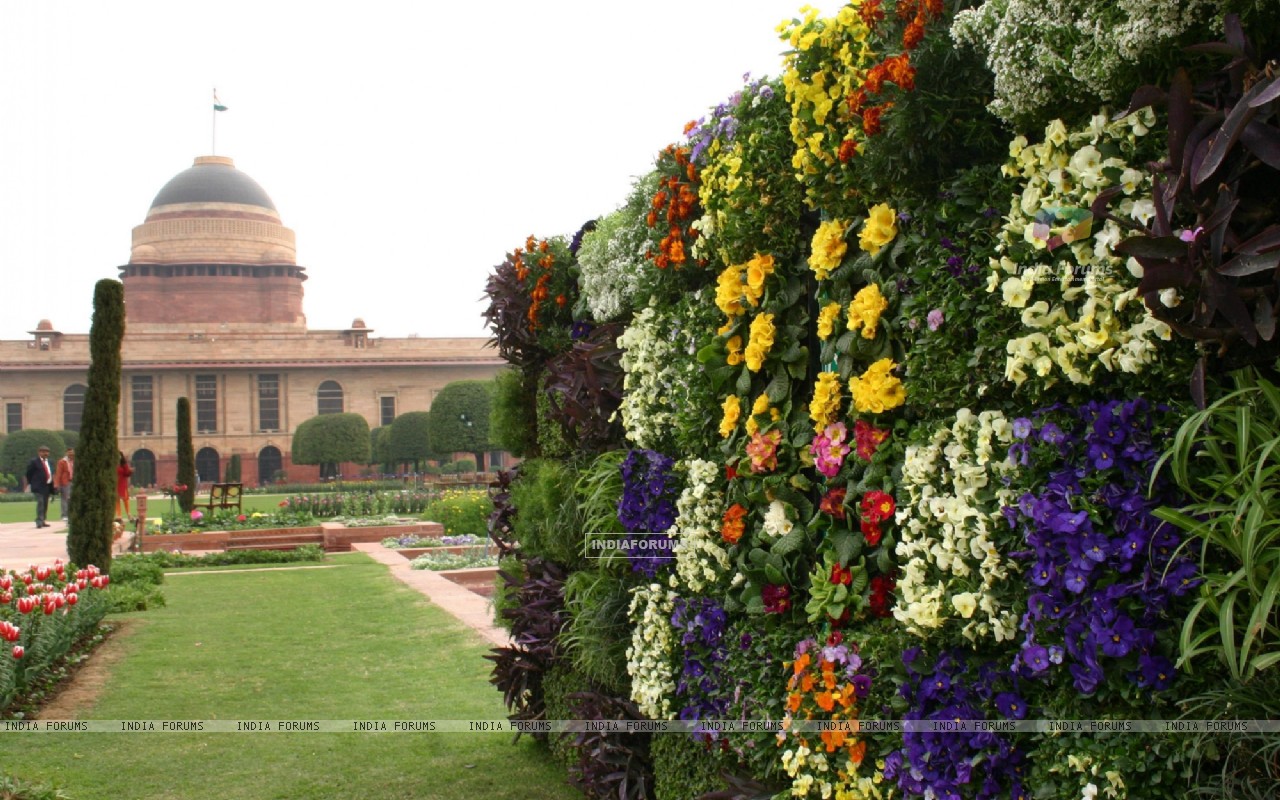
Small boards planted on the ground to identify the different herbs alongside being cultivated. The information are classic examples of the great Indian"facts". There are no further proofs required when declarations like "cure for cancer", "treats diabetes", "removes stress" etc are posted under the names of the plants in English and Hindi. The Tulsi (Basil) plants get a canopied little green house of white of their own. Huge roses are in bloom at the last plot of this garden. "Notice the thickness of their base" Achan points to the rose plants. Evidently, they are very old stock.

From the herb garden, the crowd carries us to the bonsai garden. Well maintained samples of Peepal, Neem, Banyan, Oranges and more in bonsai form. We confirm that one of the trees we have in our garden back home is a species of Banyan. Amma wants to hurry to the musical fountain. I want to spent more time admiring the tiny oranges, the tamarind and the hibiscus. Amma has seen some better bonsais somewhere. She has the highly irritating habit of mentioning other better places that she has been to while we are standing somewhere else. Achan tells me that she didn't have this habit in the first 25 years of their marriage.

Kumar Sanu croons a patriotic number at the musical fountain. The sound of a few rusty joints of the fountain interfere with the music. We keep walking. Climbing up the stairs lined by sweet pea climbers in full blossom, we reach the Mughal gardens. 

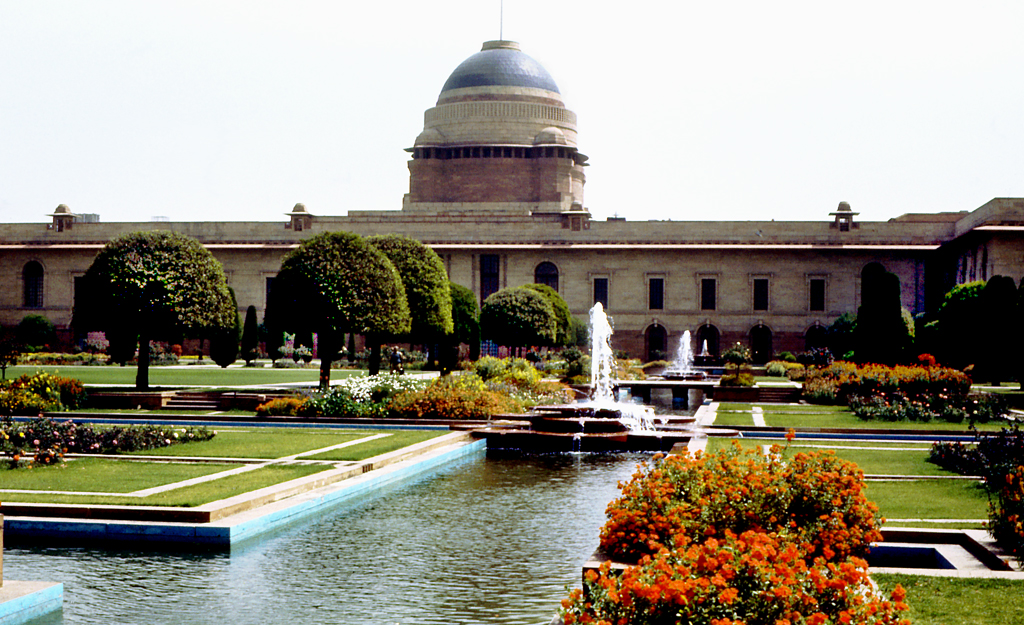
The presidential palace, the royal Rashtrapati Bhavan, looms in the background. But it is the magnificent garden that takes my breath away. Beautifully manicured, impeccable arrangement of plants, hedges and trees. Amri Khusrau's famous statement about "a paradise on earth" immediately comes to mind. Justifiably. Set on the sides of two water channels with their lotus fountains, it is a marvel of flora domestication. Amma and Achan go ooh and aah on their way, hand in hand, from section to section. I am mostly speechless. The fountains, the flower beds, the well rounded trees, the riot of colors! It is painfully pretty in the bright afternoon. Marigolds are truly gold and violets and violet here. I had no idea green had so many shades. or that sweet williams could be so sweet or dahlias could so dazzle or that Devdaru and Babul trees could be so shapely. 

This place is without any doubt a national treasure. I swallow quietly quite a bit of my tirade against the curtailed freedom. I am glad phones and cameras are not allowed. Otherwise, it would have been difficult getting around amateur cameramen prostrated on the floor with their long lenses. Kids were running as excitedly as the security guards would allow them, anxious show their elders the new flower they just saw. Couples were holding hands and pointing the prettier and prettier blooms to each other. Despite the crowd, despite the sun, despite the guns, romance blooms. Flower power. "Chalthe raho" (Keep moving) the guards tell those who park themselves on the fountain parapets. Guns & Roses.

From the massive rectangular main garden, we move into the long rose garden. We had already been whetted towards the sensual assault that awaits us in this section. In the rectangular guardian, rose varieties like the blood red, almost black china man and the as big as lotus 'first prize'. The Mughal garden has more than 250 varieties of roses. Some of the main ones on either side of the walkway are Christian Dior, Queen Elizabeth, Oklahoma, Pasadena, Lousiana, Eiffel Tower, Pisu Pitambar, Landora, First Prize and the aptly named Bhim. 

I believe every heart would beat louder while strolling down this garden. I stand and sigh. Once. Twice. Thrice. It is spectacular. The scent is intoxicating. One from the bunch of young men walking in front of me tells another, "Is mein se ek thod ke diya na, koyi bhi ladki pat jayegi, guarantee" (If you offer her one of any of these roses, any woman will fall for you, guarantee). Touche!

From the long garden, we reach the circular garden. Bougainvillea and creepers territory. Easily over fifty different varieties. I walk slowly behind an elderly couple. Lest my hands naturally search for another to hold in this beautiful setting, I secure them both deep inside my jeans pockets. Achan and Amma take their sweet time. I don't mind. 

Hats off to Lutyens, the architect and Mustoe, the horticulturist, who conceived and executed this gem.Couple of stalls outside the garden showcase vegetable produce from the Rashtrapati Bhavan's gardens. Cabbages the size of pumpkins. I get excited seeing a board that looked like "Spiral garden" but on closer inspection it is 'spiritual garden'. No colorful flowers or butterflies here. Just trees and plants that offer spiritual solace, whatever that is, for those who seek it. 

Excellent arrangement for drinking water, resting stations and toilets throughout the garden. We sit down under a grand old Banyan tree. It is chilly under it even at 3pm. A shade of centuries. "You may get come here again, but we are not," says Amma. Silence. Breeze. We see an excited child hide under a thick flower bed. His slightly elder sister likes this game. Will roses become simply the merchandise kids are familiar with on Feb 14?

On the way out, we pass by the original circular staff quarters. 24 small rooms in one building. New apartment complexes have been built over the years. The roads inside the campus are named after previous presidents. Obviously, an army of gardeners are required to maintain the paradise on earth as it is. A deep sense of gratitude. A small wish blooms to see Shalimar of Srinagar someday.

Home,Airport, Airport, Home (BH:D199-1)


February 18, 2012  The Delhi-Agra Weekend Episode 1

The Flight
---------------
It is difficult to be up and running at 3:15 am especially when you are woken up in the middle of a dream. That too a dream about people you hadn't thought of in a while. But our taxi to the airport was scheduled for 4:15. So...Shower. Shave. Laptop shut down. Modem unplugged. Double check the adequacy of underwear. Zip the bag after topping it with a bunch of paper for scribbling and a couple of books for the flight. 

By 4:30, we were on our way to the new domestic terminal of the Thiruvananthapuram airport. This used to be the international terminal a decade ago. The city was waking up. Gods and goddesses had half an hour more of rest available. Their ring masters were only washing the premises before business hours. Tea stalls warming up to the first customers of the day. Uber-dedicated joggers on their way to holistic living. Dogs aplenty, both living and the recent victims of mid-road collisions. 

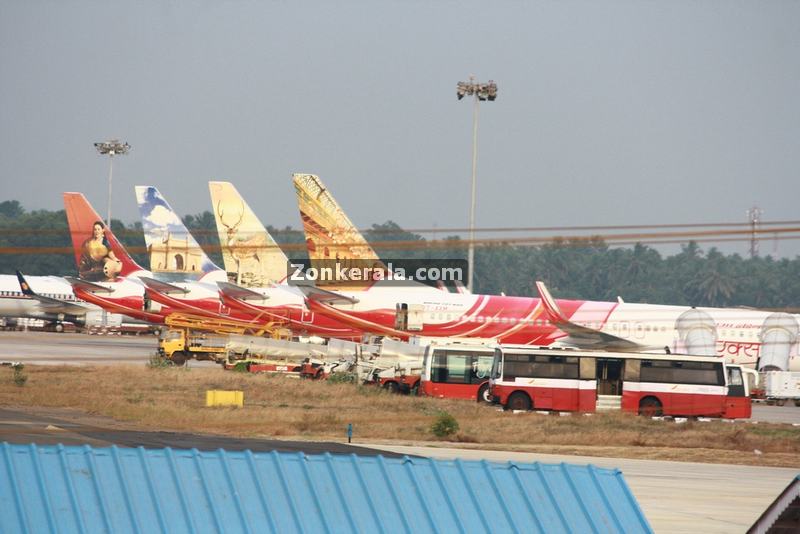
The 6am flight to Delhi via Kochi is popular among the members of the parliament, politicians and administrators from the state. The flight returns from Delhi to land at Thiruvananthapuram by 9:30pm. So if you are good enough to get things done at the capital in half a day, Air India is your best bet. By train, Delhi still takes nearly 3 days. Before trains, by bullock carts, it used to take a few months and excellent survival skills. 

We notice three different times on the clocks at the terminal. The red LCD one above the check in counter hurries by a good ten minutes. The one on the display screens above the security check is 5 minutes ahead of my watch. Once you are done with security, the wall clock that greets you grants two additional minutes for the day. In the lounge, the statues on display remind Achan of the movie, 'the night at the museum'. At the pat down section of the security, equal number of stations for men and women. The airport authorities are rather optmistic about the rising equality for women in India. Achan and I stand in the long masculine queue. Amma quickly goes through the dedicated, sparse feminine line.

Since everyone including a couple of top administrators have managed to reported well before time, we take off 15 minutes ahead of schedule. The sleepy darkness of the city below is punctured only by a few city lights. On the eastern horizon, the rejuvenating rosiness.

It takes 21 minutes to Kochi. From the time the safety announcement lady is done on the small screen and seat-belt sign is turned off, we get a little over ten minutes before the landing announcement. It is in between these two airports that a new one is being planned by the great political minds of Kerala! Yet another one of those exercises done to secure more land for the select few richest in the country in the name of development.

The English lady (from her accent) sitting on the seat in front of me across the aisle, with a nice morning blonde cowlick changes to socks and relaxes with a thick book on rock music. A few more VIPs board from Kochi. An uncle in an elegant black kurta sporting a "jhaadu" mustache with a rolly polly aunty. My attention for the rest of the flight alternate between the inflight movie, 'Sherlock Holmes' whose soundtrack I begin to appreciate at this third viewing, the English lady who frequently adjusts herself into tantalizing wardrobe malfunction possibilities that never materialize and a short story by U.A. Khader. The breakfast served was surprisingly tasty. 

Airport
----------
No fog issues in Delhi meant that we landed by 10am as scheduled. The physical features map on the screen showing the real time flight position is a great illustration of the size of the Himalayas. A bit of forceful braking of the aircraft after touching down to ensure a rather quick turn onto the tarmac. The speed with which Indians release the seat belt buckle as soon as the flight touches down makes me realize how difficult it must have been living under the British. It looks like even a few minutes of buckling down is unbearable. To hell with safety. We want freedom! The hatred for discipline runs in our blood except when we insist on imposing it on others all around us. We wait on the tarmac near a Kathakali figure embossed on the wall before deplaning.

To call the Indira Gandhi International Airport terminal 3 as impressive would be an understatement. The neat carpeted walkways, the all glass paneling on either side and the full length walkalators are rather welcoming. As one climbs down the escalator, huge metallic looking hands in various "mudras", the gestures in Indian classic dance and Buddhism, jut out from the wall that is covered with big copper plates. The nine hands represent the Abhaya, Varada, Prana, Pranayama,Tripataka,Trishul, Chatur, Mayur and Akash mudras. I learnt later that they are the work of designer Akash Jasliwal and are resin based with a metal finish. The terminal is truly world class with a classic Indian touch. The stress is on the "classic" here since "Indian touch" has nowadays means, unfortunately dirty, crowded, corrupt and shoddy work.

Walking out of the terminal, from among the crowd of chauffeurs, guides and hosts with name boards of their unseen guests, we find the gentleman, in his early 40s, carrying a print out with Amma's name on it. We notice his prominent limp as he rolls Amma's bag to the parking garage. We follow. "Aap Santoshji hai na?" I ask based on the text message we received yesterday from the tour company. "Ji"

Speeding down the 10 lane road leading out of the airport, it is impossible not to notice the military presence that is nearly nonexistent in Thiruvananthapuram. Several posts with guards carrying INSAS assault rifles and what look like MP5K submachine guns. The road sharply turns at one point near the wall of the airport till which point it almost looks like we are driving directly towards aircraft that are taxiing on the runway. 

Before stopping at the first traffic light, we pass by a coed school. Some boys in white uniform with blue ties and girls in white salwars with blue dupattas are playing and talking outside the school gate. We stop for nearly two minutes at the signal. Shacks made of corrugated thin steel sheets on the side of the road. A mini-slum. A beggar woman walks from car to car with a baby tied in a cloth bag that goes over her shoulder leaving both arms free for alms. The temperature is close to twenty degrees and the sun is bright. Everyone still has some type of sweater on. 

Santoshji tells me that we are driving through Daula Kuan. Since traffic demands all his attention, I avoid asking him if there are still the eponymous washing wells in the area. No mention of the famous Daula Kuan rape case from two years ago either. 

Massive building of the Department of Defense Accounts. Tall, faded, old apartment complexes rise on both sides of the road. "Sab military ke hai" Santoshji informs. I realize that an inland capital like Delhi is fundamentally a military barrack. The palaces, the offices, the trade are all add-ons. The capital is where the military control lies. You capture the capital, you capture the empire. As long as you don't have the capital, the resistance will continue. The fortifications today may not be as obvious as at the time of the epics, the sultanates or the Mughals, but Delhi stands on a strong military foundation. 

Santoshji points with visible pride at the metro rail that runs on the pillars dividing the road as a train rumbles over us. The rumble of the metro rail and the rattling of Santoshji's rear view mirror hanging solar disc with tiny bells and an embossed Ganesh would form the periodic soundtrack of our city tour. 

I was prejudiced that Delhi was a dry, dusty land like most of Uttar Pradesh, but very soon I began appreciating the nearly perpetual presence of road side trees. Though the dry Acacia that has become an icon of African safaris, dominated this particular area, there were Gulmohars, Neem and even a few teak making frequent appearances. At the traffic signal for Simon Bolivar road, the driver of a green carrier auto assumes that he would have enough time to check on the locks. Mistake. The blaring horns assault that followed as soon as the green arrows on the light appeared must have reduced his life span by a year, at least those of his ears.

Chaos Bagh
------------------
We turn under the metro towards Karol Bagh. The towering red Hanuman statue that watches over metro travelers night and day rises to our left. The muscular monkey god is in the process of parting his chest with his bare hands. We zigzag through the regulatory metallic fences on rollers on the road into the incredibly busy Karol Bagh. 

The slowing down gives Amma enough time to comment about the huge board of the Federal Bank at the turn. "Repeatedly we have told them to put the "Ltd" (limited) along with their name. Without it, they pretend to be a nationalised bank." "They are not the only private bank which does that," said Achan and as if to prove his point, we pass in front of a branch of the "Dhanlaxmi bank".

To imagine the Gaffar market area of Karol Bagh, think about Dadar railway station in Mumbai at peak hour. If you don't know what that feels like, think about the busiest, most chaotic railway station you have ever been to in South east Asia. Now blow open the roof of that railway station, keep the same amount of people jostling about but allow cars, motorbikes, cycle rickshaws, horse carts and stray dogs into the mix. Add a couple of intersecting paths with no traffic signals or cops and you have Gaffar market. It is the always crowded, always busy, go to place for all your "imported" needs. For those from Thiruvananthapuram, this is Delhi's 'Beema palli' area but a thousand times busier in the same amount of space. 
Buildings bordering the road are packed with shops of all kinds. Mobile phones, electronics, consumer goods, banks, fabric, interior decorations, pawn shops, coaching centers, lawyer offices, eateries, sweets, spare parts, helmets. On the footpath, sales of clothing and leather. An eye-catching board of a shop specializing in bridegroom costumes. "Dulha hum saja denge" is their guarantee subtitle. 

I felt that this place has retained it character over several centuries. It must have been where traders from all over the world came to exchange their goods, showcase their wares and hope to fetch a good bargain. I had read that this market had iPhone, iPad,PS3 etc all available well before their official launch in India. The only policemen you will see are stationed at the entry road. Gaffar market operates under its own market laws. They are draconianly Darwinian especially when it comes to moving through the market. The cacophony of car horns and bicycle bells are nonstop. The average speed if you are not stuck is a jerking 5kmph. Santoshji deeply impressed all of us by his vehicle handling skills here. It was no case of luck that his Maruti taxi was dent free when every single vehicle I saw around us resembled the surface of the moon up close. 

At both the intersections, the indescribable chaos of Indian traffic that has baffled travelers from abroad, is on full display. For anyone who has been familiar in life only with the rule-obeying, orderly traffic of other countries, it would appear a miracle that thousands don't perish every hour at every intersection of such roads here. New rules of time and space that would stump Einstein reveal themselves. Between any car and lamp post, there is always enough space for a cycle rickshaw. Given any such rickshaw, there is new space created just enough for a scooter as well next to the car. Any vehicle can turn anywhere anytime it pleases, spontaneously, when it figures out which direction it should take towards its destination amidst the ocean of metal, rubber, petrol and muscle that continuously churns around it. I would call it a 'U-he' turn. 

The road does have dividers on which there are some plants. They look like old aspiring trees that have been stunted for life by the atmosphere around them. I wonder if snowfall works as a source of water for these plants. Based on the trees on the roadside till Karol Bagh, Delhi should have a robust ground water presence.

Right at the end of Gaffar market comes Saraswati marg, the street in which we were to find Clark Surya, our hotel for Delhi. Saraswati marg is also narrow, crowded and slow moving. The vertical neon and colorful signboards that compete for attention from the facades of the buildings give it an appearance of the busy Hongkong streets that I have seen in Jackie Chan movies. 

Check in
-------------
At 12 noon, we check in at Clark Surya after telling Santoshji that we will freshen up, have lunch and be ready by 1:30. The receptionist is courteous and pleasing. His ears resemble those of the Ganesha figure embossed on the wall panel behind his desk. That paneling covers the wall and appears like red putty applied using fingers. There is a manager's cubicle and a foreign exchange facility in the small lobby. I spot a feminine life behind that cubicle only much later. She had been absolutely motionless, focused on facebook at her terminal. Facebook was also open on the manager's as well as the receptionist's computers.Tea, more specifically, 'masala chai' and cookies arrive. Onward to room 305 on the second floor. 

Amma, as usual, is not pleased with the cleanliness of the room. She thinks it is clearly not the "super deluxe" room that our itinary had promised. We check out a couple of other rooms. All are equally small 10 ft by 12 ft. The exhaust fan in the bathroom has its switch, for some strange reason, hidden behind the sofa in the main room. There are two dangerous looking boxes, one brown and one black with a needle dial display, that control thick the wire going into the air conditioning unit. The television's cable has been unplugged. 
"This is the minibar. You can use it. We will replace and charge." informs the bellboy. I am intrigued by the bar part of the minibar. Turns out there are only two bottles of water, two Fruti mango juice cartons, two tiny bars of chocolate, two packets of peanuts. Our room has no window. Even if it had, the view would have been the congested street below and the drab buildings across it. The bathtub contractor obviously hadn't consulted the building engineer. The bathroom door had been shaved off to make sure that it can close without jamming on the bathtub frame. 

From the key, the napkins and the china, it is clear that "Clark Surya" is only the current name of the hotel which was once Surya International and Surya Sheraton. There is nothing 'starry' about this place except for the fabulous framed paintings on the walls.

We decide to have lunch at the hotel itself after consulting the menu in the room. The hotel's restaurant, labeled roof top, is on the fourth floor. The 'roof top' is a 6ft by 10ft balcony from which only a sea of terraces in different states of decay are visible as far as the eye can see. It has an unwelcoming dirty table cloth on a long table set with 8 chairs. By the side, all the paraphernalia for creating omelet. The wash room is a toilet.

We skip the roof and opt for the covered portion of the restaurant. One chappati costs Rs. 30. I presume that's 'starry'. We have some with a mutton curry and an egg curry. The TV in the restuarant is tuned to some show about boy Hanuman. But the story is about Ravanana. Amidst the atrocious acting and garrish sets and costumes, a 1990s type special effect has a chubby boy dressed as Hanuman floating in front of a cut-paste from the rejected reels of George Lucas from his high school days.
The waiter doubles as the manager. There is a chef. Well, there is a guy in an unwashed apron wearing a tall rippled Dodin Buffant made out of paper that has been ripped off from the inside of some packing material that came rippled readymade. I didn't bother to count if it had 101 ripples as tradition demands. The food was good but not good enough for the price.

20120328

Chalo Dilli (BH:D198)

February 17, 2012


I have been noticing a bunch of people who sit and stand on the lawns right outside one of the entrances of the Kananakunnu Palace early in the morning, all of them facing the east. After the sun rises above the tree line of the palace garden, they pack up. While they are seated, a couple of times, I have heard one of the men who stand at the back say something. I couldn't quite figure out what. They are not doing Surya Namaskar. I am familiar with that exercise and there isn't much chance of my forgetting it ever since Anunay Jain attempted a display on a branch overhanging a tributary of river Colorado few years ago leading to what became a series of great photographs of human panic and of evolutionary ape origins, and an unforgettable road trip.

Interestingly, more and more people are joining this group every day. Usually by the time I climb up the flight of stairs and reach that spot, I find old aunties in various stages of getting up from the lawn and folding the mats, sheets and newspapers on which they had been sitting. I am sure in a matter of few weeks, this group will grow big enough to occupy the entire lawn. This is a society of high spiritual enthusiasm. As long as it does not involve any kind of physical labor. As long as it looks like the folks doing it might be getting something out it. Nobody wants to miss out. No questions are asked. And as always, the newcomers become the most vocal marketing agents for the fad. 

The tea/coffee portable business that manifests in the form of two young men outside the palace gates just in time for walkers and joggers returning after their morning rounds, has taken an organic turn. The fan base has exploded now that the business has become one of vegetable juice. Surely, mixing carrots, cucumber, beans and something green on the spot in a blender is much more appealing than ready made tea and coffee with questionable sugar content and unknown sources of milk. 

For some inexplicable reason, the city corporation has made sure that there is not a single garbage bin that the public can use anywhere in these most public of spaces. Perhaps they are afraid that the uber clean population of the city will overuse such a facility leading to joblessness for the thousands of sweepers and cleaners that the corporation enjoys unionising. 

Shashi Tharoor, the member of Parliament for the city, was in all the newspapers today. He took the initiative to reopen a railway crossing gate right outside the famous All Saints women's college the day after he found the newspaper reports about pretty college girls struggling through the closed beams of the gate and coming dangerously close to a death by goods train fate. I am glad Mr. Tharoor reads the newspapers and takes action immediately.
I am sure he has been doing it through out his tenure but it is the newspapers that are reporting it only when he gets to be photographed with college girls who treat him like a rock star. He has promised that the government will pay the railways the money it owes soon so that the gate stays open more than the one month arrangement that he has scored for the time being. I wish we could get pretty college age girls to represent most of the woes of the city. The handsome Mr. Tharoor will more be in the papers then for all the good work that, I am sure again, that he has been doing. The city anxiously awaits the nation's tallest flagpole that he had promised and half a dozen other extra tall lamp posts he has promised to erect all over the city. Great to hear about all these erections among a generally dysfunctional administration. 

Surprise in the evening at the Cafe Coffee Day. Neighbors from College Station who I haven't seen in 7 or 8 years. They are on a two weeks vacation from Boston. A friend of theirs with them, I recognize the name from facebook. Small world. The little addition to their family seemed excited about the vacation. 

With the blog and FB notes, it's not difficult to keep track of my life these days. The blog is currently around 75 days behind the notes. But it was heartening to receive "Get well soon" messages from soon-to-be-friends strangers who had only read recently about my hospital stay on the blog.

Stopped by the Spencer's grocers to pick up some tissue paper on the way back home. At the check out counter, yet another face I hadn't seen in 7 or 8 years. "I think I recognize you," she said. She has been working in India after getting her degree from Texas A&M. 

While getting dropped off at home, wondered if there would be anymore blast from the past before the flight tomorrow morning. We are scheduled for the 6 am flight to Delhi. Delhi started off for me as Ranji Panicker wrote unforgettably in the King's screenplay "Aksharangal Achadichu koottiya pusthakathalukalile" (the one in the pages full of printed letters) Delhi. It was by far the most frequently mentioned city in the school history textbooks. The sought after capital. The iconic capture of which stood for sway over an entire subcontinent. Delhi of the monuments, Delhi of the Sultans, the Mughals and the British later gave way in my mind to the Delhi of the much loved writers of Malayalam: VKN, Malayattoor and Mukundan. Delhi of the political machinery and machination, Delhi of the fabulously rich and the abjectly poor; Delhi where friends went to study; Delhi from where the 'DC's of IIT arrived; 

My 200th day in India this time around, I will be in that capital. I look forward to the Delhi that I will see. My 100th day here was in the hospital. Despite what I have read and have been told, I don't think the experiences will be comparable! Agra and the Taj will be a bonus. Will be back with the travel notes on Wednesday.

Book Shop, Coffee Shop (BH:D196)

February 15, 2012


Morning walk today had to be shorter because I had to carry Amma's bag to the RBI Officer's quarters from where she took a car on her annual pilgrimage to Sabarimala. Achan had to take care of few things at the bank. I went with him to be dropped of at the DC bookstore. On the way I told him a new story idea that I had been entertaining. He suggested a few good additional elements. 

At the DC bookstores, sales girls in training approached with brochures of the upcoming compendium of "World Thought". Too expensive and too big for digesting in a life time. But the collection would be a great addition for those who maintain book shelves to act as showcases. I asked them where I can find a copy of the poetry collection"Edikaloori Panambattadi". That intriguingly meaningless title has been given by poet P.N. Gopikrishnan for his second collection. The first one published 6 years ago was called "Manifesto of the lazy". I loved the couple of poems he recited at the Kriya poetry fest many weeks back. 

I was told that DC books didn't have a copy of the book but it was published by Mathrubhumi books so they would surely have it in stock. I walked to Mathrubhumi book story, taking the road that goes via the "Kalamman" temple. From the magnificent novel "Chaavu Thullal" and a couple of other books, now I know that Amman was the native Malayalam word for father. So it is easy to guess that these aboriginal gods were sort of insultingly feminized by the Hindu onslaught in later centuries. Along the same road called Tutor's line, there is another Uchan Mahakali Amman temple which is a strange mix of the original ancestral Amman diety with the attempted franchise of the Ujjain Mahakali temple. Press Trust of India's office is right next to this temple. 

In between these two temples, massive heaps of uncleared rubbish. Once gods have into inhuman sphere of ritualistic worship, who cares how the planet goes. Ring the holy bells, offer the flowers, put on some sandal paste streaks and hold your noses while walking around. If possible close your eyes while chanting some mantras, I am told this increases their potency!

The Mathrubhumi book store is a cylinder. Curved book shelves form broken concentric circles. New additions meet the visitor first in the inner most circle. Spirituality and English non fiction complete this circle. The next circle holds translations, self-help, poetry. Non fiction sits in the outermost ring. 

I browsed through Dr. S. Sharadakutty's collection of essays. She has written a great one on facebook. It was heartening to find an upbeat and positive view of facebook as a great venue to share and learn rather than the usual tirade against it as a waste of time. I guess people see only what they want to see. From the publisher's note on this book, I learnt that she has translated Bilhana's Caurapanchasika. I found it in the poetry section at the shop. I called Achan and learnt that he was still stuck at the bank. So sat down with Caurapanchasika, an outstanding collection of erotic love poetry from 11th century Kashmir. This work was also shunned by the prudish, anal retentive pretentious Indian custodians of culture very much like the 8th section of Kalidasa's Kumarasambhava. That segment which narrates in detail Shiva's utter sexual submission to Parvati came under much fire from the critics ever since it was written. Some even claimed it wasn't by Kalidasa and that it was a curse from the goddess that made him write those lines. Sort of satanic verses!

I picked up the book that I had come looking for and joined Achan at the bank. Gopikrishnan's poetry is very entertaining broken prose. I hope to relish the poems in rereading over the next few days.

All the walking around in the sun, I would like to blame for the unexpected nap in the afternoon. Evening at Cafe Coffee Day helping Saiju finish his presentation on sea port architecture for an upcoming conference in Chennai. A particularly rambunctious crowd of youngsters at the coffee shop today. The loud attempts of young men falling over each other in their attempts to impress a pretty lady is so universal. At at least five tables in the shop, new movies were being planned. After finishing the rough outline of the presentation, we went inside the airconditioned area for another cup of black coffee. An obnoxiously loud aunty was slashing the young man sitting across from her, with a visibly trapped expression on his face, with her heavily accent English statements. 

Achan made a concoction of the coconut flower from the cut tree with palm sugar. A rare delicacy. That reminds me: I found in Dr. Sugathan's book the traditional Kerala recipe for a sweet toddy called "Madhurakallu". Jaggery is mixed with the small bananas of the 'Palayamkodan' variety and fermented in jars topped off with water. This water is drained a few days later and mixed with more fruits like jackfruit and pineapple and kept for three or four days. Finally an addition of cardamom, black pepper, cloves and mint. I wonder if anyone makes it these days. Akkani, the sweet alcoholic drink from Palmyra has become popular again in the outskirts of the city by the side of the highways now that the heat has begun to pick up.

Luvdei (BH:D195)

February 14, 2012


Dr. Sharadakutty has written her column in today's newspaper about the great Malayalam poet, P. Kunjiraman Nair, based on whose life the new movie, Ivan Megharoopan, has come out. She says how writers are inherently "failures" according to society since they will not play by the social rules of discipline and respectability. The poet was much abused and detested for his relations with several women. Sharadakutty seems depressed on Valentine's Day about living in a society that insists on minding other people's business. I would have loved it if she had mentioned that all poets need to be rebels especially in the grand arena in which India has mixed sexuality with morality. And for some inexplicable reason, the society seems to have this blissful belief that in a country so utterly rife with corruption in every sphere, majority of the people maintain clean marital relationship!

The Central Bureau of Investigation says that Indians have stashed $500 billion in secret accounts abroad. Clearly this is the country that simply loves giving to the rest of the world as our politicians, custodians of culture and purveyors of spiritual traditions insist. We would much rather make other countries rich than see the lot of others here improve. And we insist on our national motto that "Truth alone triumphs". Absolutely! Honesty is for sissies who live in other countries who haven't been blessed with world's oldest philosophies!

Newspapers today carried the mobile phone captures by an onlooker of a man freeing a stray dog that had its head stuck in a plastic container. For two days, thousands of people passed by that dog in its misery in one of the busiest intersections in the city. Finally one man stepped up to its rescue and freed the nearly dead dog. Turns out he is the joint director of a central government service. Much surprise has been expressed in the newspaper about how a person in such a high position came to the rescue of a dog. Afterall, if you have a good job in India, you are expected to be a different species altogether with no humanity left. I had been asked once long time ago how I could love dogs so much despite being an aerospace engineer. I still haven't understood that question.

The coconut tree cutting operation at home that had to be converted into a two day operation has been completed. Yesterday both the gentlemen who came to do the deed didn't feel quite well. One of them was tired after a teak cutting operation the previous day. The other one felt dizzy at the top of the tree after he had chopped three quarters of the fronds down. We didn't want to risk keeping him there. Their manager, cheerleader and contractor couldn't come today because his friend's lorry has been stolen last night and he needs to go to the police station. Most of the conversation in between the axing today was about how a truck could be driven away from inside the locked gates of a house in the middle of the night inspite of having a watchman in the neighborhood. Plenty of coconut tree related goodies in the diet for the next few days.

A ray of hope in the newspaper to contrast with the tree cutting. Kongode (Palakkad) police station's civil officer R. Mahesh and Bharani from Coimbatore got married yesterday. As soon as the marriage was fixed, Mahesh announced his decision. All the guests at the wedding were given saplings of Njaaval (Black Plum) and Mahagony trees. In the bags with the saplings, the couple also left the message asking the guests to bless them by making sure that these trees were planted. "In a world without greenery, love cannot exist" they wrote. The Forest Officer had assisted them in this wonderful gesture by providing the saplings at the discounted rate of Rs. 2 each. The couple planted a Mahagony tree at their new home at the end of the day. I really hope this exemplary tradition catches on. Truly, a great news to read on Valentine's day.

Afternoon at the Cafe Coffee Day, a few Valentine couples. A couple in their late teens lean on each other on the leather sofa. A couple in their mid twenties sit next to the fan outside. She subconsciously holds forth every bite she is about to eat towards him. I wonder if her mom had used a similar gesture when she was a baby. A thirty something couple sits in the nook under the stairwell, facing each other across the small round table. There is clearly something exciting about the relationship. Perhaps a dirty little secret. A visibly married couple goes through the Valentine's day outing ritual with grim faces that Indians tend to have during rituals. I sit around serving as a bouncing wall for ideas towards a presentation on architecture of sea ports. 

Love birds pack the lawns and benches of the rich arboreal environment of the Museum late in the evening. I sat on the raised concrete parapet around a metallic tap cover and watch the city trying to walk off its nascent obsesity and other lifestyle problems. Love hangs in the air. I walked to the second hand book shacks by the side of the Public Library in search of distraction. 
"Do you have "The Lost Steps"?" 
"No, but would you like "The Lost Symbol"?
I wish everything in life could so easily be substituted.

A Village Wins...For A Day! (BH:D94)

February 13, 2012


At 12:30 this afternoon, two trucks with police protection, carrying 90 tonnes of garbage from the city moved into the village of Vilapilshala. The city corporation had ordered the reopening of the garbage processing plant that had been shut and sealed by the village local administration. Though it is called a processing plant, there was precious little processing going on there. The fact that it is an inefficient piece of junk is clear to anyone who drives through the village and feels the stench. The underground water of the village has been polluted by the seepage from the mountains of filth. It stands as a product of decades of corruption of the corporation. 

Hundreds of cities across the world and even many in India handle their garbage according to state of the art technology. But for tiny Thiruvananthapuram, most of the money meant for technology disappears in greasing the palms of the insatiable powers-that-be. The result is an utterly unhealthy environment for a village. After 11 years, the people who suffered through it finally said enough is enough.

Since 6 am, more than 5000 men, women and children packed the roads leading to the garbage plant refusing to let the police enter. The 500 strong police force was quickly surrounded by the people. When forced arrests of the front lines of the protesters was attempted, stones rained on the police. The villagers sealed off all routes that led in and out of the village. Some tear gas was fired. Some men were roughed up by the police. But with the TV channels bringing the visuals live all over the state, it was clear within a couple of hours that this would be a disaster if prolonged. The images of women, young and old, squatting on the road in the unbearable hot sun, drinking "kanji" from steel plates using jackfruit leaves as spoon would have touched a chord in the hearts of anyone with even a shard of humanity left. As some of these women were hauled away by the police, instantly others took their places. It was an impossible stalemate.

At 3pm, the officer in charge of the operation announced that the police and the garbage trucks will leave for the day, calling off the attempt. It was a court that ordered the reopening of the garbage plant. I wonder if the judge had ever driven through the village, much less lived there. Today, an entire village had stood up against the executive and the judiciary. And displayed a rare glimpse of that ideal called democracy which has been smothered under the obese obscenities of wealth and power. 

With the UDF coalition forming the state government and the LDF in power in the city corporation, it was obvious that both these major political outfits cared little about the poor folks of the village. But for this one day, they had to bow. The police force, the muscle of the executive, had to retreat. 

The people danced on the streets when the pullback was announced. The TV channels reported that the Chief Minister's office had interfered after seeing what was going on. The leaders of the agitation promised to carry on the fight till the plant was closed for good.

For me, this simply happens to be a close to home example of the perpetual clash of the cultures. As much as I sympathize with the villagers, I am aware shamefully about which side of this battle I belong. Civilization encroaches. Cities expand to swallow. In the past, they only required sources of resources that can be ruthlessly exploited. Nowadays, they also need space to dump the filth excreted from the rapid, mindless consumption. 

In our planet this happens in a gloriously fractal fashion. Neighbors clandestinely dump on each other's yards, housing colonies dump theirs on uninhabited land, cities dump theirs on the villages, nations dump into the ocean, first world dumps into the third world! 

Those who bear the brunt are conveniently labeled savages. Theirs a lifestyle not worth preserving, we pretend to reason. Theirs an always losing battle....since the time of the myths as reinforced by those very myths. 

Dear Savage, we will invent mythology, social and economic theories to justify our actions, we will create new political machinery and fantastic ideologies to trample over your rights, we will write new technological lexicons to erase your epitaphs because we never want to admit that your children must die so that ours can live. 

But for one day, cherish your victory! Take a bow for the triumph of that elusive human spirit, of a camaraderie that was born out of sheer desperation and the love for life than any puerile ideology.

Global Ayurveda Festival (BH:D193)

February 12, 2012


Over 350 Ayurveda businesses are participating in the expo being held at Kanakakunnu Palace grounds. Since the weekends are pretty much the only evenings, I get to move around with Amma, we went for the Global Ayurveda Festival. The Sunday city crowd had already formed two lines at the ticket counter by 5:30pm. There was a stray brown puppy near the counter, mostly confused by all the crowd, entertaining the kids.

Before the entrance of the expo, a display of some old, traditional Ayurveda related utensils by the famous Somatheeram Ayurveda resort. A very impressive huge "uruli', the circular shallow vessel that is used for the various medicinal preparations. It is made from an alloy called Vellod formed by copper, tin, brass and a hint of lead. There were also the storage 'bharani' jars. The information boards said that tall "kuzhibharani"s were partly buried in the soil so maintain the temperature during storage. 

Buyers crowded around every stall that had display and sales of various products. I felt a bald man at the sales counter for anti-hair loss cream was a marketing error. At couple of stalls brief history of 'Ayurveda' in murals. Mythology passes for history. Pictures of 'Dhanvanthiri', the god of Ayurveda were aplenty. Miniature ones were being freely distributed. Several medicinal plants with their different uses were showcased. The AVP logo of Arya Vaidya Pharmacy reminded me of the 'Alien Vs Predator' franchise.A very interesting booth about Ayurvedic psychiatry. Posters insisting that this wasn't some black magic but just a misunderstanding of the term "Bhootam" which means both the elements as well as demons in Malayalam. 

Lot of students from the Ayurveda college, sporting their 'delegate' badges busied themselves around. Plenty of interest in the display boards that talked about the trees associated with the Indian zodiac signs. I wondered why cricket wasn't being used just like astrology to promote Ayurveda. 

Kottakkal Arya Vaidyashala had a book sales as well. I saw copies of 'Nalacharitham' kathakali. Achan had been looking for that book. I will ask him to check out if this edition is worth buying. Copies were flying of the stacks of books about pregnancy care, baby care, child diseases etc. The stacks of books about sexual disorders and mental disorders stayed untouched. Clearly nobody in Kerala suffers from those. Why else would the pregnancy related books have brisk sales?!

The furniture used for oil bath and oil drip treatments were exhibited by a few businesses. Mr. Unni had returned with his 'Navara' rice. We bought a couple of packets. From the government coconut board's booth, Amma picked up a handy device to help spread oil on the dosa making pan. We had no intention to check out the food sales so we ended our visit at the booth that sold 'Brahmi payasam'. I have no idea what Brahmi tastes like but that payasam tasted just like any other payasam that doesn't hold back on the jaggery.

While we were walking out of the exhibition, we could hear poet Sugathakumari's voice on the loud speakers. She was inaugurating the evening's seminar. She talked about the common, non-medicinal 'communist pacha' plant, which got the 'communist' in its name because of the rapidity with which it spreads in the state, being used as the virtually no-cost subsitute for many herbs in the preparations.

We decided to check out the seminar. I was stunned to see that the entire Nishagandhi open air auditorium was covered up to form an airconditioned seminar venue. Sugathakumari finished her speech urging the Ayurveda students and business not to lose the sanctity of the field in the pursuit of profit.

Prof. Madhusoodanan Nair, the famous poet, began his address by talking about the cut outs of "Kattarvazha" (aloe-vera) that were kept near the welcoming board at the palace gates. He said this reminded him of the story of Dushyantha, the king from Mahabharatha, who conveniently exiled his wife after feigning a loss of memory and then pined for her in front of her painting. Professor said we have eliminated real plants and trees from our environment and now glorify them using their cardboard cut outs and paintings. Then he launched on a little bit of the standard anti-Western spiel by mentioning that the encyclopedic tome, Hortus Malabaricus the 17th century Dutch catalog of medicinal plants of Kerala, was an example of the exploitative attitude of the West! I wondered how it can be so when currently it remains the one go-to book to identify many species and the population in Kerala at that time were busy splitting themselves into communities that refused to touch or even see each other much less care about documenting the environment.

After that he talked about how calling Shiva a Dravidian god is a mistake that Indians are repeating after some Western historians. I am beginning to get used to such unsubstantiated assertions that pass for truths when delivered from the dias here. He received laughs and applause when he correctly pointed out that the only way all these Ayurvedic businesses can produce all these oils, unguents and ointments is by extracting them from either eucalyptus or rubber because those are the only two trees which retain a sizeable presence in Kerala. He rued the fact that parents these days ensure that their baby has no contact with the soil. He pitied the generations that never get to take a dip in a clean river or administer themselves some native herbal remedies for their small injuries. 

Before finishing, he recited his famous poem "Agasthya Hridayam" written 25 years ago. Absolutely magnificent. I got goosebumps and it wasn't from the numerous coolers blasting cold air. It was great to see an audience of a nearly a thousand, mostly students, listen to his stunning rendition with rapt attention. The emcee requested Sugathakumari to recite a poem by popular demand. She obliged and recited her famous "What is the color of love?" 

Sugathakumari had written a sharp piece in this morning Mathrubhumi newspaper against the proposed Aranmula airport. Any sane person would wonder why tiny Kerala needs more than 4 airports and that too by destroying paddy fields in the fertile Pamba plains. But I guess if Ambani wants the land, all the political parties will be racing with each other to make the sale. Solitary voices like Sugathakumari's will remain. But for how long?