20120228

Bras (BH:D146)

December 27, 2011


T.N. Seshagopalan's carnatic music concert at the Chembai festival on Doordarshan channel to go with idli-sambar breakfast. 

I had a quiet day at home, quite in contrast to that of India's parliamentarians. The parliament witnessed the debate on the anti-corruption Jan Lok Pal bill. All the top guns of the government were present. Compared to the usual wild nature of proceedings that accompany controversial legislation, the display of cordial camaraderie throughout the day, was disturbingly revealing. It was pretty obvious that either the bill, in its current avatar, is toothless or that it is never going to be implemented. Major difficulty for many of the "leaders" to hide the smug smiles. They don't have to worry about their habitual corruption or overseas stashes of dark cash for a sufficiently long time. 

The Hindu newspaper published a supplement to celebrate 125th birth anniversary of the great mathematician, Srinivasa Ramanujan. It is commendable that the newspaper did not water down the articles for "popularity" as is the norm these days. The supplement has been elevated to the old wooden box from grandmother's house upstairs in which we save collectible newspapers and magazines.

Ramanujan was a devout Hindu. He believed that his mathematical genius and intuitive conjectures, way ahead of their time, were divine blessing. I have been thinking about the evolution of the idea of god since I read the article on the evolution of writing technology from the typewriter to word processors in the recent NY Times Sunday magazine. 
Nietzsche has remarked that the tools themselves shape the writing. 
I think the same can be said about the idea of god. 
I need many more days to flesh out this thought to see if it will amount to anything. The dominant medium and its use at any particular period in civilization shapes the features of the almighty itself. Since prehistoric times, the gods have been painters and sculptors. In Egypt and Mesopotamia, where record keeping was paramount for taxing and production, the gods became record keepers who kept a tab on all human beings to be rewarded or punished in the afterlife. 
Then we moved onto much more organized society that demanded rigid laws for managing. Gods transformed into law givers. They started writing down fates as well. Advent of drama brought the directing god. Later, as life became busy in the cities, time began to dominate lives. God got linked with time...an aloof creditor of time. This almighty found a sense of detachment from intricacies of life. It was easy for this detached god to let evolution run its course and allow the 'free-will' delusion. Now, as the high energy search for the 'god particle' progresses, the divine idea has sort of come to a synthesis of previous variations. 
As free-will crumbles under the relentless assault of psychology and neuroscience, the secular personal god of believers today is a fusion of the recording keeping, detached, law giver. Events of the universe, from the nano to the cosmic scale, proceed with randomness, but then their record is kept and physical laws are enacted. 
I certainly need many more days to flesh out this thought to see if it will amount to anything. 

The local god of bulbs and fans, our electrician, came by in the afternoon. He was here a couple of days ago to make a note of the purchases he need to make for the repair work. Today he came to collect the money. He has threatened to come tomorrow afternoon and finish the job. Achan tries to sneak away every time he comes over because this dude never stops delivering his opinions about everything under the sun while working. Even in the five minutes that he was here today, he expressed how he cannot stand the genius Malayalam screenwriter and actor Srinivasan. We were watching Srinivasan's brilliant movie,"Chinthavishtayaya Shyamala" when he showed up. "Look how dark he is and he walks like a duck!" he couldn't hold back. 
Tomorrow afternoon is going to be fun if he delivers on his threat. Two tubelights to be replaced, two switches to be repaired and one water heater to be installed. Enough time for me to learn his insights into sociology, politics, economics, history and theology!

One of the articles in Rasikaranjini magazine a hundred years ago briefly mentions Naranathu Bhranthan. The few sentences about him convey nothing about the 'madness' that has become his hallmark in popular imagination these days. Surprisingly, he is talked about as an expert astrologer/mathematician who established few temples. One among his disciples was also called 'Bhranthan'. I seriously doubt if the word 'Bhranthan' always meant 'madman' as it means today. 'Bhranthu' could have meant something like obsession or addiction centuries ago. Bhranthu, brahmin, brahma, brain, branding...I am hooked to their common, opening 'bra' variation. I google 'eymology of the word brain' and end up reading a pdf that throws in a lot of connections to Old German 'hirni', horn and Greek 'keras'. It has a picture of the 2nd century BC Celtic cauldron's relief showing the horned god Cernunnos who looks a lot like the seated yogi in the Indus valley seal. 
Google again. 
Theories aplenty...conspiracies abound. 
Perhaps this is how 'Bhranthu' begins!

I have been reading V.T. Bhattathiripad's complete works. But that great man deserves notes exclusively dedicated to him. Later.

20120227

Hartal & A Wedding (BH:D145)

December 26, 2011


The appeal for a city-wide hartal from the BJP was more or less rejected by the citizens. Plenty of shops remained closed but private vehicles and government bus service operated. First hand knowledge because I took a long walk, of about 25 minutes, to the Sree Mulam Club to attend a wedding. 
The first wedding for which I was invited through facebook! 
The auspicious time was between 11:55am and 12:45pm, so I set off from home around 11:10 in the am. 
The milk stall right up the street from home was open because newspapers, milk and deaths are usually exempted from political agitations of this kind. I don't know what the point of the exemption to newspapers today was since the regional papers had no edition owing to the Christmas holiday yesterday. May be the Hindu-leaning party was expressing its wishful thinking of an India where Christmas won't be a holiday. 

The hartal meant a day off for the immigrant construction laborers in the city. I passed three of them while walking out of the colony. They were speaking some language from the eastern side of India, I couldn't be sure if it was Bengali. Two of the men were holding hands in the platonic Indian way and the third and slightly better dressed one was sharing a joke with them. Before reaching the wedding hall, I met a few more of these laborers but this time mostly from Tamil Nadu and Andhra. 

The temple was closed but the lottery ticket stall and the flower shop next to it were open. Opening a lottery ticket stall right next to a temple is business genius. Location, location, location indeed! Even more genius is to run lottery sales from a car. You can keep changing your location, location, location. Such a car parked outside the Tagore theater. Three men were purchasing their tickets to fortune through the rider side window. 
Sober, reverential expressions while they tucked the tickets into their wallets. 
Prayerful silence. 
The car's windsheild was covered with a banner announcing "Karunya" (mercy) lottery with a bumper prize of Rs. 1 crore!

Owing to the hartal, police jeeps were parked every 100 meters or so. Khaki-clad policemen and women half way between them. May be the high density of such dutiful guarding came from the presence of the police headquarters and forensics labs are on this road. Incredibly muscular forearms on the police woman on duty next to the bus stop. I wouldn't want to be interrogated by her.

Enormous crowd at the petrol station. Hyundai, Ford, Hyndai, Suzuki, Hyundai, Suzuki, Tata...went the line. Motorbikes had a separate queue made of several parallel lines.
On the exiting bikes, judging from the joy of young pinion riders holding full bottles in both hands, you would think the brown liquid in them wasn't petrol.

Drastic reduction in the number of autorickshaws plying today. This meant more pedestrians with open umbrellas despite the wintry sun and shady trees lining the road. I was reminded of the big fuzz in the US about display of religious icons in public places when I passed the Trivandrum Development Authority building. Inside the gardenesque round-about of its driveway are an armed Rama, a seated Ganapati and a flute-playing Krishna. Further away there is a secular pert breasted water-bearer statue with inappropriately peeling silver paint.

Past a Ramakrishna Mission temple, I notice a threesome of bicycles leaning on each other finding final support on the temple wall. Abandoned student transport flashback from A&M campus! 
The small signboard near them announces that they are part of the rent-a-bike program in the city. There are details about the mobile numbers to contact and txt msgs that need to be send to avail the service. I wonder how long these bicycles will last unprotected in the sun and rain. 

A crane on the footpath. Not the civil engineering kind, the organic one, with wings, beak and jet white plumage. The one with the glorious natural symmetry that will outlast all man-made geometries! 
It was totally unafraid of the other bipeds users of the footpath. Yesterday morning I had noticed a bluish grey bird on a frond of the neighbor's coconut tree. Since it was solitary, I presumed it was a heron and not a crane, but I couldn't be sure since I didn't see it take off. Herons withdraw their long, flexible necks during flight, cranes stick them out. While coming back after the wedding, I saw that a mate had joined the footpath white crane. Ivory cranes and ebony crows together dealing with the city's garbage situation.

The impressive turn out at the wedding was proof enough that the hartal was at best partial. Guests sporting sartorial splendor. The murmur of relationships. Exquisitely decorated dais and hall. 
Lustrous lilac and cream curtains. 
Gigantic heart shapes made with white and red daisies. 
The backdrop of the dais curtained with garlands of jasmine interspersed with garlands of red roses. These floral curtains were topped by three bronze tiaras that gave them the appearance of the floral veils worn by grooms in North India. 
Two filigreed frames with metal vines and flowers defined the edges of the dais. The setting was so elegant that I didn't want to degrade it with a cellphone photograph. 

The bride was currently from Dubai and the groom from USA meant that there was no dearth of cameras of all kinds at the venue. Besides the seven dudes who looked "official", there were at least a dozen amateurs faithfully recording the proceedings. 
I got the chance to say hello to the bride before the ceremony. Petite and smart with a dynamite wit, she had played the part of a worried mother to perfection in one of my plays back at A&M. Today, she was a very pretty bride. The sacred thread was tied at 12:09 pm according to the massive clock at the hall with the sponsor name 'Paramount' on its face.

According to the receipts we received from the stall of Kerala Sahitya (literature) Academy at the book fair recently, their website is www.kerala'shity'akedmi.org! 
I don't know if this typo reflects the legendary sense of humor of the original poets of Malayalam. It reminded me of a Houston restaurant that had "shag" paneer as a chef's specialty on the menu with the caveat that he needed to be told in advance for a party of over 12! Obviously!
The actual website of the Sahitya academy, spelled correctly, is far from 'shity'! 
Mostly because they have digitized copies of several volumes of 'Rasika Ranjini' magazine from early last century. This magazine was edited by Kunjikuttan Thampuran. I spent a good chunk of the day reading through some of its articles on old Malayalam texts, the arrival of the Portuguese and Sankaracharya. 

My frustration with the lack of dating on most of the ancient text stems from my ignorance. I need to familiarize myself with the Kadapayadi system of numbers that I had mentioned before in these notes. It was the popular tradition. Each numeral is associated with a particular set of letters. To notify a date or any number, a meaningful word or verse would be created from those letters and inserted in the text. The more talented the poet/writer the better he would be able to unobstrusively make the insertion so that it falls in place with the rest of the material. Couple of days back, reading an essay on Kunjikuttan Thampuran, I learnt that in a small verse he composed about Shankaracharya, he had cryptically mentioned the birth year of Shankara to be 37 years before the beginning of the Malayalam era. Dating was done either using the Malayalam era or the ancient Kalpa calendar that goes back thousands of years. 

My hips tell me that the long walk this morning might have been a bit ambitious!

Sweet Christmas (BH:D144)

December 25, 2011


Chill air rushed in as I opened the window this morning. 
4 am. 
The wet freshness of yesterday's rain lingered in the air. 
Cricket orchestra in full swing. 
Something, dead or alive, makes a muffled plunge from some neighbor's tree to the rain soaked soil. But it is loud enough to induce a momentary respectful silence from the insects. 
M.S. Subbalakshmi was already half way through 'Venkateshwara Suprabhatam' from the loud speakers of a distant temple. By the time, I had washed my face, she was followed by some unknown local singer duo belting some Malayalam devotional hymns. The devotion seemed doubly loud this morning. 
And it dawned on me that it was Christmas! 
The marketing machine geared towards clients of the Hindu persuation of course had to be doubly louder than usual!

By the time, I installed myself on the sofa throne on the recently reclaimed base upstairs, guttural nascent wail of a scooter engine. I uninstalled myself to look out to the street below. Our neighbor Leny chechi has been suffering from high fever for the last couple of days. The hospital ruled out dengue, thankfully! I was checking to see if it was her son, up and about early and if he needed any assistance. The neighbors have been taking turns in taking care of their meals. 
It wasn't his scooter. It was doctor uncle and aunty on their way to the sunrise mass at their church. Aunty had been practicing daily for the last month her choral responsibilities. We have been working through the delicious homemade cake she gave us four days ago. Yesterday Amma bought some non-alcoholic wine to complete the Christmas celebrations.

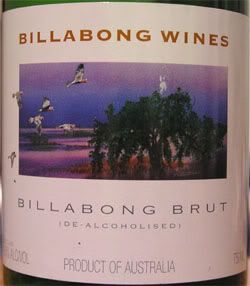
The non-alcoholic wine beast is new to me. Billabong brand imported from Australia. Since I am facing stiff alcoholic sanctions for a few more months, something is better than nothing. Amma's Christmas provision shopping exceeded Rs. 1500, so the store gave her 2 kg of sugar free. Given that she is the only on in the house who can indulge in refined sugar, it should last us till next Christmas.

We paid a visit to my sister's in-laws. It is jackfruit season. The lush jackfruit in their backyard was in form. And it was the delicious 'Varikka' variety with its crispy carpel that I prefer to the other common Koozha variety. Delectable moist golden yellow pieces. This succumbing to temptation I rename as cautious consumption in my personal narrative and instantly felt good. In hindsight, it might have been the fructose.

Sweeter conversation with the granny there. A freedom fighter, she minces no words about her frustration with the current breed of politicians who she calls Maharajas (those of the state) and Emperors (those in Delhi). "There is only one patriotic Indian at this point, I suppose," she declared. Anna Hazare? Kiran Bedi? Kapil Sibal? Katju?Santosh Pandit? the names that bubbled up in my brain proved beyond doubt the undetectable alcohol content in jackfruit of the varikka variety! 
"Abdul Kalam," she said. 
Ah, that would have been my next guess. 
She went on to talk about P.C. Alexander, whom she personally knew,and who was the candidate opposing Kalam in the 2002 Presidential selection. As we left, she asks me to check out the article in yesterday's Mathrubhumi newspaper about earthquakes and dam safety by a scientist. 
She is past 85. It's wonderful that she gets excited about such articles rather than the perpetual tragic fate of the heroine in a never-ending megaserial or yet another limp miracle cooked up to drag on one more episode of a mythological tv series. 
"It is written by some Arun," her eyes twinkled behind the lenses. 

I borrowed the newspaper from Rema aunty's as soon as we got back home to read the article by some Arun. Sure enough, it is the sanest of everything that has been splurged so far in all of the media about the Mullaperiyar issue.

The Billabong wine and cake by lunch time. Chappatis and Seer fish curry too.

Visits in the afternoon. More cake and wine gifts. Technically, not wine. The label says 'health drink' appetizer. Again, something is better than nothing. "I had declared well in advance that none of this non-alcoholic stuff will do for me," revealed my youngest uncle, visibly pleased about his gift bottle of Bacardi. The cake is black forest. Mindful of my morning indulgence, I restrict myself to the cherries and the dark chocolate shavings that are rather submissive on the tongue. We decide to test if the cherry pits will sprout in the backyard.

The sweetness of the cake does precious little to the bitter conversation about the doomed garbage collection situation in the city. The Bharatiya Janata Party has declared a hartal in protest tomorrow. That is even more trouble for the common man. The BJP would be appreciated better if their party workers collected all the trash and disposed it or at least dumped it in front of the Mayor's house or the corporation office!

Found time to study a splendid essay by Kuttipuzha Krishna Pillai on Tolstoy's art criticism. The essay opens posing the challenging questions: What is art? What is its purpose? Tolstoy demolishes the common notion that art is an exploration and stimulation of beauty and its purpose is to provide joy. He opines that art is born out of the artist's uncontrollable desire to share an intense experience. The sharing creates a commonality in the minds of those experiencing the work of art. This breaking down of boundaries is the purpose of art. 
Tolstoy lays down the four essential characteristics of true art: universality, individuality (originality), clarity and sincerity! 
He laments that what is produced in the name of art is mostly for the satisfactions of the baser instincts and unrefined taste of the elite minority. He suggests that when art appeals to the poorer and weaker sections of the society, it will be elevated. He made these observations based on Russia a century ago. In India today, appealing to the baser instincts goes hand in hand with satisfying the majority of the population, from the balcony to the frontbench. 
Those seeking universality, originality, clarity and sincerity have shrunk to a minority and they certainly don't call themselves the elite.

I consider Azhagar Samiyin Kuthirai (Azhagar Sami's horse, Tamil) to be one of best Indian movies of the year. So I was excited about director Suseenthiran's new project, Rajapattai, with national award winner, Vikram. However, the reviews are sorely disappointing. The poster of the movie, out here in Thiruvananthapuram, does not highlight the actor or the director. Instead it says in big bold font: "4 songs, 4 fights, 4 heroines, 17 get-ups!" Dismal! 'Get-ups' are probably the number of times you feel like leaving the theater during the film.

2 cakes, 2 drinks, 2 conversations, 17 pieces of fruit (jackfruit, grapes, cherries) is my Christmas poster. May be a little too sweet. I am glad Christmas comes but once a year.

Socrates & Kunjikuttan Thampuran (BH:D143)

December 24, 2011


I am writing this against a background score of rolling thunder and drumming rain. This kind of downpour is least expected around Christmas time. An INSAT satellite image this morning showed a shiny white patch of depression approaching the Indian peninsula. We are marching towards the wet new year. 

Despite such heavy rains and swollen rivers, people like servant maid Omana have to walk half an hour carrying heavy pots of water twice every day for her domestic needs. Ironically, she stays near Aruvikkara dam which provides drinking water to the entire city. Well, I say, entire city, it should actually be termed as the fortunate parts of the city where pipes have been laid and pipes haven't burst. Kerala is bound to suffer also from load shedding and power cuts from early next year. I am sure the situation will be same five years from now just as it had been five, fifteen, twenty years ago. 

I have been chugging, with open mouthed amazement, through the biography of Kunjikuttan Thampuran by Dr. K. T. Rama Varma. The open mouth part of the amazement is not a good thing considering the mosquito situation in the city. Now that garbage clearance has not been happening for five days, coupled with today's heavy rain, I will be very surprised if there isn't at least a small scale epidemic outbreak. But I digress.

Kunjikuttan Thampuran was born as the combination of the illustrious Kodungalloor royalty and Venmani Namboothiri family that was famous for its poets. Kodungalloor is derived from the original word Kodi-linga-yoor (10 million penis land, in a sense, but it is a reference to Shiva or Indra, depending on the mythology you want to follow). Kondugalloor palace operated a school (gurukula) where scholars from far and wide taught for free. Students could choose their teacher or teachers. Only restriction was that they pursue only one subject. The valid assumption was that a student who could master any one subject under the tutelage of a scholar to its highest level can teach himself any other subject. The school produced several gems not just in common subjects like Sanskrit grammar, poetry and astrology but also in music and dramatics. Though caste-based segregation ran deeply in the society at that time, the same teachers taught talented lower caste kids at the outhouse. This was the atmosphere that Kunjikuttan Thampuran grew up in.

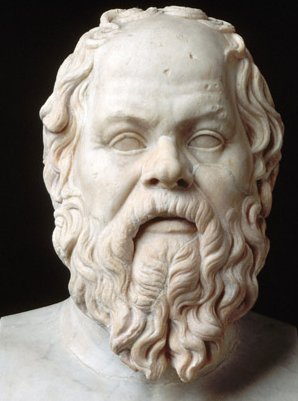
From a young age,Thampuran began to dabble in Sanskrit and Malayalam poetry. He was ambidextrous. It is recorded that he would play chess with one hand while writing with the other. Like Socrates, he used to get completely lost in his own thoughts frequently. The late 19th century was the time when Kerala literary scene was beginning to sparkle.Frequent poetry and drama writing contests were organized. 

It is while reading about his speed of composition that my lips began to part. 
In 1891, at Kodungallur, the Tahasildar organizes a contest. Each competitor has to write a drama of 7 acts and at least 200 verses, beside the prose, on a given subject within 12 hours. Kunjikuttan Thampuran and his brother were the only two who managed to finish the task on Symanthakam (a gem story from the Ramayana) and Viradaparvam respectively. Kunjikuttan Thampuran's Symanthakam was published that month itself with the subtitle "composed in 9 hours". 
More distance between my lips.

At a similar contest in Chalakudy, Kunjikuttan Thampuran writes the play called "Sitaswayamvaram" (Sita's wedding). The handwritten copy has survived with the Thampuran's note in the first page, "Started at 22 past noon; finished at 2 minutes past midnight"!
Mouth open!

In 1892, at Kottayam, Kandathil Varughese Mapilla, the founder of Malayala Manorama newspaper organized a three day contest. Poetry on day one. The challenge was to compose 20 verses on the topic of "Sadacharam" (Good behavior) in a particular meter in an hour. Kunjikuttan Thampuran came second. 
Day 2: Drama: A play in 5 acts and at least 100 verses on the avatar of Ganga. Kunjikuttan Thampuran wins the competition hands down by finishing in 5 hours and 5 minutes. 
Kocheeppan Tharakan, who went onto become a popular playwright,recounts what he saw that day, "I have never seen anything like this in my life. Kunjikuttan Thampuran was completely transformed. His face swelled up. His eyes bloodshot. He closed his eyes and stayed silent for a few seconds. Then ordered his scribe to starting taking the drama down. He recited the play nonstop while composing it as if he had it by heart. They stopped only after three and a half hours. All the other poets bowed before him."
Speechless. Breathless. Mouth wide open. Unexpected detour for mosquitoes!

Day three of the contest was on translation and essay skills. Thampuran who went on to translate not just Sanskrit classics but also Othello and Hamlet, won hands down and received the title "Sarasadruthakavikulakeeridamani"

It is a pity that this same Manorama group that used to publish works by legendary scholars like Kunjikuttan Thampuran and Kottarathil Shankunni is nowadays dedicated exclusively to pulp trash. The contests organized today by the Manorama TV channel involve husbands who can do household chores. May be it is a sign of the times! 

A month after my second surgery, I have managed to shift my base upstairs. By base, I mean, the laptop. My own base, which used to lag behind me, a month ago, has now become rather lean and easily transported. 

The base shifting facilitates undisturbed reading. I have been e-reading James S Miller's Examined Lives in parallel. The first life examined is Socrates. Just like Kunjikuttan Thampuran's frequent reveries, Socrates also used to be completely lost in his own thoughts. An instance reported by Plato from the siege of Potidea, a military campaign that Socrates participated in, says that the soldiers saw Socrates stand still at dawn one day, thinking over something. Since he found no solution, he continued standing past mid-day and past dinner. Since it was summer, the soldiers slept in their bedding outside and noticed him stand all night. He stood till the sun came up, then offered his prayers and left. 

The superhuman stamina of Socrates seems to be the common attribute researchers can glean from the multiple contradicting records that survive about the philosopher. This is yet another similarity with Kunjikuttan Thampuran who could sit for hours together in composition of his works. He went nonstop for 874 days translating the entire Mahabharatha (125,000 verses). A stupendous, unmatched task that earned him the title of Kerala Vyasa.

The thrust of Miller's Examined Life, as he explains in the introduction, is that philosophy was entwined with the way of life of philosophers till the 17th century or so. It was not abstract and academic as it has become. Socrates strove to live in the best possible way. A seeker of wisdom was a seeker of the ideal disposition and exemplary character. Philosophers persevered to be role models. Much like teachers/gurus of India of the past.

The love and struggle between the unappealing (reportedly monstrous-looking) old, wise Socrates and the extraordinarily handsome, high-born and wavering Alcibiades, as reported by Plato, Xenophon and Diogenes Laertius, seems to be a dramatization of the battle between the sensible and the sensuous, the prudent and the prurient, conscience and corruption, restraint and temptation, the eternal and the ephemeral that goes on in every human mind that is inclined to examine itself. 

Much more to be remembered about Kunjikuttan Thampuran and Socrates, but since I mentioned the "bug-eyed, big-bellied, thick & protuberent lipped, old, balding, ugly satyr" looks of Socrates, I will wind up for the day with a short description of Kunjikuttan Thampuran put down by another poet of the time: "thala niraye kuduma, ullam niraye pazhama, ochapedatha vakku, puchcham kalaratha nokku, nanutha shareeram, kanatha buddhi, nadu muzhuvan veedu, nattukarellam veettukar" (roughly translated as: full tuft of hair and cultured mind, his words never loud, never condescending his looks, tender his frame, terrific intelligence, feeling at home anywhere, everyone is his family)

Rain has lost her force, but she continues to sniffle charmingly tonight!

Death Unfair & Book Fair (BH:D142)

December 23, 2011


"hey"
"hola"
"I need to tell somebody this"
Thus began a gmail chat soon after I woke up this morning. Since I was not the initiator, it was bound to be interesting. 

"I am somebody" I told her, reaffirming the only identity that I have grown comfortable with.
"I went to wish a friend on his birthday on facebook and found out that he had died 30 days ago"
I didn't know how to react except say that "it is sad." 
Couple of years ago, we had lost a friend in a tragic accident near College Station. I remember that his facebook page had remained active for a few weeks after that with some folks, unaware of the news, still posting on his wall.
"Not a good friend, I suppose, since it looks like you hadn't been in touch very much" I tried to be comforting.
"We used to chat for hours till some time ago," she said, "then many months ago I unsubscribed to his updates because they had become all along the lines of 'I am sick', 'not well' etc; turns out he really was sick. I see from his final postings now that he knew he was terminally ill."
"hmm" those are the letters that have come to mean my speechlessness. And then I realized something.
"If one of us were to die too, the situation won't be any different," I typed, "you won't find out unless someone else posts on my wall about my demise. If you are gone, I will probably think that you have become too busy. My consolation is that I have a few friends who check in on me or my family if I tend to become inactive on social networking."
"I hope they post on your wall because I don't know your family" she quipped
"I see lot of old folks here who scan the obituary section of newspapers every morning to see who among their peers and acquaintances are no more. I guess when our generation grows old, we will do it on facebook or whatever is the social networking fad then. It is going to be a much more intense experience that a short announcement on newspaper written by someone else. We will be staring at entire timelines that have come to their end."
"I think facebook has a protocol for dealing with death."

Everyone is going to have a final status update, I thought, if they stick around on the site long enough. All man-made communication media, since the time of rock art, have been a privilege of a select few. If it was the few who could leave drawings and streaks of paint tens of thousands of years ago, it was the massive stone monuments for the pharaohs. 
After the invention of language, its gifted practitioners and those who could hire those practitioners left their verbal images and shadows of their imaginations behind. Voices became immortal after the invention of recording. Again, mostly great voice. 20th century saw cinematic immortality, limited to a minority. 
Facebook and other social networking sites have close to 1 billion users. Granted it is a hugely restrictive medium, still it allows an iota of personalisation of the message. Granted it is going to be mindless status updates, immaterial news shared, jokes distributed, selective touched-up photos idealizing our own lives, but it is nevertheless an image of the life that will be left behind. 
Left behind, eventually, by millions who never deactivated their accounts. 
It will be the most massive, most democratic memorial of humanity yet conceived.

"Do you mind if I use our conversation when I write my note for the day? I won't use your name or details," I asked her 
"It is ok even if you use my name"
"Nah, if I use your name, half the Indians reading it will immediately think about the actress with the same name and instantly enter into fantasies."
--------------------------------------------------------------------------------

The Trivandrum International Book Fair was inagurated yesterday. Over 100 publishers were showcasing their titles according to The Hindu newspaper. Achan and I set off soon after 10 am. Just as we were locking the gate, the Kudumbashree employee who collects the trash came running. 
"Saare, ithonnu fit cheyyanam veettil. Ennittu fit cheythennu ithil oppittu tharanam," [Sir, please fit this thing in your house. Then sign here that you have put it up] she said waving one of those small radio frequency transponder like the toll Ez-tags in the USA. 
This was the Thiruvanathapuram Corporation new identification mechanism for homes from which they would collect trash. Trash in the city hasn't been removed for 4 days. It is a political deadlock. The city stinks. Yet that doesn't stop the powers-that-be from making crores in bribes by handing out contracts to transponder making companies! 
What is the point of hundreds of thousands of homes receiving transponders?! 
It is a Thiruvananthapuram-scale version of the 20,000 crores that have blown for the Unique Identification Aadhar card scheme which now has been declared useless! 
Sometimes one doesn't know whether to laugh or cry about the blatant looting of public coffers that goes on in this country.

When we reached the book fair venue by 10:30, things were only getting started. Cartons of books were being hauled around to be put back up for display. The display area was set up inside the good old Sanskrit College campus. The dilapidated buildings and ancient trees on this campus seem as old as that language. Near the book stalls, a red carpeted area with red plastic chairs set up with a dais. This would be where the luminaries of literature will deliver seminars and have panel discussions till December 31.

Before getting to the fair area, a make-shift stack with a banner announcing "Kappa-meen curry" (Tapioca & fish curry). Across from them a Jaivashree stall selling seeds and another one selling Christmas cake.
The first book stall we walked into had M.P.Veerendra Kumar's Haimavathabhoovil. We had been meaning to pick up a copy for some time. "We will pick it up on the way back," we told the bearded young man manning the booth. He looked all set for a Sabarimala pilgrimage.

The largest booth belonged to DC Books. Malayalam translation of complete works of Kalidasa looked very appealing. We asked for works of Kuttipuzha Krishna Pillai. "We don't carry them now. Please ask the NBS booth. We have 10% discount on English and 15% on Malayalam." Christopher Hitchens' Arguably was priced at Rs 500. An exceptionally tall lady was browsing the English books section. 

Since the book fair was organized by Children's Literature Institute, numerous booths geared towards kids. Plenty selling CDs, DVDs and software. At Kerala government's Book Mark booth, we make first purchase: a biography of Kunjikuttan Thampuran. While at the billing counter, I notice Kottarathil Shankunni's Ithyhamaala, 100th year special edition. "Edukkanam Saare, first sale aanu, 15% discount tharam" (Please take Sir, it is our first sale of the day, I will give 15% discount) said the pleasing lady at the counter accompanied by her daughter. "School adacho?" I asked the wiry little girl. She smiled and shook her head. Christmas is happy time for kids here, Santa or no Santa.

Onward to the stall of Mathrubhumi books. We pick up Haimavatha Bhuvil from their since it is a book published by them. Add to that the complete works of V.T.Bhattathiripad. 12% discount. While picking up V.T, Achan sends the stacked copies of M.T's Kaalam (time) over the edge of the table. 

At the Kerala Bhasha Institute's booth, I notice a collection of ancient edicts of Kerala starting from 800 AD. Decided to come back to it if we don't overshoot our Rs 1000 budget by much. 

No luck with Kuttipuzha's works at NBS either. Malayalam translation of Das Kapital is priced at Rs.600. I would have thought the communist parties of Kerala would have subsidized the work. China should be printing it cheaply!

Appropriately creaking floorboards at the sparse collection displayed at the Kerala archives and manuscripts stall. Manorama books feature mostly their magazines. A girl on exceptionally high heels and lip gloss matching her maroon kurta chats with a long haired young man who meets all required criteria for the "intellectual" look. A television channel conducts short interviews of visitors. 

We walk around Islamic Publication stall with its rather unenergetic salesmen. Impressive collection displayed by "Current books". Despite Mullaperiyar dam issue, a great collection of Tamil works, including translations of Malayalam originals. 

Finally we get lucky at the Kerala Sahitya Academy stall. I pick up three collections of essays by Kuttipuzha Krishna Pillai. Achan picks up the biography of Ochira Velukutty, the legendary actor who played Vasavadutta (female role) in over 7000 stagings. 
I notice the transliteration with meaning in Malayalam of Bhasa's Natyashastra. The authentic, original text of the arts. It is a steal at Rs. 130! This stall offers 20% to 50% discount. 
We slightly exceed our budget but still remain under $25. Since Bhasa is coming home, Kalidasa will have to wait.
Expected crowd at the Amar Chitra Katha stall. Though the publishers were not arranged alphabetically Zen publishers had the last corner. They seem to specialise in Malayalm screenplays and movie related books. I notice three books on actor Mohanlal and one on Priyadarshan. I wonder if that book on Priyadarshan is a copy of some Hollywood director's biography. 

On our way out, we buy a packet of okra seeds. We politely smile away the little girl trying to sell us Christmas cakes. From a distance, I recognize the voice of poet and environmentalist Sugathakumari. She is winding up her lecture for the morning urging girls to be bold in facing the challenges of life. 

Autorickshaw back home. Unsuccessful attempt to replace a spongy electric switch in the afternoon mixed with reading Knjikuttan Thampuran's biography. A neighbor brings a piece of the first jackfruit from their tree. Youngest uncle, the greatest fan of jackfruit, is immediately informed. He promises to sneak out as early as possible from domestic duties. I taste a couple of pieces. Incredibly sweet. Hence consumption restricted. 
Nevertheless, with all these books, sweet weekend ahead.

20120226

Alberto Rosario (BH:D141)

December 22, 2011


Another day out. Not technically much out since I spent close to two and a half hours in a cab. Alberto Rosario was the driver. 
That is not his real name,but it is along those lines. 
We might as well call him Mario Miranda. I'll call him Alberto Rosario after the title character of a recently read Kakkanadan short story. But this Alberto was no pimp like majority of Kakkanadan's characters. He dabbled only in real estate besides driving. And had clear opinions about almost any topic I threw at him.

He picked me up at 7:45 in the morning. He had some difficult finding our home. Possibly because he is from the other end of the district, closer to the rocket launching center at Thumba. The other two passengers in this shared cab for the morning had to be picked up from Kazhakoottam, 20 km away. 

As we sped through the bypass, Alberto motor-mouthed. He was excited about the politician representing his constituency though he himself was a card carrying member of the opposition party. "I voted for him, Saare! Look at all the development he brought," he gestured towards the multiple cranes and earth moving equiment kicking up dust already, next to the ship-shaped Infosys building. Hundreds of soldiers of India's young IT army were marching the footpath outside the Technopark. Folks who never left their school backpacks behind. 

Apartment complexes aiming for the sky on either side of the smooth highway. "He never says no to any development project. We will keep on to electing him," Alberto continued eulogizing the politician. To add to the glorifying, he presented the contrast with the pathetic state of Thiruvananthapuram city compared to its flourishing outskirts:"See, no more garbage removal in the city from today! Who is to be blamed?! Look at the number of stray dogs one has to dodge while driving!" 
Thiruvananthapuram city corporation no longer had garbage removal system working. People at Vilapilshala nearby where the landfill and disposal system was inefficiently working put at end to it. The city will literally stink till alternatives are in place, god knows when that will be! 

As if reading my thoughts, Alberto pointed out the irony that the world's largest temple treasure is bleeding the state government's coffers. "How difficult is it for them to make it a museum?! Tourists will come from all over the world to see the antique jewels. Now it is nothing but a job opportunity for hundreds of policemen!"

Half way through the journey, I shifted to the back seat to engage in some technological discussions. Looking at a laptop screen balanced on a lap in the backseat of a car provides real time feedback of the bumpiness of the road. Once in a while, I glance out of the window. We were passing through the lush, green, rural belt that surrounds the glorified village called Thiruvananthapuram. 
Jackfruit, mango, teak trees aplenty wherever they can find space between the coconut trees. 
Little India crowding outside the village high school sharpening their skills to be recruited to the IT army soon. 
As if to illustrate the modular nature of the CFD code that was being discussed, a truck carrying miserable goats squeezed into small wire cages traveled side by side the car for a while. 
Alberto was engaging the shotgun passenger in conversation. She was multitasking with a calculator and some account books balanced on her lap.

Meetings all morning. Productive ones for a change. 
At 1pm, Alberto Rosario promptly reported to drop me back home. This trip was just going to be us. He let me in on the secrets of his real estate business. 
The rise and fall of land prices in different parts of this city of seven hills. 
Stories of clients who walk around with big dreams that don't matched their wallets. "People think this is Tamil Nadu and you can get 10 cents of land for a Rupee." Mindful of the dam row, I remained silent. 
"Since the new port is coming up, that region is hot in the market now, Saare. Lot of overseas buyers looking to set up resorts. I have landed a 1.5 acre property there facing the ocean. It is 1 lakh per cent." Ah, so Rs 150 crore total, I made the easy calculation. 
"I am waiting for the owners to come from London and sign the documents so that I can give them the advance. I am buying it for that guy, Saar, -----" He mentioned a name I wasn't familiar with. Sunglasses couldn't hide my blank stare." You don't know him?! He is the villain in some movies, Saare"
"Villains have that kind of money?" I wondered
"Yes, Saare, it is only villains who have money." Alberto winked while we were waiting for the signal at Peroorkada junction. 
"I used work in the Gulf for a body shopping company. At that time, I was approached by some people to convert some black money. The amount itself scared the shit out of me, Saare, so I refused. Rs 2500 crore! That is the kind of money that is regularly flowing out of this country. Why do you think film actors go abroad regularly to conduct shows?"
"Really?" I edged him on.
"Saare, not just film actors! You know that-----" he mentioned a famous spiritual leader, "each trip abroad, hundreds of crores are moved! You know when the government cracked down on all the ashrams and charity trusts couple of years ago...who all came out of the wood work! How can people become devotees of someone named "Gun Swami" or "Bullet Swami"?! Charity trusts are invariably to white wash black money! How will this country progress when the top of the line administrators who zip around in cars with lights and flags contribute the largest to the black money fund abroad?" He summed up as we drove past the Income Tax office of the city expressing his righteous indignation using the horn.

"Once that politician came to our church," he named a politician who had disappeared from the local political scene years ago. "Of course, he had left politics by then. He smiled widely at the congregation and said, 'you all think I am smiling but I am faking it. We politicians have two smiles, when we deliver the fake one, we are thinking to ourselves how easy it is to trick you people'. Now that was a confession, Saare!"

We had reached the Vellayambalam round-about by then. Almost home. "Look how people drive in this roundabout. This kind of chaos won't be seen in any other country. I drove around in the Gulf. Cars would enter one by one and follow the right of way strictly. Here, only might is right!"

I wished him a merry Christmas as we parted. "See you in January, Saare!". 
Sure, Alberto, I am sure you will have new juicy information by then about villainous resorts and resourceful villains.

Resplendence (BH:D140)

December 21, 2011


Bright, sunny day. I ventured out to attend a wedding. The Subramaniam Hall is around a kilometer away from home. It is part of the old and famous Trivandrum club campus. A taxi was shuttling between Rema aunty's house and the venue, so we managed a ride. I was extra careful with a bigger than usual cotton padding and two underwears.

We arrived at the hall 10 minutes before the groom's reception. An equal mix of smiling faces and purposeful faces had already gathered. Since most of the hosts knew about my condition, I was ushered to a chair quickly. Few concerned, customary inquiries about my weight loss were made. We were seated two rows from the dais. 

A resplendent 'mandapam' had been erected. An arrangement of shiny pots played the role of pillars. Golden curtains in the backdrop. Glorious setting. More resplendent silk from the hundreds of sarees jostling about, glaring under the arclights. And enough gold on display too. 
Wires criss-crossing the floor. Some dangerously taut. Some snaking up from the floor. I counted half a dozen incidents of tripping. The trip and check from falling is invariably followed by an angry frown at the culprit wire as if it can be brow beaten, literally. 
'Sopana sangeetham' by the same artists at Tara's wedding provided the musical background here as well. Since the bride this time wasn't my sister, I could relax and enjoy the music. 

First round of feast at 10:45. After the traditional initial hesitation, Achan and I decided to eat. Seats at the head of the last row. "Who are the caterers?" Achan asked a young man carrying a bucket full of rice, ready like a sprinter at the starting line. As soon as all the seats in our row are taken, his duty would commence. "Oottupura," he replied barely breaking his glance towards the end of the row where the last men standing were lowering themselves onto the plastic chairs.

To the right side of the traditional banana leaf of the feast, I found some new additions. A cashew nut, a fig and a date! 
The curries were fantastic. Mindful of my blood sugar warnings, I skipped the ultra delectable pine-apple curry. 
A potato kurma with the perfect umami taste. 
A cauliflower curry that wasn't appealing to the eyes but felt great on the tongue. (I'll skip a dirty simile here). 
Dozen other curries and pickles splashed a range of colors on the green leaf. 
When the rice-servers came around, I squinted, twisted my nose and used my palm to indicate how minuscule a quantity of rice I needed. The same was repeated for two of the three 'payasams'. I skipped the wheat payasam that was served second but tasted it from Achan's leaf. Like clockwork the first round of feasting was wound up in 17 minutes. On schedule for the wedding ceremony. None of the customary Indian tardiness when it comes to managing a wedding feast for a thousand guests.

The most important ritual of the wedding i.e. tying of the sacred thread had already been performed two days back at the Guruvayoor temple. So today was exchange of garlands and necklaces. There was a Caucasian family attending. I presume they were from the groom's side since he is studying in Germany. The husband was suited up and busy recording the event on his hand-held. The wife and the little daughter wore churidaars and the young son had a kurta on. Right before the core ceremony, owing to the couple of dozen people constituting the close family thronging the dais, it looked like the Germans were going to be treated only to the memory of an array of assorted Indian asses in brilliant sarees and dhotis. Luckily better sense prevailed and the family also was invited onto the dais. 

The hall was houseful by the time we returned from the feast, so we watched the proceedings standing by the side wall and mostly on the closed circuit TV nearby. Since it was a working day, the crowd managed to stay just under one thousand. Seeing the happily smiling couple, decked up in splendor, posing for the numerous cameras, for a moment I wondered at what point in my life I had become physically turned off about subjecting myself to this ritual!

As soon as the bride and groom stood up, a predictable rush for the round 2 of the feast commenced. We quickly planted ourselves on chairs to prevent being carried back into the dining area in the numerous streams of humanity forcing in that direction. Memories of Dadar railway station at Mumbai rush hour.

After the dining area absorbed the hurrying and the hungry, we slowly walked out of the hall. It wasn't too hot, so I felt adventurous enough to walk all the way back home. I also hoped to burn off some of the feastly calories. Took us half an hour and most of the time I carried myself very carefully, with eyes on the ground like the nowadays extinct species of shy college girls. 

Two men were trimming the grass around the raised area outside the police headquarters where the word "Dheerasmritibhoomi" (Valiant Memorial Ground) is spelled out in Malayalam with white pebbles. Well,one man was trimming the other was leaning onto the wall and excavating the trimmings from yesterday's dinner that were lodged in his molars. 
The Aalthara temple was closed but that didn't stop three school girls in their white and green uniforms from offering prayers to the doors. 
It was past peak time at the tea stall outside Narayanan Nair's petty shop. Still a few men hung around with half drunk steaming glasses of chocolate colored tea.
Signs of abundance at the 'Haritha' vegetable vendor despite the dwindling supply of veggies from Tamil Nadu. 

After reaching home, we made lemon juice from the lemons that are given away as part of the wedding feast. Every time I drink lemon juice, I remember Aju, the founder of Heritage India restaurant at Stafford, because of the peculiar way in which he would ask all customers if they wished to have any "laa-yim juice". Some words get associated with some people forever in our minds. I cannot look at a bumble bee, like the yellow headed, shiny black one that buzzed about the garden this morning, without remembering Melissa, the blonde barber at the Aggieland barbershop who told me that her name meant bumblebee. 

In the latest issue of Wired magazine, Jonah Lehrer has written a good article titled, "Trials and Errors: Why Science is Failing Us". He cites a wonderful example of back pain diagnosis to explain the correlation is causation fallacy. Few decades ago when MRI machines were not around, doctors had only the knowledge that the human back was too complicated a collection of bones, tissues and muscles. So when a patient complained of back pain (as 80% people will do at some point in their lives), doctors would advise bed rest for a few weeks. During the resting period, the body usually healed itself. Then came the MRI machines. The scans showed problematic discs. So the correlation was made between back pains and discs, disc slips etc and surgeries and cures were imparted. Correlation was mistaken, as usual, as causation! Nobody bothered to check if there were people with disc problems who never had back pains. Only after such a research, decades later, was it found that there were a whopping number of folks who had no backpain but trouble with their discs as revealed by the scans. Turns out discs rarely have to do with back pain. So we are back to the bed rest solution.

I was reminded of this correlation is causation fallacy while reading yet another article about electronic gadgets and their addiction triggering short temper, irritation and attention disorders among today's kids. Electronic gadgets, in my opinion, have been made an easy scapegoat! 
The environment kids grow up in today is starkly different from the one of the previous generations and not just because of the gadgets. Their environment is now far less physically dangerous and far more media stimulated. Other significant factors like less time parents get to spent with them, the lack of interaction with nature, the relatively easy academic standards that are tested, the peer pressure, the shrinking social interaction, the focus on the superficial 'status' symbols, food habits, medicines etc rarely find mention or consideration in the analysis of kid's behavior. There are enough in the older generation, unfamiliar themselves with these gadgets, who are pleased to lay all the blame on the gadgets. After all, simplistic causation is our obsession and as long as we are not the cause of trouble, jolly good!

Finished Bimal Mitra's wonderful novel this morning. The characters Tarak Sen, Alakesh Chattopadhyaya and Parul Bala, the daughter of Hari Mukhthiyar have been scorched into my memory. Achan has recommended that I read Ashupurna Devi's novels that have been translated into Malayalam.