20120128

To Munnar (BH:D65)

October 7, 2011

I am seated in the balcony of our room, number 806, at the Ayur County resort in Munnar. Actually, 20 km away from Munnar town. It is 7pm. A misty cloud has engulfed the area. I can hear voices coming from the other balconies. In the private road below, between the resort's buildings, some Tamilians are discussing when to go for dinner. Some Kannadigas are trying to back their car into a better spot. Ghostly figures gesticulate in the headlights of the car. In this mist, only voices prevail. Sounds survive. And touch too. A world blinded by the invisible mist, intangible like love. May be this is why hill stations are great for honeymoons.

Our day started very early. Quick rickshaw ride to the railway station. A copy of the Hindu and Malayala Manorama, a bottle of water and onto the Jan Shatabdi express. The Shatabdi trains started in 1988 to mark the birth cetenary of Nehru. The "Jan" version is people's version that has both AC and non-AC compartments. The one we took goes to Kozhikode via Alapuzha and Kochi and return the same day to Thiruvananthapuram as Shatabdis are meant to do.

The journey to Kochi via Alapuzha takes 3.5 hours which is much shorter than the route via Kottayam that takes longer and halts more. That longer journey of 5 hours manages to get the distinct metallic train smell onto the body. Like an eminently forgettable one night stand, this odor takes a couple of showers with scrubbing to get rid of. The shorter trip does not leave its scent.

Our seats were in the very first bogie. Ringside seating for the engine drivers musical inclinations. I had wrongly assumed that train drivers are free from the great Indian habit of perpetual honking. The entire journey had the train horn jazz background score which somehow fit the landscape in the morning.

Minutes away from Thiruvananthapuram central, the train roars through the Kochu Veli station. I don't know why the 'kochu' (small, little, baby etc) has been added to the station near Veli (marriage) lake. Kochu Veli can be directly translated as Child Marriage, I guess.

The route remains just as scenic as it was in the 90s. Greenery. A thousand little ponds, scores of lakes and a handful of lagoons in which lie fragments of the fallen blue sky. In these reflections, Kerala indeed becomes god's own country. Slices of heaven captured in the watery mirrors. 

Passing through Kazhakoottam at 6:15 am: an old woman squatting on the cement floor encircling her home's well, brushing her teeth with her right hand fingers and the Umikarri (charcoal from paddy husk) in her left palm. In Kalayamkulam at 7:45 am, a man watches the passing train with a toothbrush lodged in his mouth. We're still in the same time zone. 

Smell of dried fish as we near Alapuzha station. Tethered goats scared by the train running in circles. Unimpressed buffaloes barely move. Ducks form their own aquatic quacking train.

At Alapuzha station, a brown bitch sleeping in the shade is woken up by the train. She performs yoga as soon as she wakes up. Thus inadvertently impressing a gentleman dog who was passing by. He proposes. This Malayalam month of Kanni is known for dog mating season. Malayalees prefer to get married in the previous month of Chingam.

A bunch of school kids practice march past, complete with salute, on an abandoned railway track in the station. The boy with the whistle is very particular about the posture of others. May be he will grow a Hitler mustache in ten years.

Time for bread omlette from the railway pantry. "Saya venno Seta?" (Want tea, brother), asks the Tamilian tea boy. 

I was sitting between my parents. No botox, no anti-ageing routine, no wrinkle removing cream can come even remotely close to the psychological rejuvenation of sitting between your parents. I felt decades younger.

As the train slows down to enter the new bridge across Vembanad lake, the new skyline of Kochi emerges in the distant. Abundance of buildings. Short and stocky: a Malayalee skyline. Choice Towers with 38 storeys is currently the tallest building in Kerala. I was told later that a 50 storey is coming up in Kozhikode. 

Seats in the first compartment meant that we alighted at the edge of the platform. Adventurous walking across the tracks. Adventurous for me, routine for the people casually walking beside me talking on their cellphones. During the five minute walk in search for an autorickshaw, the handle belt of one of the bag comes apart. Would any journey be complete without this luggage malfunction ritual?!

Kochi is bigger than Thiruvananthapuram. More buildings, more vehicles, more damaged roads. Morning halt at the Reserve Bank of India quarters in Kochi. Introductions to Amma's coworkers. 

Post lunch, onward to Munnar. Murugan, born and brought up in Munnar, as our guide and driver of his spotlessly clean Ford Ikon. St. Peters model basilica under construction at Edapalli. India's fourth largest mall nearing completion near by. Convenient location of gods and goods. 

Murugan was pleasantly talkative. It is pretty good when you have a driver who has read parts of the Talmud. "Njan kurachokke athu vayichittund, " (I have read parts of it) he clarified just in case we thought he had picked up the info from the numerous Israeli tourists he takes to Munnar. 

A little into the journey, I am greeted with two great sights like the Buddha's three. On the highway, a privately run public bus comes opposite to us. As we near it, out comes a head from its last window with the neck and part of the shoulders of its owner.And out from that head comes a shower of yellow vomit. Murugan swerves to avoid the half digested blessing. Few meters down the road, we see earlier editions of the emissions, already beginning to dry in the afternoon sun. Secondly, a jeep parked by the side of the road. A man in white mundu and shirt, squatting and vomitting. His wife rubs his back. The rest of the family keeping a respectful distance. The message was clear for me. My first trip involving plenty of outside food after returning from the US. Gluttony caution! I stuck to sweet, mountain bananas for the rest of the drive.

After crossing river Periyar at Neriyamangalam, Murugan begins to narrate the history of Munnar. He frequently uses the word 'set-up'. Almost everything is a good 'set up' for him. And his favorite response to any of our comments is "Athanne" (that's it) delivered with the typical Kochi accent. Murugan talked about the 'sayip' (sahib=sir=british colonial master) who came exploring Munnar for plantation possibilities. The local tribe of 'Thevars' helped him and he was assisted by a Malayalee. According to Murugan, this Malayalee was called Kannan and from the combination of Kanan and Thevar, Kannan Thevan plantations were born which later became Kannan Devan. According to online history, the name of the head of the Thevar tribe was Kannan Thevar. Anyways, there are very few boards of "Kannan" Devan anymore. After Tata Tea bought stake in the plantation, Kannan has lost an n to become Kanan, much like Dhanalakshmi bank becoming Dhanlaxmi recently.

The National Highway 49 that climbs to Munnar connects Kochi to Madurai. It is just wide enough for two cars, but every few meters, slightly wider sections are provided to work around bus created gridlock. The van called Force Traveller seems to be the Indian version of RVs. Plenty of them running "tourist packages" through out the route. 

Murugan excitedly points to us the cardamom and cocoa plants on the estates on either side of the road. He becomes talkative about the 'Malaria' tree. "Sayip kondu vannu vachathanu. Ithinte poovu karanam kothuku varilla." (the Britishers planted these tree. Their flowers get rid of mosquitoes) he says. The tree is 'Flame-of-the forest' or 'Tree tulip'. It's bark and leaves have anti-malarial properties. The fully flowered trees made me nostalgic because we used to have one in our school campus. It was fun squirting the clear liquid from its bud at each other especially finicky ones!

We stopped for tea at a shop which had a board announcing its toilet facilities. Absolutely wretched 'set-up' as Murugan would say. No water and clogged drains. We came out just as quickly as we went in. Right across from that shop, another tea stall that specifically announced "clean toilet here". We took the risk. We had to climb down uneven and tall cement steps to get there. But extremely well maintained toilet. The maintanence cost is added as service tax to the tea and bananas. As we got ready to leave, a bus from Andhra with "excursion" school kids halted at the shop. Dozens of kids in different states of wakefulness and bursting bladders filed out. We got lucky with the timing.

Munnar was under the king of Poonjar who is connected to the Travancore royal family. So the road we were on was yet another contribution from Padmanabha Swamy's devotees. Murugan explained that before humans walked and drove on these roads, they were marked out as great routes by elephants. 

A misty cloud was ascending up the valley by 6pm as we neared the resort. My cellphone display said that BSNL tower of Suryanelli was servicing that area. Suryanelli is now infamous for one of the worst underage sex scandals of Kerala. 

Before getting to Chinnacanal which is the official place name of the resort's location, we passed through a small junction. It used to be called Chekuthanmukku (Devil's or Satan's junction). But after a 'Misty Mountain' luxury resort came up there, the owners of the resort couldn't bear the thought of advertising their location as Satan's own junction in God's own country. So they changed the name to HMC junction. 
"Hindu Muslim Christian Junction," Murugan laughed.

He mentally charted a route for our sightseeing tomorrow. The resort offers drivers accommodation in a dorm like 'set-up'. The interior of the room offers ample clues that the owners had ran out of money towards the end of construction. None of the wood is polished. But the rooms are spacious. It could also be from the fear of demolition by the government which has been cracking down on resorts built by encroaching forest lands. 

Of all the places mentioned for prospective visits tomorrow, I am most excited about Muniyara, the pre-historic dolemens near by.

20120127

Vidhyarambham (BH:D64)

October 6, 2011
Day of Dussehra. A coincidental double demon murder by Rama and Durga. Well-timed! Down here in the south, it is known as Vijayadashami. Popularly, in Kerala, it is the day of Vidhyarambham. Thousands of 2-3 year olds were introduced into the world of letters today. Several temples and churches organized Vidhyarambham ceremony. Being brought up in this culture, i had wrongly assumed that all Indians begin their relationship with writing on this auspicious day. Apparently, this is restricted to Kerala. 

Vidhyarambham would a good festival for other states to popularize. Like a festival barter. Kerala has taken Ganesh Utsav and Akshaya Thrittiya, may be Maharashtra and Tamil Nadu can have large scale Vidhyarambham. Not that there is anything religious or astrologically auspicious about such a ceremony, but i think it is good to have such a day marked. In my opinion, the day you were initiated into reading and writing is just as important as your birthday. In fact, it is the first day of your conscious identity construction. Considering how much effort is spent in remembering and making up for forgetting different anniversaries, Vidhyarambham certainly deserves to be celebrated and remembered. 

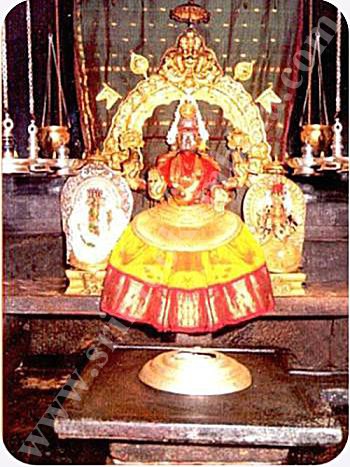
The TV channels were showing live visuals from Mookambika, the templed dedicated to the goddess of learning. i have been to this temple several times in the 90s during my days of extreme academic greed! Going to Mookambika was like petitioning at the head office of the learning department of the Hindu heavens. The goddess is primarily Saraswati (she has two other moods every day!) and she has been installed there by none other than the most learned Malayalee ever, Sarvanjyani Sankaracharya. This temple is always packed with devotees from Kerala. But since it is in Karnataka, the administration and divine interventions are performed by Kannadiga (specifically the 'adiga' bit) priests.

The temple's creation myth, which is eerily similar to the Greek one of Orpheus and Eurydice, has it that the goddess appeared before Sankaracharya in the Himalayas and agreed to follow him to Kerala. There was only one condition (that same greek condition): He should not look back till they both reach Kerala. When he reached Kollur in Karnataka, doubts overwhelmed Sankara's mind. Since he couldn't hear any of the jingling of the Goddess's jewelry (all Hindu goddesses put the models of Jayalakshmi silks and Josco gold jewelers to shame when it comes to dressing up), he turned around. "That's it!" she said, "we're done!" and refused to go any further. She said that his fellow countrymen (statesmen now) could visit her at the temple in Kollur. 

The same priest from the 90s still carries the idol around for the circumambulatory procession. Back then, i remember, hundreds of palms closed together in bhakti would go up in the air as this idol came around sitting on that priests head. Today on TV, i could see all sorts of cameras going up in the air to greet the goddess. May be this is why cameras are being blessed with bigger and better memories, better resolution and clarity of observation every few months. Goddess is great! 

Our home puja was officially dismantled by 8am when Amma came back from the temple. The ending ceremony is marked by each of us writing "Hari Shree Ganapataye Namaha;Avighnamastu" on a piece of paper and tearing it up. Like almost all other rituals in life, i have no idea why the tearing up happens. It is this same short Sankrit mantra that the small kids are initiated with. It is either written on rice or some unhygienic people prefer writing it on the child's tongue with a golden ring. When it is the same ring that binds them all, Mordor level infections can happen. i wonder if the initiation ceremonies in the churches also use the same Sanskrit mantra. May be they write something along the lines of "Yesushree Parishudhatmave Namaha; Avighnamastu".

"Lalitha Sahasranamam" youtube video with English captions was streaming in the background while we were writing, tearing and then engaging in the nominal reading which forms the three-part puja ending ritual. The laptop was right in front of me as i was reading with a deep sense of irony, from Patricia Fara's book mentioned yesterday, the chapter titled "Rationality" , ritualistically! 
Suddenly the word 'breast' popped up in the captions and caught my attention naturally. 
Verse 36 of the Lalitha Sahasranamam is a rather interesting anatomic specification. The goddess is said to have three folds on her belly so that the weight of her breasts can be balanced. Now i regret missing out on the weekly Lalitha Sahasranama sessions in College Station. Obviously, ' Fara's scientific rationality' went out of my sphere of attention and i followed the captions till the end, the whole 20 minutes or so of it. Nothing as specific as verse 36 (such an apt number) came by later. But the earlier verses contain exquisite physical description of the goddess starting from the top.

i have reread the wonderful poem, Beware by Shanta Acharya, given below, several times in the last couple of days. i think it is only appropriate to fully quote this great example of truly gifted writing on a day that literacy is worshipped. A poem that feels like the first bite into a ripe, juicy 'amla' (Indian gooseberry)!

Beware

I
Beware of living in a nation
with no road signs or price tags in shops
and certainly no Freedom of Information.

It could be a massive experiment in progress
by the rulers to improve verbal communication,
as the government is bankrupt and its people illiterate.

It could also be that the people are simply super-intelligent,
psychic, lateral thinkers who excel in problem solving
and instinctively know how to figure things out.

It possibly encourages enterprise and intelligence gathering
as individuals ferret out ways of bartering information.
It certainly keeps the economy flowing, and prevents people
from knowing whether they are coming or going.

II

Beware of living in a nation
with a surfeit of street signs and price tags in shops
but still no real Freedom of Information.

It could be a massive experiment in progress
by the rulers to discourage communication
among its citizens for fear of increasing social cohesion.

It could also be that people lack intelligence,
always in need of nurture; someone to hold their hand
as they remain illiterate and incapable of figuring things out.

It discourages enterprise and any form of self-knowing,
engaged perpetually in information processing,
leaving little time and energy for thinking.
It keeps the economy flowing, gives people the illusion
they are in control of their lives, coolly coming and going.

~Shanta Acharya

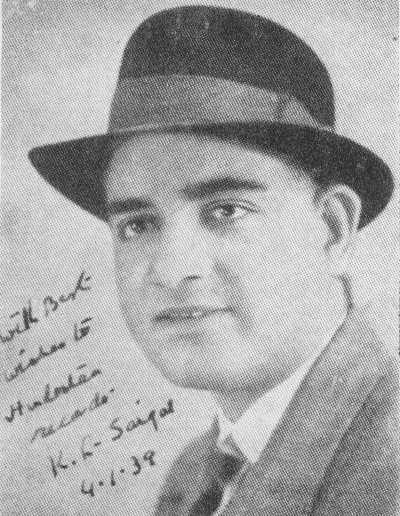
Now for the musical trivia: K. L. Saigal strongly believed that he needs the help of alcohol to bring the perfect emotion to his renditions. As the years passed, this addiction was becoming detrimental to his recording sessions. So Naushad once insisted that Saigal should not drink before recording a particular song. 
Saigal was unhappy. 
He was convinced that he will not be able to do justice to the song if he sung it sober. Naushad stuck to his guns. The composer did not want the singer disappearing into a bar and leaving the recording session hanging. 
Saigal sang. 
A masterpiece was born. 
When he heard the recording, he burst into tears. He had no idea how beautifully he could sing without the help of alcohol. 
But it was too late. The next year, he passed away due to liver failure.
Here is that masterpiece which lovers of Indian film music will always treasure: http://www.youtube.com/watch?v=DHzaJFb3RYE

I will be back with the notes after the Munnar trip. 
Technology world mourns the passing of Steve Jobs.

Mahanavami (BH:D63)

October 5, 2011

I have never shied away from engaging in stupid tasks. So if I were to rank the Indian festivals according to my liking in school days, as if such a list mattered, the puja holidays, particularly Mahanavami, wins hands down. It is a day of pens down, pencils down, textbooks down...in general, all tools down. There might be some goodness in the idea of worshiping one's tools, the instruments of trade, treating them with respect for one day of the year. But I think Indians tend to carry it too far, as usual, and can be seen routinely submitting to the "mercy" of machines! Even recently, I saw the helpless, reverential look on the face of some bankers and officials behind the payment counter of BSNL when they say "system down". The 'system' is a whimsical god. Newspaper reports here routinely hype "mechanical" faults as if they are divine interventions and attempts to repair are DOA because nobody wants to mess with the heavens!

I hadn't cast such a philosophical look at Mahanavami when I was in school. It was simply a day that Amma won't ask me to go and study. A day worth celebrating. After school days, the "puja" shrunk from being a 24 hour affair to an overnight ritual. Pens and select books will find a symbolic place near the gods for just the night of Mahanami. They would be back in business early morning on Vijayadashami day. 

Today, symbolically five books have made it to the holy stack. Kunjikuttan Thampuran's magnum opus Mahabharatham, forms the hardbound, Malayalam base. Then a very thin volume on "Developments in the Financial Markets". On top of this is Patricia Fara's magnificent 'Science: A Four Thousand Year History'. And above all 'The Best Poems of the English Language' compiled by Alissa Heyman. Amma's Flair writo-meter felt tip pen and my Jaguar fountain pen find themselves on top of this stack with some yellow ixora flowers, garden-fresh! Amma lit the two brass 'salabhanjika' figurines besides the lamp this evening. Devotional bhakti is certainly not the first emotion that comes to my mind when I look at those beauties. Or may be it is a form of devotion.

Later in the evening, Achan formed a two book stack by the side with his pen on top. Thunjathu Ezhuthachan's AdhyatmaRamayanam and Lalita Sahasranamam. He has also kept a writing pad ready on which we can write "Harishree" tomorrow morning to end the puja.

One of the habits I had acquired in the USA is.... not what you are thinking! I tend to email authors whose work enlighten, inspire and entertain me. Obviously I am not talking about engineering journals. This was a difficult habit to come by for someone growing up in India because of the constant exposure to tight-lipped, anal retentive, ego-maniacal 'scholars' and teachers usually found in this land. So I was pleasantly surprised back in 1999 when Scott Adams, as in the Scott Adams,  replied within a couple of hours to a casual email invitation to speak at IIT.  It was my first inkling that creators of timeless stuff are not necessarily time-less. 

Early last decade, I read the life transforming "Sex, Time and Power" by Dr. Leonard Shlain. This was the period I was shamelessly indulging in out-of-the-word theories about the origins of life. So the morning after finishing his book, I despatched Dr. Shlain an email, listing some of my fantasies. After lunch, I came back to my desk to find a detailed and encouraging reply on my desktop. In 2009, I exchanged emails with Dr. Dale Russell about his insightful "Islands in the Cosmos". In 2010, Dr. Richard Gombrich responded to what I thought he is thinking wrong in his "What the Buddha thought". 
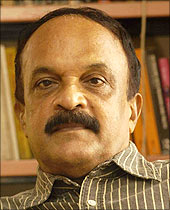
So, though I take receiving replies for granted now, I was a little apprehensive about emailing Ravi Menon whose "So jaa rajakumari" mentioned in yesterday's note had left me with an emotional high when I was done with it this morning. After all, he is an Indian, I thought. Like me, I should have added but rarely do! His email id given with the bio in the book was too tempting. I shot him an email saying how much I enjoyed the work and wished it was translated and made available online with youtube links to the couple of hundred songs mentioned. Mr. Menon responded before noon linking me to his blog. His blog is basically scanned uploads of his published articles. It is all in Malayalam, so non-mallus reading this will have to wait for me to keep posting the songs with anecdotes over the next few weeks. 


By 7pm, Kurien Issac Sir came to pick me up for dinner with his family. He and Achan swapped stories about their school days in Thiruvananthapuram. Achan went to SMV high school, Kurien Sir to Model school. Kurien Sir's dad was the librarian of Kerala University and established the Dept of Library Sciences. 
At his place, great food and fabulous conversation that would have continued all night long had Amma not interrupted it with a phone call at 10:45. 
History of Thiruvananthapuram, Kerala culture, Padmanabhaswamy temple, Hinduism, Buddhism, Christianty, quack new age Gurus, Malayalam cinema...inexhaustible topics that can burn off calories from the dinner even as it is being eaten!
After tomorrow, these notes will ne interrupted for 2-3 days since we are taking off for Munnar. I am sure the journey and the beautiful destination will provide plenty of material to note down when I get back. 

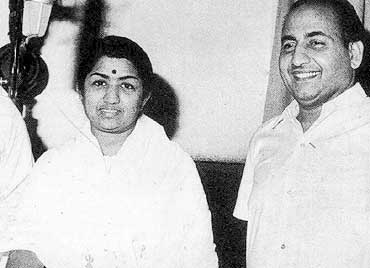
Now for the musical trivia from Ravi Menon's book. An S.D.Burman music night in the 70s. Actress Nargis is the MC. Mohd Rafi and Lata Mangeskhar are in their respective chairs after finishing their solos. Nargis announces, "Next a romantic duet from Rafi and Lata" Rafi and Lata are stunned. Nargis continues, "We know that they have not sung together for six years. But they will unite again tonight. I hope they will do it for me."
Lata and Rafi had a fallout because of their opposing views on royalties. Lata believed the singer had a share but Rafi felt that once a singer is paid, the song belongs fully to the producer. They had not sung together for film or on stage for four years. But that night, they had tears in their eyes, when they finished singing "Dil Pukare" from the film, Jewel thief. Standing ovation from the packed audience. Rafi-Lata spring had arrived yet again in the film music world. After Rafi death, Lata continues to sing "Jo wada kiya" as a tribute to him in her stage shows.

Dil Pukare: http://www.youtube.com/watch?v=w-10yloS2i8
Jo wada kiya: http://www.youtube.com/watch?v=Ou0B9T89L0g

For Malayalees, here is Ravi Menon's brilliant writing: http://paattezhuthu.blogspot.com/ 

Muse-ic (BH:D62)


October 4, 2011

The year is 1945. Music director Bimal Biswas, known for his punctuality, is ready at the studio. Musicians and technicians are ready. Only the new singer is missing. Biswas controls his anger since the young man is a relative's friend. But how irresponsible can a first time singer get! Bimal-da sends errand boys to locate the guy. The find him totally drunk in a seedy Mumbai bar and carry him to the studio. 

An hour of scolding and verbal abuse from the composer brings the aspirant singer back to some sense. He confesses: "How can I sing this song like Saigal without drinking like Saigal?" The entire studio laughs. But the young man was serious. He records the song. He voice and style match Saigal's so much that months later when Saigal hears the song he wonders when he had recorded it! Who is this young singer who went on find his own voice and immortalized several Hindi film songs in the next decades?
I will get to the answer at the end of this note. But first the story of how I got to this story. 

I don't know Andrej Pejic; I have only read hir (not a typo) interview. I have stared long and hard at posters of Milind Soman, but that's because Madhu Sapre or Shweta Menon were in them too. My point is that I haven't rubbed shoulders, much less anything else, with models. So imagine my surprise this morning when I walked into Dyna Studio opposite the Reserver Bank of India to find, staring down at me from a glass frame above the reception area, a very familiar face. 

He was the left half of an "exemplary" marriage photo that the studio was showcasing in the classic reverse scooter riding pose that new couples are photographed. One of the most straightforward guys in school, he had the most unfortunate nickname owing to his appearance. This was amplified by the fact that his mother happened to be (and continues to be) one of the most popular and pretty beauticians in town. Well, that was a decade and a half ago. Today, here he was, a content young man even the black suit and black bow tie. The lovely bride did not look any bit flustered about this dude standing right behind her. Very different from the situation back in school, indeed. 

Needless to say, this photograph filled me with confidence about this studio. They should be able to make me presentable for the numerous identity cards I am to apply in the near future, I thought. 

Indian life demands so many cards for smooth survival that it is no wonder that most people become gamblers. The fact that Kauvaryas asked for a hundred identity proving cards from the Pandavas, inducing the compulsive gambling, has been conveniently left out from the Mahabharatha.

I needed a PAN card to open a bank account and two more photos in the bank's application form. The photographer at the studio did not use more light than the camera flash. Lighting dim. "Thazhottu nokku" (look down), "Munpottu varu" (come forward), "melottu nokku" (look up), these were the only three basic instructions I had to follow. I have followed more in the past on camera. So this was easy. Then right before the moment of truth, two more: "Santoshamayittu; kannadakkale" (Be happy; don't close your eyes).Oh yes! I have certainly heard these before!

After the act, I chatted with the photographer about my framed friend on his wall. He called it a good work. He had been to our school to take the annual class photographs in the early 1980s. Owing to the desi fad of uploading those group photos from 80s and 90s to facebook, I am sure some of his work have gained a digital avatar. I wonder if there is ongoing research in psychology and criminology that finds the correlation between expressions, gestures and body language in those school photos and later life behavior. It is easy to spot the geeks and the drama queens. Identifying the artists and the rapists certainly needs research. But it can't be more difficult that Zen Nippon University's method of sexing chicks.

Both the photographer's kids had recently finished attending our school. He reiterated the usual Indian mantra of falling standards. Amma was tasked with collecting the photos in the evening. 100 bucks for 25 passport-size and a dozen stamp-size photos.

From the studio, I headed to the bank. On the way, the abandoned, dilapedated building of "Kerala Olympic Association". Rusted parallel bars in the yard. Rat-chewed, faded and cracked leather pommel horses on the verandah. Overgrown, encroaching grass, vines and shrubs that could use some real horses. A cemetry of someone good intentions...or may be, blind ambitions and puerile illusions.

At the bank building, the elevator operator today must have been a public bus conductor recently. He was quickly losing patience with and ordering around the people trying to use his "vehicle" today. Through the glass windows of the 3rd floor, while waiting at the bank, three tile-roofed, old houses nearby can be seen. This is prime real estate, easily worth tens of crores, that is being held on to. I wonder for how long. Wherever roof tiles have been damaged, metallic sheets take over: Bandaged roofs.

From the bank, few minutes of walk to the book store building at Statue junction. Same building houses tbs books in the ground floor and the better established and older DC books upstairs. Spotted a book at tbs that Achan had been looking for some time now, but did not have enough cash to purchase it. The sales lady offered 20% discount. I was still 200 bucks short! Rather high price tag for a book dealing with the history of the Nair community. This is a glorifying one unlike Robin Jeffrey's narrative of the collapse of the Nair influence that I had mentioned few notes ago. Leafing through the book told me that Mrinalini Sarabhai is a Nair. I didn't know that she was a Malayalee. In that instant, from that knowledge, Mallika Sarabhai gained a few milliHelens! Note to self: watch Peter Brook's Mahabharata again.

Went upstairs to browse DC books collection. Lot of alluring "complete works" collections. Should go back another day with enough cash. Found a collection of 19 essays by Ravi Menon on old Hindi film music. The foreward was by O.N.V Kurup and afterword by M.T. Vasudevan Nair. I was sold. And I did have Rs. 70 with me. Since I had engaged with tbs folks earlier, I went downstairs for the purchase. Luckily they also had a copy of the aptly titled "So jaa rajakumari"!

Most of the afternoon was spent reading the essays and listening to the songs mentioned in it on youtube. In between, Parvathy aunty called from Bangalore. When she had come down for Tara's wedding, I had told her about these daily notes. Finally, she managed to find time in her busy schedule to join G+ and read a few. Kind words of encouragement and appreciation! Much gratitude!

Amma brought home the photographic evidence of my appearance in the evening. A faction of my remaining hair is rising up in revolt. May be they are fleeing. May be it is the invisible neutrinos. On second thoughts, it looks like beginning stages of the 'mun-kudumi' or 'sikha', the tuft of hair worn front and side by men of different communities in southern India for centuries. This historical knowledge will do just fine as solace from nowon for my intermittent balding pangs. 

Now to answer the musical trivia question straight out of the first pages of 'So jaa rajakumari': Mukesh Chand Mathur or simply, Mukesh! Here's that drunk young man's song, the influence of Saigal is clear:http://www.youtube.com/watch?v=Yu0ibF46cio

I'll share more musical trivia and songs in the coming days. And Happy 135th Birthday, Texas A&M University!

Sound & Light (BH:D61)


October 3, 2011

While in US, I was a frequent listener to the Hit 96.7 FM, a Dubai-based Malayalam radio station that has reliable online live streaming. Their hourly news recaps was good for keeping abreast with Kerala news. Now that I am here and it is impossible not to hear the news from neighbors' television or radio, I had not accessed the streaming for the last couple of months. This morning, it was decided that the channel can provide background score for the floor mopping. Since it would still be wee hours of the morning in Dubai, the blabbering of DJs would also be absent. 

The stream alternated between truly atrocious nursey rhyme quality film songs and top grade Vayalar-ONV fare. This inconsistency encroached into my mopping. I realized that I generally like songs if they have a couple words which are not easily understood. I wonder if it is true for the general appreciation of all things linguistic. Should an element of learning be involved so that the brain is impressed? The appeal of freshness is coupled with learning. Isn't this true for literature and poetry? Isn't it another reason why there is an inexplicable sense of "highness" associated with the Hindu newspaper compared to the Times of India?

I watched the first episode of Stephen Fry's Planet Word on youtube. A perfect presenter for a series that deals with language. A human baby learns around 10 new words a day after it is two years old. It is a prolific rate of acquisition. I think it lingers on late into the life. We look for new words, new combinations and are subconsciously pleased when we find them. When accompanied with music, it is such a great throwback to the diaper days (I never wore any but it is easy to convey the age this way) when through action songs, rhymes or general singsong delivery new words had expanded our world inside. This must be why I prefer "namra sheersharayi nilku nin munnil kamra nakshatra kanyakal" to say "tharangal nanichu kannu chimmi" (Insert your favorite ghazal or Shakespearean line here followed by something from Altaf Raja or Dubya). 

It must be the same reason why the great Indian repetition irritates. The same sentences are spoken over and over again to drive home the point or in the vain hope of extracting the same emotional impact it had the first time. But since there is nothing new, the mind resents. 

Though I didn't have any important decision to make, when I went to pee around noon today, I could hear a male voice babble "raashutti" repeatedly. Owing to the ventilation aperture near the ceiling, the neighborhood sounds freely waft into the bathroom. Looking out of my room window, I could see the man responsible for the baby talk. He was one of the push-cart ironing service men. They usually park their ironing station in the shade of the car porch of the unoccupied home next door. He was talking to a baby over his mobile phone. A lot of meaningless but musical sounds were made interspersed with the "raashutti". I presume his baby daughter is named Raashi or Rashmi. I am sure he has not heard Stephen Fry's advice that there is no substitue, no disc, no software package, no coaching program, that can stand for some good old parental pampering when it comes to language learning.

On top of rat fever and dengue fever, two more dreaded words have been filling the airwaves for the last few days: load shedding and power cut. And tonight, right after 8:30, power went off. I have a small UPS connected to the modem so that I can stay online to wind up conversations or any 'cloudy' documents I might be working on. Half an hour powercut was a standard feature of growing up in Kerala in the 90s. It would go precisely for a predetermined 30 minutes during the hours between 6:30 and 9:30. It was a wonderful service for thieves. For our small neighborhood, this half an hour was conference time. Everyone would come out to their gates, some would sit down on their gate steps and conversation would flow interrupted by mosquito-induced clapping and self-slapping. So there was sense of nostalgia tonight in the darkness. 

Couple of our neighbors now have inverters, so there is a bit more light than two decades ago. Varkichen uncle and Kunjumol aunty, always vocal presences at these conferences back then, were present only in spirit tonight. With cracking dams, unmaintained generators and mismanaged power grids, power cuts will be around in Kerala even after all of us become spirits. 
Perhaps in such future sessions of darkness, the light of fond memories will shine on our names!

Dry Sunday (BH:D60)


October 2, 2011

How many beauty parlors on the 1 km road between Vellayambalam and Sasthamangalam? 
Ans: At least 6.
I think these esteemed offices must be commended for the invisible social change they are bringing about. Though I don't see any change, I am sure it is brewing like a black swan in the underground and one fine day, my morning walk will be dazzled by constant bumping into beautiful people. As of now, it is Karthika Nair's posters from the movie, Makaramanju, on the life of painter, Raja Ravi Varma, that shoulder the beauty responsibility.

While in College Station, usually on weekends, I would walk the 3 miles to Chalam's home. There is a community called Edelweiss Gardens on the way. So I was pleasantly surprised to find Edelweiss on a signboard while walking back from Sasthamangalam this morning. This was an investment service on the third floor of a building. 

My neighbor's nephew dropped by a for a few minutes. The poor dude was enduring his second trip to Kerala in the 23 years of his life which was spent from birth in a small city, 40 miles south of Atlanta, Georgia. He was waiting on his residency calls after finishing medical school in New Jersey. His family had been to Delhi and Bangalore during this visit to India which is going to last till Oct 18. With a recovering tummy after an unfortunate dinner at a north Indian restuarant in Bangalore, he was clearly not in great spirits.

"I think I overate," he confessed, "but it is difficult not to do so if one has a sweet tooth. But still I have lost two kilos after coming to India." I was surprised that he used SI units. "Mysorepak is my favorite. It is pure ghee and sugar...but irrestitible" I wondered if being in India led him to consider himself overweight. 

He hardly knew any Malayalam. "There are hardly any Malayalees in our town. Only Punjabis and Patels."

I tried to hook him onto some topic: football, baseball, Obama, tourism! Nothing worked. Finally, he smiled when asked about the traffic in Kerala."No disrespect, " he said throwing a glance at Achan, "but driving here is dangerous!" His parents are taking him on a pilgrimage of all the major temples in Kerala. His sister has done her masters in linguistics and was working on contract in Saudi Arabia. She would have had some interesting stories to tell.

Since it was a Sunday, Amma decided to use the traditional fire stove for cooking tapioca and fish curry. We had enough leftovers from the cut coconut tree to act as fuel. The uneven nature of the flame and the earthern pots contributes a unique flavor to any curry that is made this way.

In the afternoon, my cousin came over. More progress on business plans. Some interesting discussions on the construction mafia in the city. The nexus between politicians and gangs. These gangs are called "quotation teams". You can call and get a quote from them like the American insurance companies. The quote can be for any service ranging from threatening someone, kidnapping, physical assault, breaking legs, demolitions, general unrest, traffic block, destruction of public property and all the way up to murder. Unemployment, alcoholism, addictions and youthful trend of Indian demographics have spurred the growth of such criminal underworld scum. 

It was a great topic to discuss on the birthday of Mahatma Gandhi. One of the last books I issued from A&M Evans library was John Lelyveld's "Great Soul" which became notorious and got banned for the wrong reasons. The book is a great documentation of Gandhi's experiments with himself and the society and his construction of a persona that would stand the test of time as an icon. The unfortunate fallout of becoming iconic is that you mean different things to different people, sort of like the word, love. And with the passage of time, veneration and faith take over, squeezing out any meaningful association and learning...again like the word love. Hundreds of corrupt politicians paid homage to Gandhi today in different parts of the country. Fantastic Farce!

Spent a good chunk of the day catching up on recent episodes of QI. It was great to learn that best decision making is possible when one's bladder is bursting for a pee. This is possibly because the subconscious, the more powerful part of the mind, takes over from the conscious mind which is completely occupied with the peeing. So if you know you have an important decision to make 40 minutes from now, drink a couple of glasses of water now! 

From QI, I learnt about the art and science of sexing chicks. In 1920s, when the technique was developed there was an overnight drop in the poultry prices. The Zen Nippon Sexing Chicken school continues to run a 2 year course training people to gather speeds of sorting upto 1200 chicks per hour.

I wish two punctuation marks that were in vogue in the 60s would make a come back: Interobang & sarcastrophe. Would be very convenient! I will drink some water and come back to edit after 40 minutes.

Lit Up (BH:D59)


October 1, 2011

It is the Kovalam literary festival weekend in the city. Benazir Bhutto's cousin, Fatima, a writer, landed in town yesterday and was a instant hit with the media. Kurien Issac Sir suggested that we meet at Kanankunnu Palace, the venue of the literary fest this morning. It is natural to wonder why the 'Kovalam' literary festival finds itself inaugurated at Kanakakunnu Palace. I don't think the name Kovalam in the literary festival has anything to do with the location expect that an internationally recognized beach name can't do any harm when sending out invites. At one point, we speculated that the name might have to do with Kovalam Kavikal, but no. The fest grew out of the annual lectures organized in memory of Binoo K John's father who was also a journalist. Binoo K John, the organizer, is a recognized author in Indian English literature. 

I was at the venue by 10am.The lecture hall was three quarters packed. Cellphones were constantly ringing. The cacophony of ringtones is the new Indian national anthem freely remixed whenever crowds gather. Couple of policemen on duty were also taking on their mobiles. But they had the courtsey to do so outside the hall. Few desks with neatly arranged stacks of new books and bestsellers for sale. I found a seat under the last ceiling fan. 

Right before the ceremony was to begin a young man came and sat next to me. He leaned over and asked, "Arun alle?" (Arun, right?). I nodded and confessed that I did not recognize him. It is a painful fact that facebook profile pictures tend to do precious little when it comes to real world facial recognition. Once he identified himself, my memory cranked up past imaginings from St. Thomas School. He studied a junior to me. He happens to be the nephew of Binoo K John and had come down from Bangalore for a couple of days to help with the festival. It was great to meet an old face from school, even better to see one involved in a literary fest.

The event kicked off. The emcee was a disappointment. She spoke in the uber-official, obsequious Indian English. She talked about the "emperors, kings, queens, princess and princes" of literature who were present. Given that we were in a palace, I was hopeful. But despite straining my neck, no crowns, tiaras or royal staffs were to be seen. She "humbly requested" in this "most auspicious moment" the "honorable respected chief guest" to light the lamp "kindly". Then rather unkindly she made Miss Bhutto a Mrs and for the rest of event kept on murdering and bringing back to life that imaginary husband she had assigned the chief guest. 

The welcome speech was by renouned Malayalam writer Zachariah. He summed by saying Thiruvananthapuram is "more or less a beautiful city with some dirt on the side" and "it is more or less a peaceful, tranquil city". Then he made an amazing statement. While looking at Fatima Bhutto who had been smiling through the whole speech, he bobbed his head and said, "so this is that is!". She bobbed her head in response. I guess "so this is that is" is something from the Upanishads along the lines of "Thou art that" (Tat-twam-asi). Happy to learn that the head bobbing crosses the Line of Control.

An award was given to Rakesh Nath for being a promising young writer in the festival's eyes. He obliged the emcee's 'humble request' to 'kindly share a few words' and began reading off of a paper addressing non-existent "other dignitaries" on the stage. English was not his forte. He said something about string theory and 10 raised to 500 universes. His book '0+0=big bang' was the reason for the award. It was in Malayalam and he read an excerpt. As soon as he switched to his mother-tongue, he transformed into a master of words. I'll check that book out soon.

Fatima Bhutto's writing skills must be better than her oratory skills. Not that it was a boring lecture. She spoke about the shared history of the Indus Valley civilization, making a few flowery comments on the art from that culture which showed her strength in fiction and fertile imagination but also would have made any archeologist or art historian squirm. Since I am neither, I simply shifted on my seat. She inserted a few jokes. She was spontaneous at a couple of places. She tried to engage the audience in an attempt to localise her theme of Indo-Pak harmony. But the audience were busy filming her on their cellphone or just wondering what brand of Fair & Lovely cream she uses. 

Half way through her lecture, I saw Issac sir walk in. He took a seat to the my right and promptly texted me that he was there. I replied specifying the co-ordinates of my location in a hall-centered reference frame measured in chair units. In all this SMS business, I lost the final thrust of Ms. Bhutto's lecture if there was one. I am sure there was some good points well made because there was considerable applause when she finished. From the first half hour of the lecture that I listened to, she is a reluctant Arundhati Roy. I think the reluctance has something to do with the consequences she might face in Pakistan. 

We made Navara rice for lunch today. With rasam, bitter gourd curry and sambharam (buttermilk with curry leaves and onions), it was a feel good, healthy meal. Cooked navara rice reminds the tongue of adzuki beans, in texture and flavor. But at Rs 99/- for 250g, it'll remain a "medicinal" food.

Talking of medicinal foods, the coconut flower (thengin pookkula) led palpable tension in the family atmosphere this morning. Amma was not too keen on cooking it because she believed it is meant only for post-natal care of women and would induce bleeding. 
Achan pooh-poohed this notion! 
Amma tried to gather support from Rema aunty and Omana. 
"Saarinum Unnikum kodukale!"(Don't give Achan and me), Omana's ominous warning. 
Achan asked for their nutritionist and medical degrees. 
Then he wondered aloud why anyone would put the recipe on the internet if it was going to be damaging. 
Ahem! I kept quiet and went along with his argument that internet is the "authority" on reliable, constructive information. I desparately wanted to taste the dessert. 
Achan reminded Amma that Omana had recently said that all snakes are male and all rat snakes are female. 
This was the clincher. 
Amma made the dessert but she left the heavy duty stirring to Achan. 
I guess that is all the spooning he is going to have for quiet a while. The dish is divinely delicious. 

In the afternoon, Amma and Rema Aunty went to see Mohanlal's 300th film, Snehaveedu (love home) which was released yesterday. "Kandilennu vachu nashtamonnumila" (No loss even if you don't see it), Amma's concise review when she returned.

Yet another dramatic evening. Theater of Good Hope (that apparently has none religious affiliation that its name seems to invoke) was presenting the Malayalam translation of the Kannada play called Sidhathae by the famous writer, Lankesh. It was being staged at the Vyloppilli Samskriti Bhavan. This was my first visit to that center. What a spectacular venue! Built mostly with wood and stone and roofed with baked clay tiles, it is the most traditional playhouse I have ever been to. A raised stage inside the hall is itself shaped like a "koothambalam". With hanging brass lamps supplying the hall lighting, it is the perfect stage for any classical music and dance performance. And today, I saw that it can be set up very well for drama lights and sound as well.

The same campus has the Kerala Historical Research Council, Bharath Bhavan, State Archives and Lalita Kala Academy. Besides the main hall and stage, there are two open air 'mandapams' in granite and wood set up for performances. And an impressive amphitheater! 

The drama was rather short. Only 45 minutes, much to the disappoint of my youngest uncle who showed up 20 minutes late. There was a sizeable audience...around 250. The drama dealt with the final outburst of an artist who had compromised his entire life for work and for family. Sulfikar who acted as the rebel son was brilliant. I think he has a bright future in television and cinema. The dark humor was brilliant in parts. Lines like "Why Iyer? Why an Iyer? Because an Iyer is always a little higher!" drew chuckles from the crowd.
I don't know if the original play also opens with the song, "Mere Saajan hai us paar" composed and sung by SD Burman from the Bimal Roy movie, Bandini. Such a beautiful song to start a play about unfulfilled dreams.
http://www.youtube.com/watch?v=8rxJWLtWCfM